
Tufts scientists unlock the hidden microbial battles in sourdough starters, revealing simple rules that predict survival in complex communities—and why this matters for American bakers reclaiming traditional breadmaking from industrial fads.
Story Highlights
- Tufts researchers built a predictive model from pairwise microbe interactions in real sourdough starters, accurately forecasting survival in groups of up to nine species.
- Model refinements for daily feeding cycles boosted accuracy for slow-growing competitors, with seven of nine species matching predictions perfectly.
- Findings published January 22, 2026, in Ecology, using accessible sourdough to model real-world microbial stability like gut health and food safety.
- Offers practical tools for bakers to maintain stable starters, cutting waste and ensuring consistent tangy flavor without relying on commercial yeasts.
Decoding Sourdough’s Microbial Dynamics
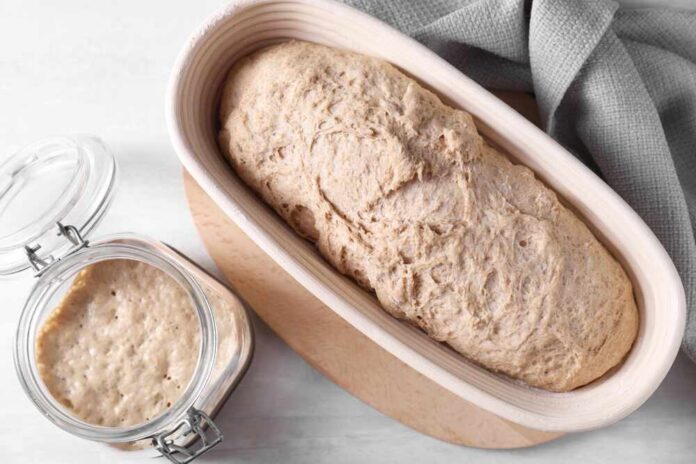
Researchers at Tufts University isolated microbes from active sourdough cultures. They tested these yeasts and bacteria individually and in pairs to map growth interactions. This data formed a pairwise model that scaled predictions to multi-species communities of up to nine organisms. The approach revealed non-random patterns in starter diversity, where over 60 bacteria and 80 yeast types worldwide converge on stable combinations. Sourdough’s natural fermentation thus mirrors predictable ecological balances, free from the oversights of factory-processed breads.
Refining Predictions with Real-World Cycles
Tufts team Lawrence Uricchio, Kasturi Lele, and Benjamin Wolfe led the study. They simulated sourdough maintenance, including initial flour-water refreshment over one to two weeks followed by daily feedings. These boom-and-bust cycles—population reduction then regrowth—prevented slow-growers from dominating, improving model accuracy. Only two of nine species deviated, validating the method against lab-grown communities. Uricchio noted starters resist invasions, showing inherent stability that benefits home bakers pursuing self-reliant traditions over global supply chains.
Practical Wins for Bakers and Food Safety
Home and artisan bakers gain tools for consistent starter management, reducing spoilage and waste. The model predicts pathogen surges in sanitized food facilities, aiding industry outbreak prevention. Economic impacts include lower food waste from reliable fermentation. Socially, it promotes safer home baking, aligning with family values of wholesome, traditional meals. No political overreach here—just science empowering everyday Americans against inflated industrial food costs under past mismanaged policies.
Flour type influences bacterial diversity, with whole wheat promoting more variety than all-purpose, though yeast dominance persists across starters. Fiber breakdown during fermentation enhances bread texture and nutrition, as separate studies confirm. These factors complement the Tufts model, offering bakers precise control.
Broader Applications to Health and Agriculture
Long-term, the model applies to gut microbiome recovery after antibiotics, forecasting antibiotic resistance, and managing microbes in hospitals or farms. It parallels agriculture, like pesticide-disrupted soils, and pharma dysbiosis treatments. Lele tracks ongoing evolution in communities to assess genetic shifts. Uricchio emphasizes generalizable ecology tools from accessible systems like sourdough. This work advances American innovation without government handouts, focusing on practical outcomes for public health and self-sufficiency.
Scientists discover what really happens during sourdough fermentation
New research shows that sourdough fermentation does more than make bread rise—it transforms wheat fibers in unexpected ways. Scientists found that enzymes already present in wheat, activated by the sourdough’s…
— The Something Guy 🇿🇦 (@thesomethingguy) March 16, 2026
Experts agree on microbial stability, with consensus that feeding cycles simulate natural dynamics. Evolutionary biologist Heil views sourdough as an evolution framework, where flour shapes bacteria but yeasts dominate unexpectedly. Classroom metabarcoding shows shifts over weeks in student starters. Model limitations remain minor, with outliers addressed. Published January 22, 2026, findings draw from peer-reviewed Ecology, with no major conflicts across reports.
Sources:
Sourdough starters reveal a recipe for predicting microbial species survival
Sourdough starters reveal recipe for predicting microbial species survival
ScienceDaily on sourdough microbial research
What Really Happens Inside Sourdough? Scientists Uncover the Secret Life of Wheat Fibers