
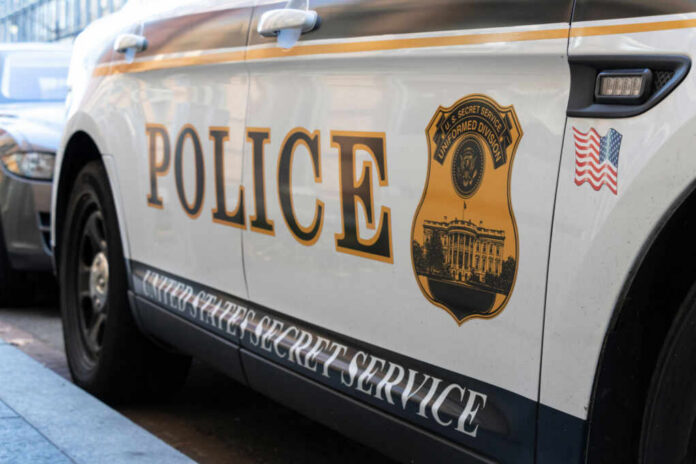
The watchdog’s finding that agents missed 102 warning radio calls about Trump’s would‑be assassin exposes a stunning breakdown in the very system meant to protect the presidency.
Story Snapshot
- A Department of Homeland Security watchdog says the Secret Service never received 102 local radio transmissions about shooter Thomas Crooks.
- Agents relied on just five phone calls and three text messages, and Trump’s detail was never warned about the “suspicious person.”
- No shared communications room was set up with local police, and a key counter‑drone system was left inoperable and under‑staffed.
- Multiple reports now show deep, systemic failures in communication, training, and leadership that left Trump exposed.
Watchdog Report: 102 Missed Warnings About the Shooter
The Department of Homeland Security inspector general found the United States Secret Service did not receive 102 local radio transmissions about the man who tried to assassinate President Donald Trump at the Butler, Pennsylvania rally on July 13, 2024. Local police were calling out reports about a suspicious person later identified as Thomas Crooks, but those warnings never reached the agents guarding Trump because the agency failed to set up a shared communications room with local law enforcement.
Instead of a live radio link with local officers, the Secret Service was relying on scattered messages. The inspector general reported that agents received only five phone calls and three text messages about Crooks. Because of that broken chain, Trump’s protective detail was never directly alerted that a suspicious person was being hunted near the rally site. In a world where seconds matter, dozens of missed calls were left sitting on a local channel while the would‑be assassin climbed into position.
Breakdown in Communication and Technology at Butler
The Butler rally failures did not stop at missed radio calls. The watchdog found that Crooks flew a drone over the area hours before the shooting, but the Secret Service’s counter‑drone system was not working and did not detect it. A single, under‑trained operator was assigned to that system, and the inspector general said this operator did not even test the equipment before the event. That meant a modern tool designed to spot threats from the sky was effectively offline on the day a gunman used a rooftop to target a presidential candidate.
Separate reviews back up the picture of broad coordination failure. A Mission Assurance Inquiry by the Secret Service’s own Office of Professional Responsibility described serious deficiencies in communication, command and control, and work with outside agencies during the Butler event. A bipartisan Senate report later concluded there was a “severe lack of coordination and communication” between the Secret Service and state and local law enforcement from the planning phase through the rally itself. These findings show the missed 102 radio calls were part of a much larger pattern, not a one‑off mistake.
Senate, Media, and Internal Reviews Point to Systemic Failure
Congressional oversight has added more detail to how these failures took shape. Senator Rand Paul’s Homeland Security and Governmental Affairs Committee released a 94‑page report describing Secret Service decisions that “allowed” the attempted assassination, including poor planning, missed warnings, and bad communication structures. The committee noted that agents chose not to retrieve radios offered by local and state officers, which further limited coordination when it mattered most. Despite these findings, the report said the agency did not fire any single person involved in planning or executing protection at Butler.
🚨Two years ago today, Thomas Matthew Crooks opened fire at Trump’s Butler rally. He was a registered Republican whose neighbor Kelly Little told WTAE there were “MAGA-supporting signs” in his family’s yard “for a while.” Classmate Max Smith told the Philadelphia Inquirer that in… pic.twitter.com/2kFOadnqdd
— Reich-Wing Watch (@ReichWingWatch) July 13, 2026
News outlets and independent reviewers have echoed concerns about the communication mess that day. The Associated Press reported that communication breakdowns with local law enforcement “hampered” Secret Service performance and listed many missed chances to stop the gunman before he opened fire from an unsecured roof. A Department of Homeland Security Independent Review Panel also identified specific failures and deeper worries inside the protection system, reinforcing that this was not just one bad decision but a system failure. Together, these accounts paint a troubling picture of the government’s ability to protect the nation’s leaders when politics are hottest.
What We Still Don’t Know Two Years Later
Even with all these reports, key questions remain. The inspector general did not publish the full content of the 102 radio transmissions, so the public still does not know exactly what officers were saying about Crooks or how detailed their threat reports were. There is also no complete public timeline showing the minute‑by‑minute path from first “suspicious person” call to the moment shots were fired from the roof, leaving gaps in understanding how fast authorities could have reacted with better links.
Judicial Watch and other watchdogs say the Federal Bureau of Investigation and Secret Service are still holding back records tied to the Butler shooting two years after the attack. That includes more detailed communication logs, threat briefings, and technical data from systems like the counter‑drone tool. Without those documents, Americans cannot fully judge whether the agencies have fixed the problems or are simply trying to move past them. For a country that values limited government, accountability, and the safety of elected leaders, those unanswered questions matter deeply.
Sources:
townhall.com, nytimes.com, cnn.com, hsgac.senate.gov, abc7ny.com, bbc.com, pbs.org, secretservice.gov