
San Francisco’s July 4 fireworks “celebration” turned into a foggy, gridlocked mess where driverless cars died in the streets and basic crowd needs like bathrooms were pushed to the breaking point.
Story Snapshot
- More than 100,000 people were funneled into a poorly planned fireworks event that ended in hours of gridlock.
- Several Waymo driverless cars stalled, ran out of battery while idling in traffic, and had to be towed away.
- One Waymo vehicle drove over a lit firework as passengers sat inside, while another car reportedly caught fire.
- Reports of extreme bathroom shortages and thin emergency planning show a city unprepared for large crowds.
Gridlock Chaos After a Foggy Fireworks Show
San Francisco officials invited more than 100,000 people to a July 4 fireworks show at the Golden Gate Bridge, even as fog forecasts made a clear view unlikely. After the show ended, traffic in the Presidio and north side of the city locked up for hours, with many families stuck late into the night. Mayor Daniel Lurie later admitted that “some people experienced delays getting home” and promised talks with partners to smooth things out next time. For many attendees, that sounded like too little, too late.
Witnesses say basic crowd logistics collapsed almost immediately once the show ended, with cars barely moving and people forced to walk miles to escape standstill traffic. Social media posts described parents carrying tired kids along dark streets and seniors trying to hike out because buses and ride shares were jammed. One widely shared complaint focused on a shocking lack of portable toilets, with frustrated residents claiming lines stretched for blocks and that the city provided only a fraction of the bathrooms needed for a crowd that size.
Waymo Robotaxis Stall, Die, and Get Towed
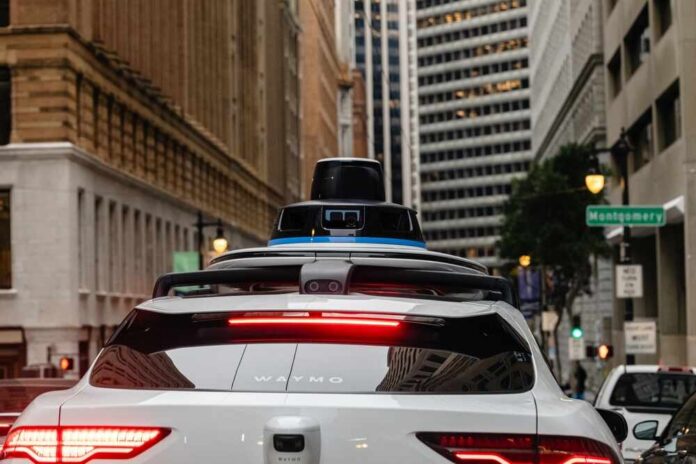
Into this mess, San Francisco’s experiment with driverless cars met a real-world stress test and failed in plain view. Waymo, Alphabet’s autonomous taxi service, confirmed that “several” of its vehicles stalled in the gridlock after the Golden Gate Bridge show and ran out of battery while idling. Video verified by national outlets showed at least a dozen motionless Waymo cars, many Jaguar I-PACE models, lined up on Presidio streets as regular drivers tried to squeeze around them in the dark. These cars were supposed to ease traffic; instead, they became part of the gridlock.
Waymo said its roadside assistance crews had to tow stranded vehicles out of the way and described the event as a “major traffic disruption” caused by heavy crowds and unplanned road closures. Company spokespeople insisted they are “evaluating ways to strengthen Waymo’s resilience in major traffic disruptions,” while local reports added that at least one unoccupied Waymo caught fire after driving over fireworks. For ordinary residents stuck behind lifeless robotaxis, this looked less like a rare glitch and more like proof the city leaned too hard on technology without a solid backup plan.
Fireworks, Safety Fears, and Cell Service Problems
One of the most disturbing moments of the night came when a Waymo vehicle, carrying passengers, rolled straight over a lit firework exploding in the street. Video posted online shows sparks flying under the car as frightened riders shout and brace for impact. The company later confirmed the incident, saying the vehicle was not damaged and everyone inside was unharmed, but that did little to calm public concern. Another empty Waymo reportedly drove over fireworks and then caught fire, raising more questions about how these systems handle chaotic, low-visibility conditions.
Local reporting also highlighted cell service outages in the Presidio area during the rush to leave, which Waymo said disrupted normal remote operations and made it harder for human staff to help stuck vehicles. That detail matters for conservatives who care about basic emergency readiness. When cell networks fail, and the city gridlocks, people expect backup plans, not excuses. Yet San Francisco’s Department of Emergency Management had offered no detailed public explanation or written traffic control plan by the time of early coverage, leaving a troubling gap in accountability.
Planning Shortfalls and What Comes Next
Mayor Daniel Lurie has promoted autonomous vehicles as “safe and sustainable” transportation and, after this fiasco, promised conversations with public and private partners to improve future events. But he has not directly addressed the bathroom shortage claims or released a full post-event operations report that covers crowd capacity, restroom counts, and traffic control decisions. That silence fuels concern about government transparency and the city’s habit of chasing shiny tech projects while ignoring basic services like working transit, clear roads, and enough toilets for huge holiday crowds.
The less viral, more interesting one from the same night: after the Golden Gate fireworks let out, SF gridlock got so bad that Waymos got stuck in it until their batteries ran flat — video showed a dozen-plus stalled in a line, several towed. Waymo blamed "extreme traffic…
— Kasper Kristensen (@Ksvane) July 6, 2026
For many Americans watching from outside California, the Bay Area’s July 4 meltdown looks like a warning. A city tied to progressive policies and tech worship packed families into a foggy fireworks show, underdelivered on core infrastructure, and let driverless cars clog exits and even roll over explosives. The Trump administration now has to weigh how far Washington should trust local leaders who rush to adopt autonomous fleets while their residents still cannot count on clear roads, reliable cell service, or a safe route home on the nation’s birthday.
Sources:
nypost.com, youtube.com, nbcnews.com, reddit.com