

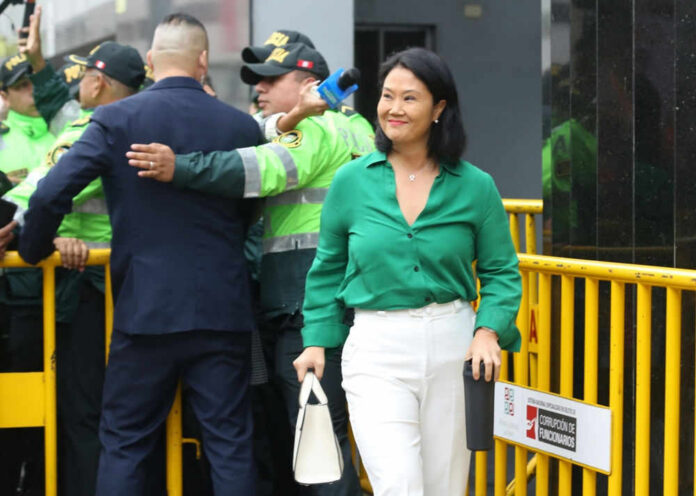
Peru’s election board officially certified conservative Keiko Fujimori as president-elect on July 3, 2026 — and her opponent later dropped his fraud claims and conceded.
Story Snapshot
- Peru’s National Jury of Elections confirmed Fujimori won with 50.135% of the vote — a margin of 49,641 votes out of roughly 18 million cast.
- The election board reviewed contested ballots, found no fraud, and rejected the opposing party’s appeal.
- International monitors from the European Union and the Organization of American States also found no evidence of fraud.
- Losing candidate Roberto Sánchez dropped his fraud claims and conceded the race on July 6, 2026.
A Certified Win After a Nail-Biter Count
Peru’s runoff election on June 7, 2026 came down to the wire. Conservative Keiko Fujimori faced left-wing congressman Roberto Sánchez in a race so close that the final result took weeks to confirm. Peru’s National Office of Electoral Processes closed its count at 100% of tally sheets on June 29, showing Fujimori with 9,223,396 votes against Sánchez’s 9,173,755 — a gap of just 49,641 votes. On July 3, Peru’s National Jury of Elections officially proclaimed her president-elect.
The margin — about 0.27% — is razor-thin but legally decisive. Under Peru’s electoral rules, a candidate must top 50% of valid votes to win. Fujimori cleared that bar at 50.135%. The election board reviewed the contested ballots, found no counting problems, and rejected the fraud appeal filed by Sánchez’s party, Together for Peru.
Fraud Claims Collapsed Under Review
Sánchez initially refused to accept the results and escalated his objections, saying he would not recognize Fujimori’s government unless the election board ruled for “legal certainty.” But the board did exactly that — it reviewed the ballots and declared no fraud or manipulation. International monitors backed that finding. Both European Union and Organization of American States observers reported no objective evidence of fraud after the runoff. Three days after the official certification, Sánchez retracted his fraud allegations and conceded the election.
This pattern is not new to Peru. In the 2021 election, Fujimori herself alleged fraud when leftist Pedro Castillo beat her by 44,263 votes — a margin of 0.13%. The election board rejected those claims too and certified Castillo’s win. Now the shoe is on the other foot, and the process held up the same way. The rules applied equally, and the certified result stands.
A Right-Leaning Win in a Turbulent Democracy
Fujimori’s victory is part of a broader trend. The New York Times noted her win adds Peru to a growing list of Latin American nations shifting toward the right. She ran on a platform focused on security, economic stability, and restoring institutional order — themes that resonate in a country that has cycled through nine presidents in ten years. Her inauguration is set for July 28, 2026, Peru’s Independence Day.
#AndinaEnglish Peru: Keiko Fujimori receives credentials as President-elect of the Republic
👉https://t.co/DYnCh92o5b pic.twitter.com/LggHXmoDE2— Agencia Andina (@Agencia_Andina) July 15, 2026
Already, Fujimori is moving fast. She has received her official credentials as president-elect and signaled a foreign policy reset — including restoring ties with Mexico after a diplomatic rift and pledging closer relations with Washington. For a country worn down by political chaos and leftist mismanagement, a certified conservative win backed by international observers and a completed legal process is a clear outcome — whatever the noise around it suggested.
Sources:
efe.com, aljazeera.com, reuters.com, cnn.com, newscord.org, en.mercopress.com, americasquarterly.org, wsws.org