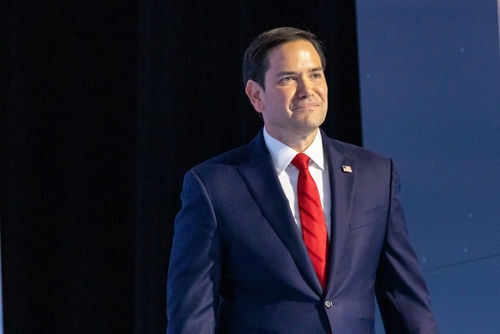
Marco Rubio and Stephen Miller are pushing a sweeping federal crackdown that targets left-wing political violence, financing, and travel in one move.
Quick Take
- The Trump administration says National Security Presidential Memorandum 7 orders agencies to disrupt and prosecute political terrorists.
- The State Department announced new visa limits aimed at foreign nationals tied to far-left terror networks.
- Rubio says four violent leftist groups were already designated as Foreign Terrorist Organizations last November.
- Critics warn the effort could blur the line between terrorism and protected political speech.
What the State Department Announced
Secretary of State Marco Rubio used a July 16 conference to press a global campaign against what he called far-left terrorism. Reuters reported that President Trump ordered law enforcement and intelligence agencies to work together to “disrupt, identify, defund, debank, arrest and prosecute” political terrorists under National Security Presidential Memorandum 7. The Washington Post also reported that the State Department announced a new visa restriction policy aimed at members of far-left terrorist and aligned groups.
Rubio said the administration had already designated four leftist groups as Foreign Terrorist Organizations last November and would add more “soon,” though no new designation was announced at the conference. ABC News reported that the four groups were based in Europe and that the State Department also offered a $10 million reward for information about their financing. The administration’s case is clear: cut off money, travel, and support before violence spreads across borders.
How Rubio and Miller Framed the Threat
Rubio and Miller argued that the threat is not local or random. CNN reported that Rubio invited representatives from 67 countries, while NBC News said the administration described the issue as part of a broader international security effort. Rubio also accused Iran and Cuba of backing extremist networks, and the State Department said it wants foreign partners to help block recruiters, financiers, and enablers from moving people and money across borders.
That message fits a familiar conservative argument about public safety and state power. If a movement uses violence, funding networks, and foreign safe havens, then federal agencies should act fast and hard. Supporters of the crackdown say the government is finally treating political terror like a real threat instead of a talking point. The White House strategy memo also places violent left-wing extremists among the top national threats.
The Civil Liberties Fight
The push is already drawing sharp resistance from civil liberties groups and critics who say the government is stretching the law. The Brennan Center warned that NSPM 7 directs agencies to investigate people tied to political violence networks and funding sources, raising concerns about broad surveillance and preemptive enforcement. Reuters also reported that civil liberties groups fear the designations could reach lawful protest activity, not just criminal conduct.
@courtdefenders 17-Jul-26 email
"Ahead of Trump’s national address tonight, Marco Rubio and Stephen Miller hosted an ominous press event on the “resurgence of political terrorism.”
Both Miller and Rubio delivered chilling remarks, vowing to use NSPM-7, a national security…— Sláinte – JohnLone Ranger (@1stSvelteCelt) July 17, 2026
That dispute matters because the administration is not only targeting violence. It is also targeting “aligned groups,” funding streams, and overseas supporters. Critics say that language can sweep up people who never committed a crime. Supporters reply that law enforcement cannot wait for more attacks before tracing money, recruiters, and organizers. The fight now centers on where public safety ends and political policing begins.
What Happens Next
The next test will be whether the administration turns its rhetoric into more formal action. Rubio said more designations were coming, but the July 16 event did not produce a new one. That gap will matter for readers who want proof that the federal government is acting, not just talking. It will also matter in court, where any effort to punish speech, protest, or donor activity will face First Amendment scrutiny.
For conservatives, the larger issue is simple. If the federal government can track terror money and cross-border organizers, it should. If it starts treating ordinary dissent as extremism, it crosses a dangerous line. The administration is betting it can draw that boundary cleanly while making left-wing violence a top national security priority.
Sources:
military.com, cubacenter.org, reuters.com, youtube.com, npr.org, lemkininstitute.com, en.cibercuba.com, abcnews.com, ibtimes.co.uk