

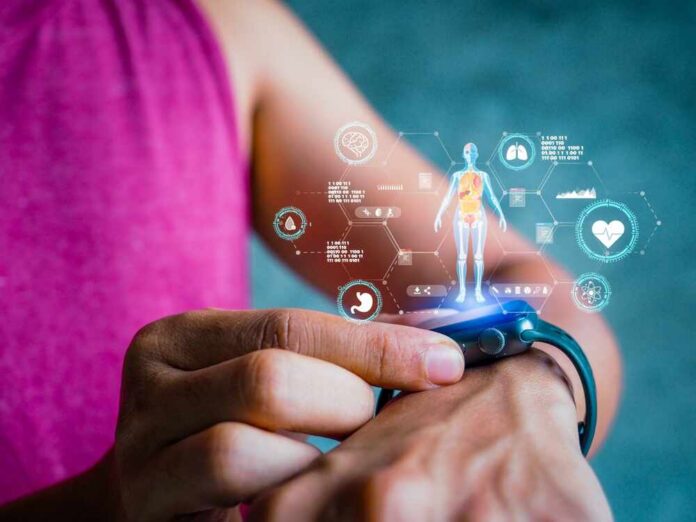
Federal funding for advanced wearable health trackers under HHS risks turning your most intimate biometric data into government surveillance tools, bypassing privacy protections cherished by freedom-loving Americans.
Story Snapshot
- HHS’s ARPA-H Delphi program pours taxpayer dollars into cytokine and hormone biosensors, despite a booming $43 billion private market.
- FDA deregulates low-risk wearables without public input, leaving sensitive health data outside HIPAA safeguards.
- Secretary Robert F. Kennedy Jr. pushes universal adoption via massive ad campaigns, raising fears of mandatory tracking.
- Unprotected data on inflammation, stress, and pregnancy could expose Americans to law enforcement and data brokers.
HHS Funds Wearable Biosensors Amid Privacy Gaps
HHS announced the ARPA-H Delphi program in March 2026 to fund biowearable biosensors monitoring cytokines and hormones continuously. These devices track inflammation markers and stress hormones, syncing data to clouds and smartphones. Secretary Robert F. Kennedy Jr. advocates every American wearing one within four years through the largest HHS ad campaign. This federal push ignores a private sector already driving the market from $43 billion in 2024 to projected $168 billion by 2030. Conservatives wary of government overreach see taxpayer funding attaching political strings to personal health tools, eroding individual liberty.
FDA Expands Deregulation Without Public Comment
FDA Commissioner Marty Makary issued guidance on January 6, 2026, broadening the “general wellness” category to exempt low-risk wearables from regulation. This covers non-medical signals like arrhythmia patterns, avoiding review even without public comment. Makary stated the agency must promote these products while guarding safety. Wearables now flood the market unregulated, generating data streams outside HIPAA protections. Law enforcement and data brokers access this biometric information freely, as federal bills like the Smartwatch Data Act remain stalled. Limited government favors private innovation, not unchecked deregulation inviting abuse.
Stakeholders Drive Universal Adoption Agenda
ARPA-H solicits competitive proposals from private tech firms for Delphi funding, blending government power with market growth. Kennedy’s vision empowers population health monitoring under the banner of “know thyself,” yet critics highlight procurement tracks bypassing consumer consent. Senators Jacky Rosen and Bill Cassidy proposed reforms for data sales consent and HIPAA extension, but gridlock persists. Private sector profits from biometrics like ECG and glucose tracking, projecting $500 billion opportunity by 2036. Power dynamics favor HHS and FDA, amplifying tensions between health empowerment and surveillance fears rooted in conservative values of privacy and self-reliance.
State laws like Illinois’ Biometric Information Privacy Act provide partial shields, underscoring federal failures. Devices reveal sensitive details such as pregnancy via hormones, threatening family privacy long defended by traditional principles.
Surveillance Risks Undermine Conservative Principles
Short-term, unregulated devices proliferate unprotected data accessible to brokers and authorities. Long-term, government-funded tech enables real-time physiology surveillance, from heartbeats to stress levels. Consumers face privacy loss, especially vulnerable groups tracked via cytokine data indicating health vulnerabilities. Economic boosts contrast with eroded trust from breaches, fueling political debates on overreach. Preventive care shifts accelerate, but amplify security challenges in biometrics and wearables robotics. Americans demand protections aligning with constitutional rights against intrusive monitoring, prioritizing personal autonomy over federal experiments.
Sources:
The Feds Are Investing in Wearable Health Trackers. That Could Put Your Private Data at Risk.
US FDA to limit regulation of health and fitness wearables, commissioner says
FDA moves to ease oversight of wearable health and wellness devices
Wearable Technology Market Research 2026-2036
What the FDA’s 2026 Wellness Device Update Means for Wearables