

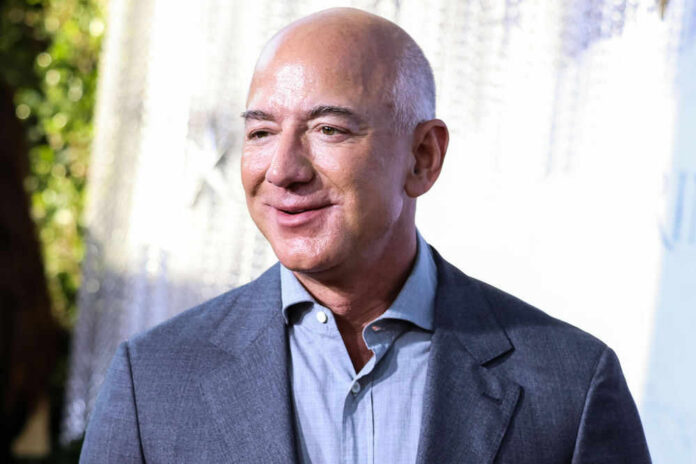
Jeff Bezos is reportedly floating a jaw-dropping $100 billion plan to buy up manufacturing companies and retool them with AI—an industrial shakeup that could redefine jobs, production, and power in America’s economy.
Quick Take
- Reports say Bezos is in early-stage talks to raise a $100 billion investment fund focused on acquiring manufacturers and deploying AI automation.
- The discussions appear preliminary: no announced fund launch, no confirmed partners, and no stated timeline.
- The strategy targets “real economy” companies—factories and production lines—rather than the app-and-ad model that drove much of the last decade’s tech wealth.
- The upside is productivity and competitiveness; the downside risk is worker displacement and a new concentration of industrial control under mega-investors.
What the reporting actually says—and what it doesn’t
Reporting published around March 19, 2026 says Bezos is in “early talks” about raising roughly $100 billion for a new fund aimed at buying manufacturing companies and applying AI to automate and upgrade operations. The key point is the stage: early talks are not commitments. No formal fund name, investor roster, or target list of companies has been publicly confirmed, and the reporting relies on unnamed sources familiar with the discussions.
That uncertainty matters for readers trying to separate real developments from hype. A headline number like $100 billion grabs attention, but the underlying facts available so far are limited: it’s a concept under discussion, not a completed fundraising round. Until filings, partner announcements, or a launch are publicly documented, the story is best understood as a signal—Bezos’ interest in scaling AI into manufacturing—rather than a done deal.
Why manufacturing is the next battleground for AI capital
The reported plan focuses on acquiring manufacturing firms and retrofitting them with AI-driven automation. That differs from the software-first investments that dominated the post-2022 AI boom. Manufacturing is capital-intensive, operationally complex, and often slow to modernize. For investors, that creates opportunity: if AI can reduce downtime, improve throughput, and tighten supply chain decisions, margins can move in ways that are harder to achieve in saturated consumer tech markets.
The broader context is a global industrial environment still dealing with higher costs, supply chain fragility, and competitive pressure from abroad. The research also notes the fund concept fits alongside U.S. concerns about competing with China in advanced manufacturing. In that sense, the idea lands in a political moment where many Americans want reshoring and industrial strength—but also want those gains to translate into stable communities, not just higher returns for financiers.
Big promises meet blue-collar reality: productivity vs. displacement
The sources summarize a straightforward tradeoff. AI-enabled factory upgrades can improve efficiency and competitiveness, potentially strengthening domestic production over time. At the same time, automation has a documented tendency to reduce the need for certain roles, particularly repetitive tasks. The research explicitly flags manufacturing workers as a group that could face layoffs or job displacement if AI retrofits are aggressive and aimed primarily at cutting labor costs.
This is where Americans’ frustration with elite decision-making often resurfaces. The reported strategy—acquire companies, overhaul operations, pursue efficiency—sounds like a private-equity play scaled to a tech titan’s wallet. If such a fund materializes, the practical question for policymakers and citizens won’t be whether AI exists. It will be whether worker transitions, retraining, and local economic stability keep pace—or whether the benefits are privatized while the disruption is socialized.
What to watch next: confirmations, structure, and who controls the “factory stack”
Because details are thin, the most responsible takeaway is a short list of verifiable markers to watch. First, look for confirmation of the fund’s structure: whether it is a traditional private fund with limited partners, what governance looks like, and how acquisitions would be selected. Second, watch whether any manufacturing targets are named, because industry choice (defense-adjacent, automotive, aerospace, consumer goods) will change the national-security and jobs implications.
Third, track the technology ecosystem around the project. The research notes Bezos’ ties to Amazon’s AI environment could provide leverage, but no deal terms have been made public. If a single investor network can control capital, acquisitions, and the AI tooling that runs production, that raises legitimate questions about concentration of power in the real economy. In a country that values competition and self-government, transparency will matter.
https://twitter.com/zerohedge/status/2034790804531671548
For now, the reporting supports a narrow conclusion: Bezos is exploring a massive manufacturing-and-AI investment thesis, but the plan remains unfinalized and uncommitted in public terms. Americans should demand clarity as more facts emerge—especially where job security, industrial resilience, and the long-term health of communities are on the line.
Sources:
Jeff Bezos in Talks to Raise $100 Billion for AI Manufacturing Fund
Jeff Bezos’ AI project “Project Prometheus” (Seattle Business Journal)