
Trump’s decision to pause a U.S. Navy escort mission in the world’s most important oil choke point shows how quickly a military standoff can turn into a high-stakes bargaining chip.
Quick Take
- President Trump paused “Project Freedom,” a U.S. operation intended to guide commercial ships through the Strait of Hormuz, citing progress toward a potential agreement with Iran.
- The pause is described as temporary, while the U.S. naval blockade of Iranian ports remains in place.
- Pakistan is credited as a mediator pushing the negotiations forward, according to Trump’s public statements.
- The Strait of Hormuz remains a global economic pressure point because it carries roughly one-fifth of the world’s oil.
Trump pauses escorts while keeping pressure on Iran
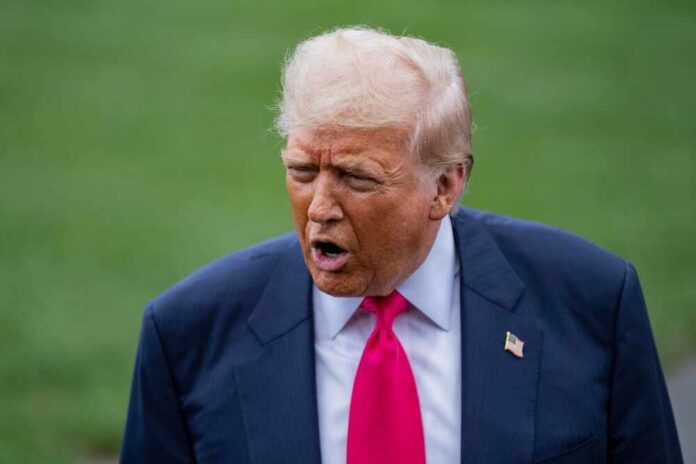
President Donald Trump said May 5 that he is pausing “Project Freedom,” a U.S. mission launched over the weekend to escort commercial vessels through the Strait of Hormuz amid Iranian threats. Trump framed the pause as short-term and tied it to negotiations aimed at a “Complete and Final Agreement” with Iran, with Pakistan playing a mediating role. U.S. officials emphasized that the broader posture has not softened, because the U.S. naval blockade of Iranian ports remains in effect.
Defense Secretary Pete Hegseth and Secretary of State Marco Rubio publicly characterized the operation as defensive in nature, reflecting an effort to protect shipping rather than widen the conflict. That distinction matters because it signals to allies and energy markets that Washington is trying to reduce escalation risks while still preserving leverage. In practical terms, the pause creates space for diplomacy without fully stepping away from the tools—naval power and economic pressure—that brought Tehran to talks.
Why the Strait of Hormuz is a flashpoint that hits American wallets
The Strait of Hormuz is only about 21 miles wide at its narrowest point, yet it carries about 20% of global oil, making it a strategic choke point with direct consequences for inflation and household costs. When threats rise—mines, missiles, drones, fast boats—shipping insurers react, routes change, and energy traders build in risk premiums. That is why even short disruptions can ripple into fuel prices, transportation costs, and broader consumer inflation.
Reporting tied to the launch of Project Freedom described U.S. Navy efforts to reduce immediate dangers by clearing Iranian mines and directing ships toward safer routing. Accounts also described tense encounters involving U.S. destroyers facing Iranian small boats, missiles, and drones, while regional partners such as the UAE engaged incoming threats. Those details underline why administrations of both parties have treated Hormuz as a red line: the shipping lane is vulnerable, and adversaries can exploit that vulnerability quickly and asymmetrically.
Diplomacy through strength, with Pakistan as a broker
Trump’s pause announcement credited Pakistan with requesting time for negotiations, positioning Islamabad as a go-between in a moment when direct U.S.-Iran trust is limited. That approach fits a familiar pattern in geopolitics: regional intermediaries can carry messages, propose face-saving terms, and test whether compromise is real or performative. The research available does not lay out the specific terms being discussed, so the public cannot yet judge whether the talks address core issues such as maritime security, attacks on shipping, or enforcement.
Analysts quoted in coverage warned that an escort mission could jeopardize a fragile ceasefire, while also noting that Iran has strong incentives to resist because control of the strait functions as leverage. That tension is the central tradeoff: protecting “neutral and innocent” shipping can deter coercion, but it can also create close-contact scenarios where a single miscalculation triggers a wider clash. Trump’s pause attempts to manage that risk while keeping the blockade in place as an economic vise.
What happens next: markets, deterrence, and credibility
The immediate impact of a pause is a lower near-term chance of a direct U.S.-Iran naval collision, but it does not remove the underlying pressures that caused the crisis. Oil markets have already shown sensitivity to the possibility of renewed attacks, and the longer shipping uncertainty lasts, the more it can bleed into price expectations. For Americans already frustrated by years of high costs, Hormuz instability is not an abstract foreign-policy debate—it can show up at the pump.
"Trump pauses Project Freedom in Strait of Hormuz to see if Iran deal can be struck"!!
CBS News #SmartNews https://t.co/6j3i7pWRrj— Caroline Ramsey-Hamilton (@RiskAlert) May 5, 2026
The strategic question is whether a temporary pause produces verifiable Iranian steps that reduce threats to commercial traffic, or whether it simply buys time while Tehran retains the ability to menace shipping. Conservatives tend to favor clear deterrence, defined red lines, and limited but decisive uses of force to protect U.S. interests. Critics on the left often argue that military deployments invite escalation. The available reporting confirms the pause and continued blockade, but it does not yet provide enough detail to measure compliance, timelines, or enforcement mechanisms.
Sources:
Trump Iran Project Freedom Strait Hormuz May 5
Markets: Trump Project Freedom Strait of Hormuz renewed attacks ships