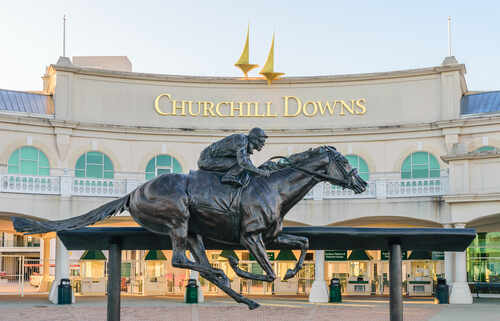
While Washington can barely agree on the basics, one American tradition still manages to unite millions for “the most exciting two minutes in sports.”
Story Snapshot
- The Kentucky Derby’s “Run for the Roses” nickname reflects a long-running tradition formalized when roses became the race’s official flower in 1904.
- The Derby began May 17, 1875, at Churchill Downs in Louisville, drawing about 10,000 spectators to watch 15 three-year-old Thoroughbreds.
- Legendary moments—Secretariat’s 1973 record performance, Affirmed’s 1978 win, and Mine That Bird’s 50-1 upset in 2009—help explain the Derby’s staying power.
- Louisville’s Derby Festival, launched in 1956, turned Derby season into a month-long civic and economic engine.
- A separate “Run 4 Roses” brand now applies to a major NCAA-certified youth basketball tournament slated for July 9–11, 2026, in Louisville.
“Run for the Roses” Still Signals an Older America
Churchill Downs in Louisville, Kentucky, remains the home of the Kentucky Derby, a 1.25-mile race for three-year-old Thoroughbreds that has been run continuously at the same site since its 1875 debut. Organizers trace the Derby’s founding to Colonel Meriwether Lewis Clark Jr., who drew inspiration from European racing. The “Run for the Roses” nickname grew from late-1800s social traditions and later became official through the rose blanket awarded to the winner.
Roses became associated with Derby celebrations as early as an 1883 post-race party tradition and were formalized as the event’s official flower in 1904. That continuity helps explain why the Derby still reads as more than a sporting event for many Americans: it is a living artifact of local custom, private enterprise, and community ritual. In a time when institutions often feel politicized, the Derby’s symbolism tends to resonate because it is rooted in place, history, and repeatable rules.
Legendary Wins and Upsets Keep the Derby a National Obsession
The Derby’s staying power also rests on its ability to produce stories that feel bigger than the calendar. Secretariat’s 1973 run remains a benchmark for dominance, and that year’s Derby is still cited for its historic performance and record-setting reputation. Affirmed’s 1978 victory sits in the public memory as part of a Triple Crown-era narrative that elevated the sport’s prestige. Mine That Bird’s 50-1 upset in 2009, by contrast, reinforced the Derby’s unpredictability and the possibility of shock outcomes.
That mix of inevitability and chaos—dominant champions alongside improbable winners—helps explain why the event is often framed as “the most exciting two minutes in sports.” For viewers, it compresses training, risk, strategy, and split-second execution into a single burst. For Louisville, it concentrates national attention into a seasonal surge. For the racing industry, it serves as the flagship gateway into the Triple Crown storyline that follows through the spring.
The Derby Festival Turned a Race Into a Civic Economy
Louisville’s Derby Festival, established in 1956, broadened Derby season into a series of public events that added scale and predictability for local businesses and civic life. Research describing the festival highlights major celebrations such as parades and community gatherings that surround the race and encourage tourism. That matters in an era of economic anxiety and rising costs: a reliable annual draw can stabilize jobs, hospitality revenue, and city branding in ways that many communities struggle to replicate.
The festival’s growth also shows how cultural institutions can expand without requiring federal direction. Private organizations, local government coordination, and civic participation turned a signature event into a broader economic and social calendar. For Americans who feel battered by federal overreach or bureaucratic failure, that’s a reminder that many of the country’s most durable successes come from local tradition and voluntary participation, not from top-down mandates. The research provided does not quantify 2026 attendance or revenue, limiting precise projections.
“Run 4 Roses” Basketball Expands the Brand in 2026
Not every “Run for the Roses” reference is about horse racing anymore. A separate “Run 4 Roses” youth basketball tournament has announced a 2026 edition scheduled for July 9–11 at the Kentucky Exposition Center. Event materials describe team fees and an early-bird rate, and they emphasize that the tournament is NCAA-certified. Organizers also point to prior years’ growth, including large team counts, multiple courts, and extensive college-coach attendance.
The overlap in naming can confuse casual audiences, but it also underscores a broader trend: major American sports traditions increasingly operate as platforms that other events borrow from to signal heritage and scale. That can be good for tourism and local commerce, but it also creates pressure to commercialize symbols that once felt purely communal. Based on the provided research, no specific 2026 Kentucky Derby breaking developments were included, so this analysis focuses on the event’s documented history and adjacent 2026 scheduling for the basketball tournament.
Sources:
https://www.thegr8experience.com/articles/run-for-the-roses
https://run4theroses.com/roses-classic/
https://filsonhistorical.omeka.net/exhibits/show/kentucky-derby