

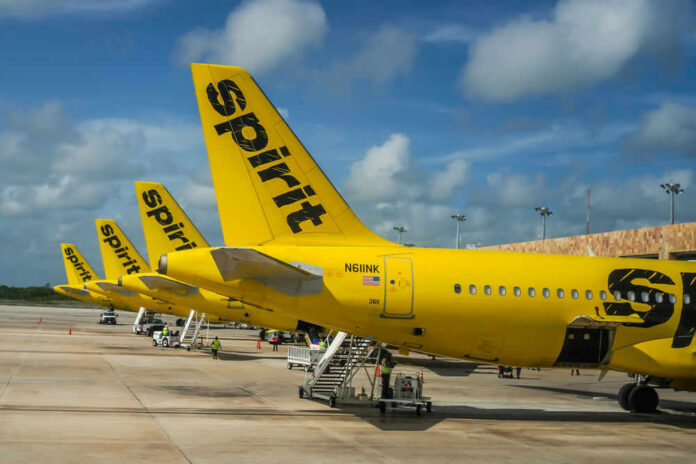
Spirit Airlines has ceased operations, stranding thousands of passengers and laying off 17,000 employees as jet fuel prices double in the wake of the US-Israel war on Iran, triggering a crisis that threatens to reshape American aviation and drain taxpayer wallets through federal bailouts.
Story Snapshot
- Spirit Airlines shut down operations May 2nd after jet fuel prices surged 100% since February, devastating budget carriers already operating on razor-thin margins
- Association of Value Airlines requested $2.5 billion federal bailout on April 27th, but the White House has remained silent as of May 4th
- Major airlines including United, Delta, and Air Canada are slashing flight capacity by 3% in May, reversing projected growth of 4-6%
- United CEO warns the airline faces an additional $11 billion in annual fuel costs—exceeding their best year’s profit—while passengers face fare hikes of 20-40%
War-Driven Fuel Crisis Cripples Budget Airlines
The collapse of Spirit Airlines on May 2nd marks the first major casualty of a fuel crisis triggered by the US-Israel military campaign against Iran that began in late February 2026. Jet fuel prices have doubled from approximately $90-100 per barrel before the conflict to $200 per barrel by early May, creating unsustainable cost pressures for low-margin carriers. Spirit had been struggling through a two-year bankruptcy proceeding before the war, but the fuel spike delivered the final blow. The shutdown stranded passengers across the country and eliminated jobs for 17,000 employees in a single day, underscoring how geopolitical conflicts translate directly into American job losses and economic pain.
Taxpayer-Funded Bailout Request Goes Unanswered
On April 27th, the Association of Value Airlines—representing Spirit, Frontier, Allegiant, Sun Country, and Avelo—formally requested $2.5 billion in federal assistance in exchange for equity stakes. The trade group cited jet fuel increases of 100% since February, noting that fuel represents approximately 40% of operating costs for budget carriers. As of May 4th, the Trump administration has not responded to the bailout request, leaving the fate of remaining budget airlines uncertain. This silence raises legitimate questions about whether Washington will once again force taxpayers to rescue an industry suffering from external shocks beyond its control, or whether market forces will be allowed to reshape the aviation sector through consolidation and failure.
Major Carriers Cut Capacity as Fares Skyrocket
Analytics firm Cirium reports that 19 of the 20 largest airlines globally have reduced May flight capacity by approximately 3%, reversing earlier forecasts of 4-6% growth. United Airlines CEO Scott Kirby warned in March that the fuel price surge would cost his carrier an additional $11 billion annually—more than the airline’s best-ever annual profit. Asian carriers face even steeper cuts, with AirAsia reducing capacity by 10% while raising fares 30-40%, and Vietnam Airlines slashing flights 10-20%. Air Canada suspended multiple routes in late May. United and other major carriers are imposing fuel surcharges and eliminating unprofitable routes, particularly overnight flights and service to smaller markets that budget airlines traditionally served.
Structural Shift Threatens Affordable Travel Model
Aviation analyst Meelad Aslam describes the current crisis as a shift from “incremental” pressure to a “structural” threat that could permanently end the low-fare business model that budget carriers pioneered. Every one-cent increase in jet fuel costs airlines millions annually; the $2-per-gallon jump since March represents an existential challenge for carriers without fuel hedging strategies or scale advantages. Delta Air Lines, which operates its own refinery, maintains better cost protection than competitors. United CEO Kirby has publicly advocated for industry consolidation and mergers as the path forward, while acknowledging that travelers will need to accept permanently higher fares. This represents a fundamental reversal of the democratization of air travel that budget carriers achieved over the past two decades.
ENERGY SHOCK IS HERE: AIRLINES COLLAPSING AND GAS PRICES SOARING, 2-4 WEEKS UNTIL GLOBAL DEPRESSION https://t.co/7B8d0CHlhr
— Redacted (@RedactedNews) May 5, 2026
The aviation crisis exposes how foreign conflicts—in this case, a war driven by decisions made in Washington and Tel Aviv—impose direct costs on ordinary Americans through job losses, reduced travel options, and higher prices. While the Trump administration weighs whether to provide taxpayer-funded relief to struggling airlines, passengers face a future of fewer flights at higher costs. The geopolitical gambles of the political class have once again produced consequences that fall hardest on working Americans who simply want affordable transportation. Whether this energy shock will trigger broader economic collapse as some predict remains uncertain, but the immediate damage to the aviation sector and the thousands of families affected is undeniable and points to failures in leadership that prioritize foreign interventions over domestic economic stability.
Sources:
Spirit Airlines Might Collapse Due to Rising Fuel Costs and Regional Turmoil
Spirit Airlines Collapse: Soaring Fuel Prices Threaten Budget Airlines, Bailout Help
Airlines Cancel Flights Amid Rising Jet Fuel Prices and Shortage