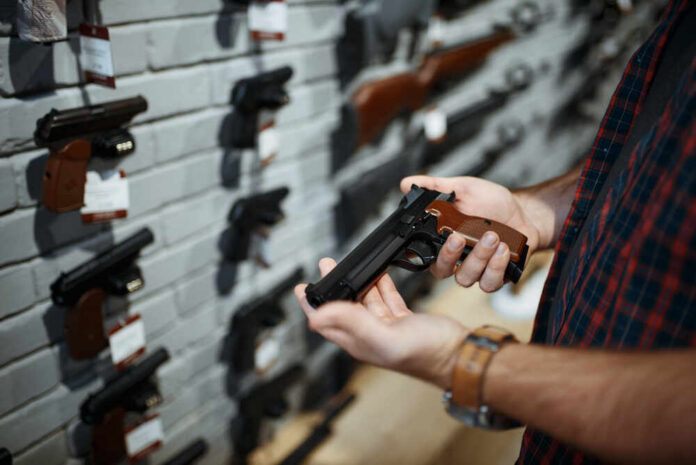
Virginia Democrats are rushing a sweeping gun-control package toward Gov. Abigail Spanberger—testing whether “moderate” campaign branding was ever meant to survive contact with one-party power.
Story Snapshot
- Virginia Democrats, empowered by a 2025 trifecta, advanced multiple firearm restrictions early in the 2026 session.
- Gov. Abigail Spanberger, elected as a self-described moderate, has expressed support for signing major gun-control legislation while her office says she will “review” bills that reach her desk.
- Key proposals highlighted in reporting include an “assault weapons” ban approach and a five-day waiting period for firearm sales and transfers.
- Supporters argue the measures are aimed at public safety; critics warn they burden lawful ownership and weaken timely self-defense.
Virginia’s Trifecta Opens the Door to Fast-Track Gun Restrictions
Virginia’s 2025 off-year elections delivered Democrats unified control of the governorship and both legislative chambers, setting the stage for rapid action on long-standing gun-control priorities. Reporting described the result as a trifecta that removed many procedural obstacles and accelerated bill movement once the 2026 session began. In practice, that alignment means firearm policy can move from committee to final passage quickly, leaving gun owners watching timelines as closely as bill text.
State Sen. Saddam Salim introduced an assault-weapons ban at the start of the expanded Democratic majority’s tenure, and multiple gun-related bills advanced in the weeks that followed. Fox News reported that Virginia Democrats sent a “sweeping gun-control package” to Spanberger’s desk, while noting the push coincided with very different policy debates in nearby West Virginia. The contrast underscores a familiar reality: state lines increasingly determine how broadly Americans can exercise Second Amendment rights.
Spanberger’s “Moderate” Image Meets a Hard-Left Legislative Wish List
Gov. Spanberger’s political profile matters because she campaigned as a moderate and has a national-security résumé that includes federal service. Critics highlighted the tension between that branding and her stated willingness to sign aggressive firearms restrictions. Fox News also reported her office emphasized that she is a mother of three daughters in Virginia public schools and a former federal law enforcement officer who carried a gun daily, framing her posture as child-safety driven rather than ideological.
Even so, Spanberger’s public posture has contained a key ambiguity. Her office said she “looks forward to reviewing all legislation that comes to her desk,” but did not explicitly confirm whether she will sign Salim’s bill. That nuance matters for voters trying to separate a firm commitment from a standard statement issued while legislation is still being processed. With Democrats holding the levers of power, however, the practical question becomes whether review will translate into restraint.
What’s in the Package: Assault-Weapons Policy and a Waiting-Period Proposal
Two proposals repeatedly cited in coverage illustrate why the fight has become so intense. Fox News described HB217 as an assault-weapons ban that would “gradually” remove covered firearms from circulation without retroactively criminalizing current possession. Another bill, HB700, would impose a five-day mandatory waiting period for all firearm sales and transfers. Together, these approaches target both what Virginians can buy and how quickly they can lawfully obtain it.
Supporters of the gun-control push argue such tools are evidence-based and necessary to reduce gun violence, with national advocacy groups backing bans and related measures like extreme risk protection orders. Critics counter that waiting periods can collide with real-world threats, especially when a citizen has a credible need for immediate protection. The research provided also notes that some analysis pieces question whether banning certain rifles aligns with the weapons most commonly used in shootings.
Why Conservatives See a Constitutional Stress Test in Richmond
The Second Amendment debate in Virginia is not just about policy preferences; it is about how far government should go in burdening a constitutional right for people who have done nothing wrong. From a limited-government perspective, a default presumption against lawful ownership flips the American model on its head. If the state can slow-walk a purchase through mandatory delays or narrow permissible firearms categories, citizens effectively need government permission to defend themselves.
Virginia’s debate also illustrates a larger political pattern: “moderate” labels can become less meaningful once a single party secures total control and advocacy groups demand results. The available reporting does not resolve precisely how far each bill goes in technical scope, and some commentary sources rely on opinion rather than primary legislative text. What is clear is the direction of travel—toward tighter restrictions—and that voters who prioritize gun rights will judge outcomes, not slogans.
Sources:
https://www.independent.org/article/2026/02/24/virginia-second-amendment/
https://mcbath.house.gov/2026/2/ranking-member-mcbath-announces-gun-safety-legislation