
Half a million people flooding London streets to chant “No to Trump” is a reminder that America’s cultural fights don’t stop at our borders—and they’re increasingly bundled with pro-mass-migration and pro-Palestine activism.
Story Snapshot
- Organisers of the Together Alliance march claimed around 500,000 people rallied in central London on March 28, 2026, calling it the biggest UK anti-far-right demonstration.
- The turnout figure came from organisers, not an independent or police crowd estimate, and was used to project momentum against right-leaning populist movements.
- The event mixed anti-“far right” messaging with explicit anti-Trump signs and “Refugees welcome” slogans, reflecting a broader global progressive coalition.
- Metropolitan Police reported 25 arrests, including 18 linked to a Palestine Action support protest, under heavy policing and public-order conditions that ended at 5 p.m.
What Happened in London—and What Was Actually Verified
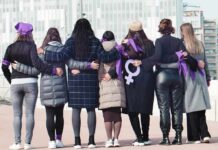
Organisers said roughly 500,000 people joined a Together Alliance demonstration in central London on Saturday, March 28, 2026, marching to Whitehall for speeches and assembling around Trafalgar Square for a related music event. The “half a million” figure was presented as a milestone and billed as the biggest anti-far-right rally of its kind, but the reporting available attributes that number to organisers rather than an independent count.
Metropolitan Police maintained a major presence and enforced public-order conditions that ended the joint rally at 5 p.m. Police reported 25 arrests in total, with an 18-arrest portion tied to a separate Palestine Action support protest; two arrests were linked to people climbing the National Gallery, and five others were recorded for unspecified additional reasons. Reporting did not describe widespread disorder, suggesting authorities contained disruptions despite the size claim.
Messaging: “Anti-Far-Right” Branding, Anti-Trump Slogans, and Migration Politics
Placards and slogans reported from the march included “No to racism, no to Trump” and “Refugees welcome,” underscoring that the rally’s “anti-far-right” label also served as a vehicle for broader progressive messaging. For American conservatives watching from 2026—especially amid frustration over years of border chaos—this blend matters. When “anti-racism” branding is paired with open-border slogans, it becomes harder to separate legitimate anti-bigotry sentiment from advocacy for mass migration policies.
The march also featured political and celebrity validation, including a supportive video message from London Mayor Sadiq Khan and public backing reported from well-known entertainers. That type of endorsement helps organisers frame their coalition as the mainstream and their opponents as unacceptable. It is also a familiar playbook for U.S. audiences who have watched major institutions treat “populist” or “national” concerns—like border security or cultural cohesion—as disqualifying, rather than debating them on the merits.
Coalition Convergence: Pro-Palestine Alignment and Internal Friction
One of the most consequential details was the convergence with a separate Palestine Coalition march, which joined the main route. That alignment illustrates how today’s street politics often operate as bundled causes—anti-“far right,” pro-migration, and pro-Palestine activism moving together as a single bloc. With America now at war with Iran and MAGA voters divided about deeper involvement and U.S. support for Israel, these optics are not remote: they shape public pressure campaigns and influence how “acceptable” viewpoints get defined.
Not every group appears to have felt welcome within that coalition. One report described Jewish groups as being ignored by organisers, a point that signals potential fractures inside a movement that otherwise sells itself as broadly inclusive. The reporting provided does not show organisers’ detailed response to that criticism, so the claim cannot be fully evaluated here. Still, it highlights a recurring reality: big “umbrella” marches can paper over serious disagreements until controversy forces them into the open.
Why U.S. Conservatives Should Pay Attention in 2026
American readers do not need to copy Britain’s politics to learn from them. When organisers claim huge numbers and label opponents “far right,” the goal is often to delegitimize dissent—especially on hot-button topics like migration, national identity, and security. That matters at a time when U.S. trust is strained by high energy costs and a new Middle East war that many voters believed would be avoided. The London march shows how quickly global narratives can be mobilized against nationalist arguments.
Half a million people march in London for biggest anti-far right demonstration https://t.co/c3OEWNCs8Y
— The OPEN Daily (@theopendaily) March 28, 2026
The key factual takeaway is straightforward: a large, heavily policed London protest occurred, organisers claimed an exceptionally high turnout, and police reported 25 arrests with a notable pro-Palestine protest component. The bigger political lesson is about narrative power. Numbers—especially when not independently verified—can be used to “prove” a movement is finished or fringe. Conservatives should insist on clear definitions, verifiable counts, and consistent standards before accepting claims that dissent is “extremism” simply because it resists the prevailing cultural agenda.
Sources:
Half a million gather in London for biggest anti-far right demo, say organisers
Half a million join London rally against the far right, claim organisers
Together Alliance: Mark Rylance, Paloma Faith back march