

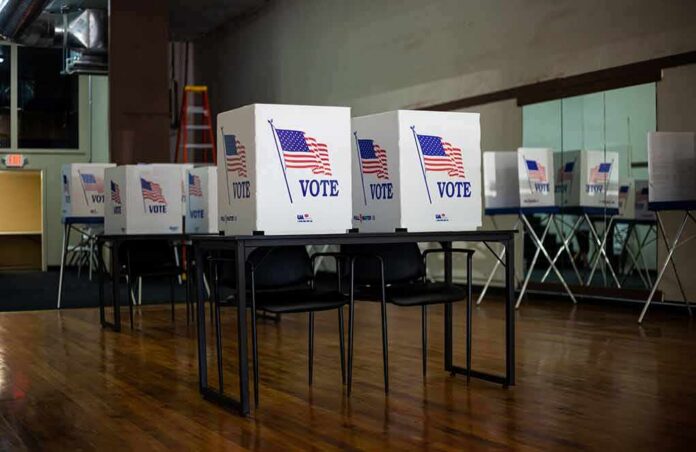
A sudden jump of nearly 60,000 inactive Mississippi voter registrations before the midterms is forcing hard questions about who controls our elections and how outside data flagged lawful voters.
Story Highlights
- Inactive registrations reportedly rose by almost 60,000, topping 230,000 statewide before the midterms.
- Democratic lawmakers demanded answers about the state’s use of Experian credit data in voter-roll work.
- Reports identified voters who found changed statuses or missing poll-book entries on Election Day.
- The Secretary of State said counties review flags and that Experian alone did not decide status.
Spike In Inactive Voters Triggers Demands For Oversight
Associated Press reporting said Mississippi’s list of inactive registrants grew by nearly 60,000 since the 2024 election, reaching more than 230,000 before the midterms. Democratic lawmakers asked for an investigation into how the increase happened and why some voters faced hurdles at the polls. Their request centers on process, not outcome, and seeks records and guidance provided to counties. The lawmakers also want a count of how many affidavit or provisional ballots were rejected after voters were marked inactive.
Mississippi Today and other outlets reported voters who showed up and found their status changed or their names missing from poll books, with county officials later confirming errors in some cases. One named voter said an Experian record wrongly linked her to a Texas address, and officials rejected her affidavit ballot after that appeared in her file. These stories do not prove statewide intent, but they show real people ran into fixable data problems tied to address conflicts, timing, and record review.
How Experian’s Address Data Entered The Election System
Reports said the shift followed the Secretary of State’s move to provide Experian address data to all 82 counties as part of voter-roll maintenance. A Mississippi Today review attributed at least 50,000 inactivations to address conflicts after the rollout, pointing to Experian as a key source used by local officials. Experian has said its supplemental address information is not designed to validate voter files by itself, and that election officials must make the final calls with proper checks.
The Secretary of State’s office said it distributed data in 2025 that flagged about 113,000 records for local review and that no one was made inactive or removed without a county official’s decision. The office also said the more than 230,000 inactives reflected over five years of work and that Experian did not alone set anyone’s status. That account stresses a layered process: the state supplies leads; counties verify; voters can still cast affidavit ballots that count if qualified under state law.
What Happened To Voters Marked Inactive At The Polls
State law allows an affidavit ballot when records do not match, but outcomes were uneven across counties, according to press reports. Some voters had ballots counted after review; others did not. One named organizer said a credit report error triggered a Texas address flag and a rejected affidavit ballot, which was later disputed and removed from her credit file. These cases highlight a gap between data flags and a voter’s true residence, and they raise questions about uniform county guidance and timelines.
Democratic lawmakers asked for details on how many people were wrongly marked inactive, what instructions counties received on using Experian data, and why some affidavit ballots from inactive voters were accepted while others were rejected. Their request seeks contracts, training materials, and county-level decisions. Those records would let lawmakers separate lawful maintenance, like moves or deaths, from errors caused by weak matches or outdated addresses that slipped through local review.
Conservative Lens: Clean Rolls, Clear Rules, And Local Control
Election integrity requires both clean rolls and fair access. Mississippi’s approach used a private credit bureau as one input to help counties find bad addresses, which can reduce duplicate or outdated entries. But credit files are not built for elections, and even a small error rate can hit many people when used at scale. Experian itself says officials, not the vendor, must validate and decide. That means clear standards, strong matching rules, and fast fixes when voters flag mistakes.
🚨 Oregon, this is the most explosive find for this election!
What are the chances of THOUSANDS of voter registration records landing on the EXACT SAME DAY in 17 of Oregon's 36 counties?
It happened on Sep 25, 2026, weeks before the registration deadline: 12,798 records on the… pic.twitter.com/s4X7j1WgS7
— Cecile Shaw (@CecileShaw) November 20, 2026
For conservatives, the path forward is common sense: demand full transparency on matching rules, notice steps, and county training; require a public audit that separates rightful inactivations from bad matches; and publish uniform cure timelines so a lawful voter is not bounced by a database glitch. The Secretary of State says the office followed the law and welcomes review. A public, line-by-line accounting would confirm that claim and keep decisions where they belong: with accountable local officials.
Sources:
spectrumlocalnews.com, tallahatchienews.ms, sunherald.com, wlox.com, sos.ms.gov, democracydocket.com