

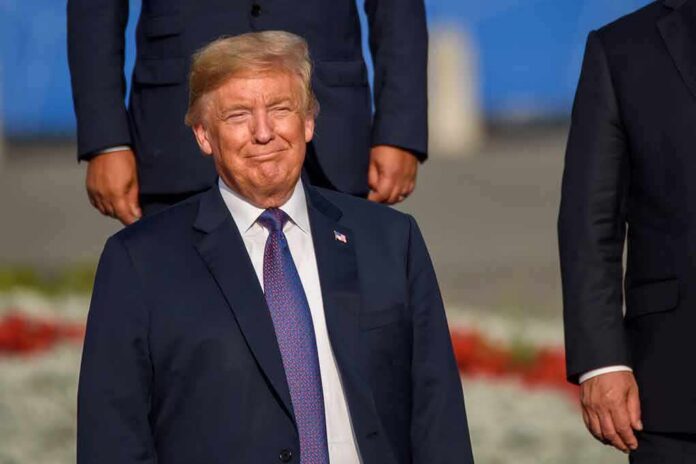
China confirmed President Trump will meet Xi Jinping and Vladimir Putin in Shenzhen on November 19, marking the first-ever trilateral summit of these leaders to discuss world peace and strategic stability.
Story Highlights
- China’s Foreign Ministry announced a three-way leaders’ meeting in Shenzhen on November 19.
- Beijing said talks will cover world peace and strategic stability, using formal diplomatic language.
- The White House and the Kremlin also confirmed the unprecedented gathering.
- Reports link the summit to Asia-Pacific Economic Cooperation events in Shenzhen this week.
Beijing Sets Date, Place, and Purpose for a First-of-Its-Kind Summit
China’s Foreign Ministry said President Xi Jinping will host President Trump and Russian President Vladimir Putin in Shenzhen on November 19. The ministry described the session as a China-Russia-United States heads-of-state meeting. The announced aim is discussion of world peace and strategic stability. The statement framed the gathering as a major step in big-power dialogue. The timing aligns with Asia-Pacific Economic Cooperation events in Shenzhen, which created a window for leader-level talks on the sidelines.
Foreign Ministry spokesperson Mao Ning said the leaders will have in-depth exchanges on safeguarding world peace and promoting strategic stability in relations among major powers. The brief did not list draft agreements, action items, or enforcement steps. It set the tone with broad themes common to summit diplomacy. That phrasing fits typical pre-summit practice, where leaders set a high-level frame and leave details to working teams or to follow-on channels after cameras turn off.
Washington and Moscow Confirm Participation, Framing Security Priorities
The White House confirmed President Trump’s participation, and Russia signaled that President Putin would attend, making the session an unprecedented tri-leader meeting. Coverage tied United States priorities to nuclear issues and international security, with reports noting attention on arms control and the Middle East. Those topics reflect immediate risks that affect Americans, allies, and energy prices. They also line up with long-standing conservative goals of peace through strength and verifiable limits on threats.
Shenzhen’s Asia-Pacific Economic Cooperation setting provides a practical venue for side meetings among major powers. Reports describe the trilateral as occurring alongside those events on Thursday, November 19. The leaders have met one-on-one in various formats before, but not together in a three-way format. That makes this session a diplomatic first in their personal histories and a test of whether face-to-face contact can lower risks and set guardrails amid rising global tensions.
What “Strategic Stability” Could Mean for Americans
Strategic stability talks often focus on reducing the chance of war by mistake, limiting arms races, and preserving clear communication during crises. For American families, fewer nuclear risks and steadier energy markets matter at the gas pump and in grocery aisles. When the world’s largest nuclear powers speak directly, they can cool hot spots and set rules of the road. That helps our troops, our allies, and our economy, without asking taxpayers to fund endless, vague multilateral schemes.
🇨🇳 𝐀𝐥𝐥 𝐄𝐲𝐞𝐬 𝐨𝐧 𝐒𝐡𝐞𝐧𝐳𝐡𝐞𝐧 𝐚𝐬 𝐓𝐫𝐮𝐦𝐩, 𝐗𝐢 𝐚𝐧𝐝 𝐏𝐮𝐭𝐢𝐧 𝐆𝐚𝐭𝐡𝐞𝐫
APEC opens in China, with the first-ever three-way summit expected on the Iran war and nuclear arms.— Warwatch (@warwatchh) November 18, 2026
China’s framing emphasized peace and stability, while United States briefings and reporting highlighted nuclear weapons and other security issues. That split is normal in summit season. Each capital stresses its own goals. What counts is whether leaders open working channels, lock in steps that lower risk, and keep America’s interests first. Reports also noted President Trump’s broader Asia itinerary, which includes economic stops and the option for additional leader contacts if useful to United States goals.
What to Watch as Talks Begin
Watch for signs of practical follow-up. Clues include a schedule for expert meetings, a hotline upgrade, or a path back to structured arms talks. Even modest steps can pay off by reducing miscalculation. Also watch whether leaders mention the Middle East, North Asia, or sanctions. Those issues hit shipping, insurance, and energy costs. A measured, America-first approach seeks concrete gains that protect our people, strengthen our deterrent, and reject globalist blank checks that never deliver.
Bottom Line for Conservative Readers
A confirmed trilateral meeting among President Trump, Xi, and Putin is rare and serious. The venue and timing are set. The purpose, as stated, is peace and stability. The White House and Kremlin confirmed it, not just Beijing. The language is broad, but that is normal before leaders sit down. Results will be judged by actions that cut risk, defend our interests, and avoid costly foreign entanglements. Expect clarity on nuclear risk, crisis communication, and next steps after the cameras leave.
Sources:
efe.com, cnbc.com, nbcnews.com, economictimes.com, france24.com, japantimes.co.jp, biz.heraldcorp.com, abcnews.com