

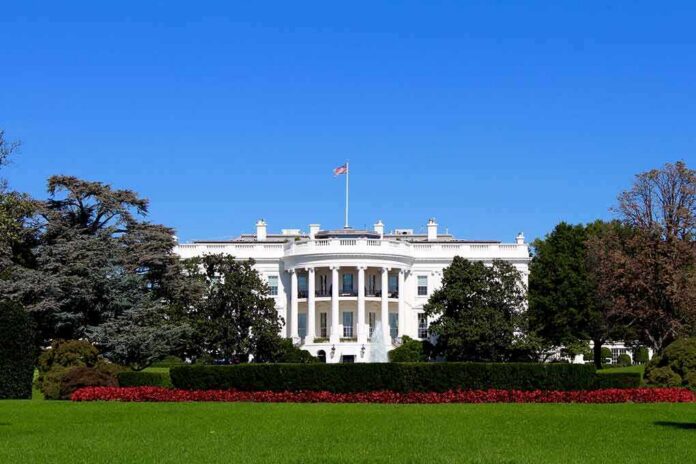
The Supreme Court let President Trump keep building the White House ballroom while the lawsuit continues, delivering a clear procedural win for the administration.
Story Highlights
- The Supreme Court allowed construction to continue during litigation in a 5-4 order.
- The justices did not decide if the ballroom is legal, focusing on standing instead.
- Chief Justice John Roberts dissented and called the project “likely unlawful”.
- Local planners advanced the project, and a House bill would authorize it.
What The Supreme Court Actually Decided
The Supreme Court issued an unsigned order on August 31, 2026, that let work continue on the East Wing ballroom while the case proceeds. The majority said the National Trust for Historic Preservation likely lacked legal standing to sue. The Court did not rule on whether the project is lawful. The order paused lower-court restrictions and reset the posture back to construction-for-now, with the merits still open for later decision.
Chief Justice John Roberts filed a dissent that said the construction is “likely unlawful.” He argued that Congress controls federal property in the District of Columbia and has barred new buildings on federal parkland without express approval. His view highlights a live separation-of-powers dispute, but it did not carry the day. The Court’s narrow holding turned on who can sue, not on executive power over the White House grounds.
Why Standing, Not Merits, Drove The Outcome
The case turned on injury, not design. The Trust and a member said the work blocked views and caused upset. The majority signaled that such general or aesthetic harms do not meet the legal standard for standing. That means the Court saw no proper plaintiff yet, so the project can proceed during the fight. A different plaintiff with a concrete, personal harm could still bring a new challenge later, so the legal risk is not gone.
For conservatives, this matters. Standing rules stop activist lawsuits that try to control policy from the courthouse. The Court’s move checks lawyer-driven obstruction and keeps elected branches in charge. The administration can continue building while it makes its case on authority and procedure. Opponents will likely search for a new plaintiff or push Congress to speak clearly, but they did not win that leverage today.
The Road Through Lower Courts And Congress
Lower courts earlier blocked the project, saying only Congress can allow a major structure on federal property. Those judges cited the Constitution’s Property Clause and a long-standing statute that bars new buildings on federal parkland without express approval. That record set a tough backdrop for the administration, even if it is now on stronger ground procedurally because the stop-work order is lifted during appeal.
While courts wrestled, Washington planning officials advanced the project. Reporting shows local planners gave a green light in early April. On Capitol Hill, a House measure would authorize the ballroom, stating that the President may design and build the facility on White House grounds. Lawmakers have not enacted it yet, but its filing shows Congress is engaged and could remove any doubt by passing clear authority.
What Comes Next For The Administration And Taxpayers
The administration now has time to build a full legal and factual record. Officials can document security, safety, and continuity needs that a modern, high-capacity space would meet. They can show how existing renovation powers and appropriations cover the work or ask Congress for tailored authority. Each step helps answer critics who say the process cut corners. The stronger the record, the harder it will be to stop or unwind the project later.
Expect opponents to press two paths: find a plaintiff with a direct, concrete injury, and push Congress to block or condition the build. They will also cite polling and heritage arguments to sway public opinion. For readers who care about limited government, the key is simple. The Supreme Court did not bless the ballroom, but it did block an aggressive lawsuit from halting the elected executive’s work midstream. The fight moves to Congress and to facts, where it belongs.
Sources:
reason.com, cnn.com, politico.com, thehill.com, reuters.com, bbc.com, pbs.org