

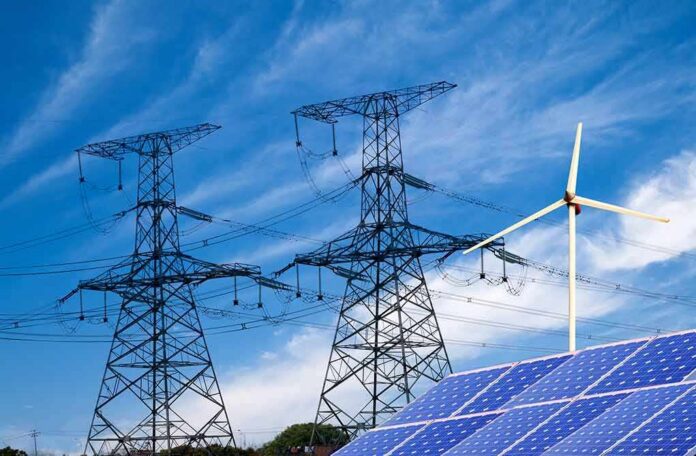
Maryland’s own grid planner warned that retiring key plants could trigger voltage collapse across Baltimore’s system if replacements lag — and families will pay the price if politicians get the pace wrong.
Story Highlights
- PJM warned plant retirements could risk voltage collapse across Baltimore’s grid if fixes stall.
- State officials promise affordability and reliability while advancing green goals through new orders and bills.
- Maryland rate watchdog says utility rate plans fueled an affordability crisis with faster increases.
- Maryland remains a large power importer, so regional costs and rules hit local bills hard.
PJM Flags Concrete Reliability Risks Tied to Plant Retirements
PJM Interconnection, the regional grid operator, told Maryland that retiring certain generators without timely fixes could trigger reliability violations and even voltage collapse across the Baltimore Gas and Electric system. The warning links plant exits to serious grid stress if replacement transmission and generation do not arrive on schedule. PJM has also outlined multi-state transmission projects to prevent overloads, which shift real costs onto ratepayers as they come online. The bottom line is simple: Maryland cannot retire dependable supply faster than it adds firm capacity and wires.
Regional market mechanics also push bills higher when supply is tight. Analysts estimated surging capacity prices across PJM would impose billions in added annual costs on customers beginning June 2025. Marylanders feel these costs even if the stress starts across state lines because the grid is regional and power flows follow physics, not borders. That design leaves Maryland families exposed when policy or market errors shrink firm capacity too fast or delay needed lines that move power into load centers.
State Leaders Promise Relief, But Watchdogs See Rising Pressure
Maryland’s executive branch ordered agencies to stabilize utility bills and improve reliability while still pursuing state energy goals. The directive explicitly calls for affordability, reliability, and competitiveness in implementing the state plan. Lawmakers also passed the Utility RELIEF Act to deliver near-term bill help and reshape programs to favor lower costs for households. These actions show leaders know price pain is real. Still, promises only matter if the grid holds and overall costs stop rising.
The state’s independent Office of People’s Counsel drew a sharper line. The office told regulators that multi-year rate plans have sped up rate hikes and deepened an affordability crisis for customers. The office said new legislative standards now require those plans to prove “customer benefits,” reflecting concern that the earlier approach harmed households and muddied oversight. That warning backs what many families already see on monthly bills: complexity often hides higher charges and less accountability.
Maryland’s Import Dependence Magnifies Transition Risks
Public Service Commission reports show Maryland is a net importer of electricity. In 2024, in-state generation could not meet peak needs without imports, and the state leaned on power from elsewhere to keep lights on. That reliance means transmission rules and regional charges land on local bills regardless of where new lines or plants get built. The Office of People’s Counsel has reported billions in assigned transmission costs over time under regional cost allocation methods. If the region underbuilds, Marylanders still pay more and shoulder reliability risks.
Critics add that fast retirements without ready replacements can corner grid operators into expensive backstops that ratepayers fund. PJM’s filings show large capital assignments translate into future revenue requirements families will absorb. Households do not budget for acronyms or auctions; they budget for dollars. When project slips or market shortfalls hit, customers cover the gap. That reality argues for a measured, reliability-first timetable that adds firm capacity and transmission before subtracting dependable supply.
What a Real Reliability-First Transition Looks Like
Leaders can keep their climate goals and still protect families by locking in three basics. First, hold reliability must-haves as non-negotiable. PJM’s warning about voltage collapse is not theory, it is a systems check. Retirements should not proceed until replacement capacity and key lines are built and tested. Second, reduce bill shocks by curbing plans that front-load increases and by auditing every charge that flows from regional markets onto local bills. Third, sequence projects so consumers are not paying for both old plants on life support and new gear that is late.
Maryland produces just 57% of the electricity it consumes. A new @ppi report urges the state to prioritize grid reliability & avoid prematurely retiring natural gas generation—helping advance climate goals while keeping energy reliable & affordable.
Read: https://t.co/9W9ECzTipe
— Natural Allies for a Clean Energy Future (@Natural_Allies) August 27, 2026
President Trump’s team has made domestic energy security a priority. Maryland’s path will test whether state leaders match that focus with actions that put families first. The proof will be seen in summer peaks that pass without outages, winter storms that do not crash the grid, and bills that stop rising faster than paychecks. Until then, prudence beats press releases. Build the wires. Add the firm megawatts. Then, and only then, retire what the system no longer needs.
Sources:
pjm.com, opc.maryland.gov, thedailyrecord.com, cbsnews.com, baltimoresun.com, eenews.net, mgaleg.maryland.gov