
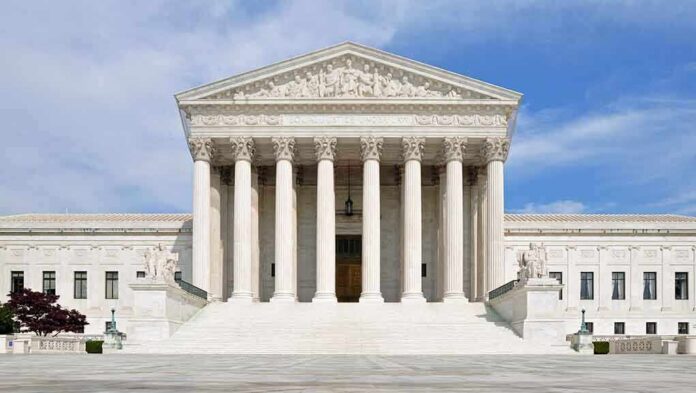
The Supreme Court’s 6-3 order let the Trump administration restart federal citizenship checks that states say they need to protect voter rolls before November.
Story Highlights
- The Supreme Court granted a stay that restores use of the revamped federal citizenship-check system.
- The decision lets the Department of Homeland Security help states verify voter rolls ahead of the election.
- Critics warn about privacy risks and occasional false flags on naturalized citizens; the majority allowed the program while litigation continues.
- President Trump’s team argues the program is lawful and vital for election integrity across dozens of states.
High Court Restores Federal Citizenship Checks Ahead of Election
The Supreme Court granted emergency relief on September 25, allowing the Department of Homeland Security to resume using its modified citizenship verification system to help states review voter rolls. The justices granted the request from the administration, which said states needed the tool to identify noncitizens on registration lists before ballots go out. The stay lifts a lower court block and permits use while the case proceeds. The ruling arrived weeks before Election Day, sharpening focus on election integrity.
The order is a win for President Trump’s election integrity push and for states that asked for help confirming citizenship status on their rolls. Reporting indicates more than two dozen states plan to use federal data to support list maintenance, with federal officials coordinating the process. The move follows months of legal fights after a district court said the upgraded system likely violated privacy rules. The Supreme Court’s stay keeps the system active while those claims are fully reviewed.
What the Program Does and Why States Sought It
The Department of Homeland Security’s revamped process draws on federal records to confirm whether a registered person is a United States citizen, then shares matches with state election officials who run their own reviews under state law. The administration says this helps catch rare yet real noncitizen registrations, supports clean voter rolls, and builds trust in outcomes. A Florida court earlier directed the agency to keep access open for several states, underscoring demand from state officials for this data.
Supporters say the program gives states a concrete way to verify citizenship, which most Americans assume is already standard practice. They argue that accurate lists prevent illegal votes, reduce returned mail, and speed election day processing. Federal officials say the system uses identifiers to improve match quality and sends information to states for their own due process steps. The Supreme Court’s stay means those checks can continue as training, notices, and audits roll on before November.
Critics Cite Privacy and Error Risks; Court Weighs Harms
Opponents, including advocacy groups, argue the program was not built for voter eligibility, could blend Social Security data with immigration records, and may sometimes flag naturalized citizens as noncitizens. Justice Ketanji Brown Jackson’s dissent warned that burdening even a few lawful voters outweighs the government’s claimed harm and questioned the government’s legal authority, but the majority allowed the program to continue for now. The case proceeds on the merits, and final rulings will settle those legal questions.
Past reports have described occasional false matches in state-level checks, which local officials later cleared up, fueling calls for strong safeguards and notice procedures. The administration says it has strengthened matching rules and directed states to give voters clear notice and time to respond before any change in status. The Supreme Court’s order does not end the debate, but it confirms that election officials can keep using the tool while courts review the remaining claims.
Why This Matters for Election Integrity and Voter Confidence
Election officials face a tight window to confirm rolls, mail ballots, and run early voting. The restored federal checks give them another source to spot clear mismatches, reduce errors, and focus follow-up on the small fraction of records that raise questions. The Trump administration argues this step protects every legal ballot by stopping illegal ones, strengthens faith in results, and supports consistent standards across states that choose to use it.
Supreme Court just cleared the way for the Trump admin to use the SAVE citizenship database so states can verify voters ahead of the midterms.
Only American citizens get to vote in American elections. That’s not radical. That’s the baseline.
The ruling is limited — no mass purges… pic.twitter.com/fwETHgUg48— Dreamy (@Dreamy365855) September 26, 2026
Conservatives view the ruling as a constitutional win for lawful voters and for equal treatment under the law. The Court did not dismiss privacy concerns; it balanced them and allowed careful use while courts hear the case. The path forward is simple: verify with solid data, notify voters, fix mistakes fast, and keep every legal vote. That is common sense. That is how we guard our elections, our voice, and our future.
Sources:
youtube.com, reuters.com, supremecourt.gov, democracydocket.com, cbsnews.com, 6abc.com, apnews.com