A Biden-era “International Woman of Courage” honoree is now on a U.S. terror watchlist, and her visa is revoked.
Story Highlights
- The State Department says Taif Sami Mohammed al-Shakarchi’s U.S. visa is revoked after Federal Bureau of Investigation watchlist placement.
- The same Iraqi official was honored in 2022 by the Biden State Department for “courage” and “gender equity” work.
- Reports say she is no longer in the United States and cannot reenter with a revoked visa.
- The case fits a long pattern of secret watchlists and quick visa pulls that the public cannot easily verify.
State Department Confirms Visa Revocation After Watchlist Action
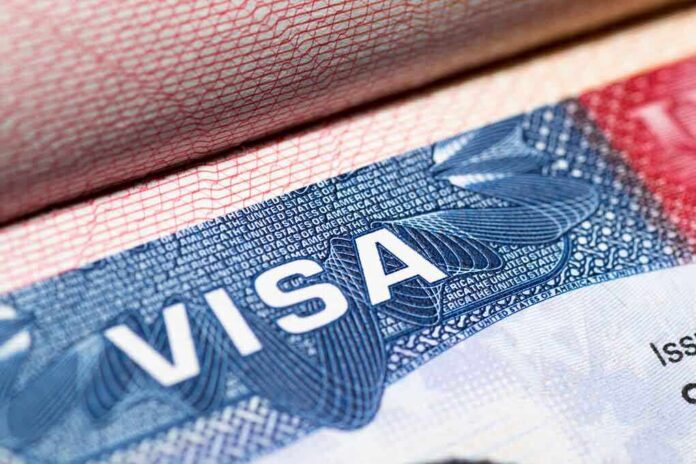
The U.S. Department of State said it revoked the visa of Taif Sami Mohammed al-Shakarchi after her placement on a Federal Bureau of Investigation terrorism watchlist. An official statement named her directly and tied the decision to her watchlist status. The department stressed the link to her past recognition by the prior administration for anti-corruption and gender advocacy. The statement marked a clear break from that 2022 praise and confirmed the immediate visa consequence of the watchlist move.
News outlets in the region reported that the State Department said she is no longer in the United States. Those reports said the watchlist placement triggered the visa action and ended her ability to enter the country. The updates arrived days after rising chatter about her status spread on social media. The department’s statement gave the first on-record U.S. confirmation of both the watchlist link and the revocation outcome in this specific case.
Biden-Era Award Now Collides With Security Concerns
The same Iraqi official received the International Women of Courage honor in 2022, when the Biden State Department promoted her as a reform voice. That choice now sits under a harsh light, as U.S. security agencies flagged her for watchlisting. The contrast is sharp: a public award for “courage” on one hand, and a terrorism screen action on the other. The development raises questions about vetting tied to high-profile awards issued during that period.
Coverage from global and regional outlets echoed the change in status and the revocation announcement. Reports framed the move as a dramatic reversal from the earlier honor. They noted the practical effect is a travel block to the United States. They also repeated the key U.S. assertion: the watchlist placement came first, and the State Department followed with a visa pull. That sequence shows the security lead agencies driving the final outcome.
Denials From The Iraqi Official And Why Public Proof Is Scarce
The Iraqi official denied the accusations and rejected her placement on the watchlist, according to regional media. Her office had earlier called rumors about her “completely false.” Those denials are on the record, but they do not unlock the classified details behind a U.S. watchlist entry. The public cannot see the government’s evidence, and the agencies will not disclose it, which keeps the dispute largely one-sided in available facts.
“Biden-honored Iraqi official lands on US terror watchlist as Trump State Dept revokes visa
Taif Sami Mohammed now appears on the US terrorist watchlist after receiving Biden's Women of Courage Award in 2022”
— kyrie eleison ✝️ (@kyrieel07604045) August 30, 2026
Longstanding oversight explains the secrecy. The Government Accountability Office has described how watchlist and visa systems limit public detail to protect operations. The Terrorist Screening Center and related policies do not confirm or deny who is listed. State Department rules allow swift visa revocation when eligibility changes or security concerns arise. That mix helps stop threats fast, but it also leaves citizens and press with few specifics to judge any single case.
What This Means For Security, Vetting, And Accountability
President Trump’s administration moved to enforce the watchlist finding by cutting off U.S. entry. That action shows a priority on security first and travel second. It also signals a tougher posture toward past awards that may not have aged well. Future vetting for public honors should include deeper security checks and better follow-up reviews. Americans expect leaders to stop threats early and to admit when an older call, made under a different team, missed the mark.
For readers, two truths can coexist. The official denies wrongdoing, and the U.S. government rarely shares watchlist proof. But the State Department’s on-record decision stands and carries real force. The outcome is simple: her visa is revoked, and she cannot enter the United States. That is how the system is built to work. The job now is staying alert, demanding sound vetting, and supporting firm action when risks emerge, even when details remain classified.
Sources:
twitchy.com, aljazeera.com, state.gov, fbi.gov, washingtontimes.com, english.aawsat.com