

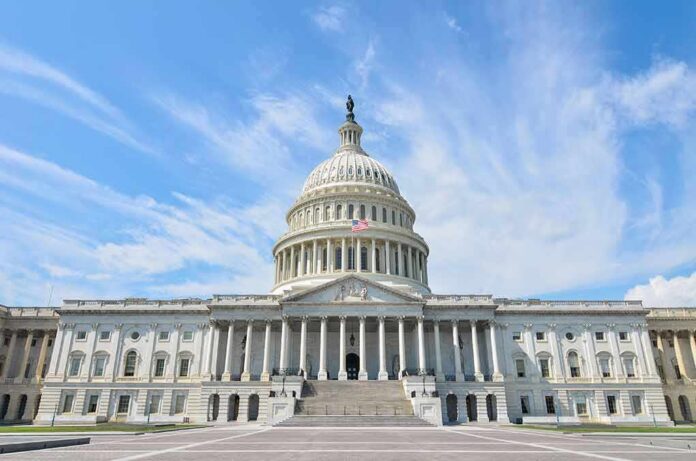
House Democrats are demanding Congress cancel recess to rush broad artificial intelligence rules, while Speaker Mike Johnson says speed could hand China the edge.
Story Highlights
- Democrats urged Speaker Mike Johnson to keep the House in session and pass AI safeguards now.
- Johnson warned against rushed laws that could harm America and help China compete.
- Republicans favor careful steps, resisting new agencies or licensing regimes for developers.
- A bipartisan draft would preempt some state AI laws, a major sticking point for Democrats.
Democrats Press To Cancel Recess And Fast-Track AI Bills
House Democrats sent a letter urging Speaker Mike Johnson to bring members back and remain in session until Congress passes “meaningful, bipartisan AI safeguards.” The appeal, led by Representatives Sam Liccardo, George Whitesides, Lori Trahan, and Ted Lieu, cites what they call catastrophic risks from advanced systems. The call came as the House heads toward a multi-week recess this fall, shrinking floor time for action before elections.
Democrats framed the issue as urgent public safety. They want Congress to act now on guardrails for cutting-edge models and data centers. Their push follows months of briefings, hearings, and draft text that did not reach the floor. The request tries to force attention while voters watch rapid tech change. It also raises pressure on committees to advance text that can pass both chambers this year.
Speaker Johnson: Avoid Rushed Rules That Could Aid China
Speaker Mike Johnson said Congress must not rush complex artificial intelligence policy. He warned that the wrong bill could harm the country and give China an advantage. His approach favors measured steps, testing ideas in committee, and avoiding sweeping mandates that lock in the wrong model. That stance reflects concern for American innovation, national strength, and the risk of handing rivals a strategic opening.
Reporting also shows House Republican leaders resist bills that build new federal agencies, impose licensing on developers, or add heavy burdens that slow small innovators. Their view stresses free enterprise, clear limits on government overreach, and targeted enforcement using tools that already exist. That means narrower actions may move, while grand frameworks wait for more consensus and technical clarity.
Why Congress Keeps Stalling On A Big AI Package
Policy windows have opened and closed all year as lawmakers weighed how to handle safety, national security, and free speech. A bipartisan House pair unveiled a draft that would require top developers to disclose safety and security risks and would override some state artificial intelligence laws. That preemption fight split the coalition and sapped momentum, with analysts calling the deal a long shot this year.
Democrats objected to broad preemption of state rules, arguing it weakens consumer protection and handcuffs attorneys general. Republicans argued a patchwork of state laws would crush small builders and favor giants with big legal teams. That clash mirrors fights in past tech debates and helps explain why committee work drags and floor votes slip toward the calendar’s edge again.
Smaller, Targeted Bills Remain On The Table
Lawmakers have floated narrower ideas that could win votes. Proposals target deepfake abuse in campaigns and emergency controls for dangerous systems. One bipartisan concept would require makers of the most advanced models to be able to slow or shut them down if they pose serious harm. These steps aim to curb clear risks without building a new bureaucracy or freezing useful tools for families and small businesses.
Washington is scrambling on AI as the House heads home
After an Anthropic researcher quit warning the tech could "kill us all by the end of the decade," Amodei, Altman, and Musk talked slowdown. Democrats led by Rep. Sam Liccardo asked Speaker Johnson to stay until there are… pic.twitter.com/qprRKZlM2R
— Tesla_Optimus (@Tesla_Optimus_K) September 14, 2026
For conservatives, the map is clear. Congress should defend Americans from fraud, protect kids, and secure critical systems. It should also avoid top-down schemes that crush speech, throttle energy use, or lock in Big Tech. President Trump’s team wants innovation that beats China, lowers costs, and keeps power in the hands of citizens, not federal agencies. Careful lawmaking can hit those marks without giving away our lead or our liberty.
Sources:
cbsnews.com, aiweekly.co, thehill.com, ua.news, congress.gov, politico.com, axios.com, washingtonpost.com, meritalk.com