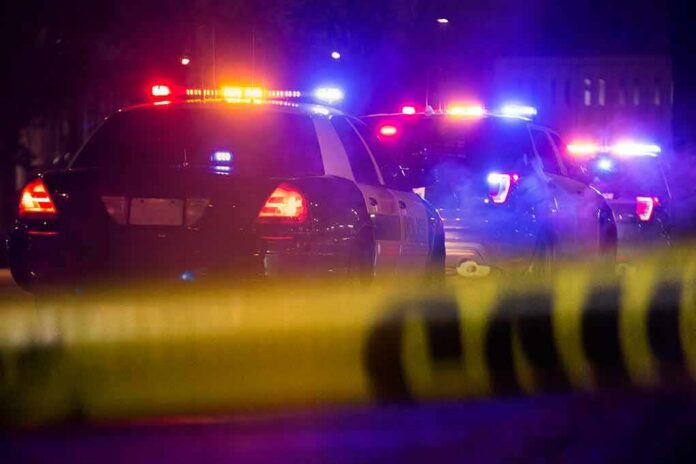
Charlotte police say a convicted felon shot an officer, fled, and then racked up nearly 200 new charges with his brother in a rapid crime spree.
Story Highlights
- Police identified the accused shooter as Dionte Antonio McCracking, a convicted felon.
- CMPD says Dionte and his brother Jatarius face about 190 charges across jurisdictions.
- The officer was shot during an encounter tied to a stolen vehicle, police said.
- North Carolina’s “habitual felon” label enhances sentencing on new felony cases.
Police Say Officer Shot During Stolen-Vehicle Encounter
Charlotte-Mecklenburg Police Department leaders said an officer was shot during an encounter with suspects linked to a stolen vehicle in west Charlotte. Police identified the accused shooter as 28-year-old Dionte Antonio McCracking. Officers said the suspect fired toward the officer and then ran. The officer survived. Reporting from local outlets matched police accounts of the confrontation and the flight that followed, based on statements from police officials soon after the incident.
Warrant information and follow-up reports identified Dionte McCracking as a convicted felon now charged with attempted murder of a law enforcement officer and possession of a firearm by a felon. State correction records cited in that coverage showed he had been incarcerated for firearm charges and released shortly before the shooting, underscoring the repeat-offender concerns raised by police and prosecutors in the case.
Brothers Tied To Nearly 200 Charges In Six-Week Span
Charlotte-Mecklenburg Police Department officials said Dionte and his brother, 27-year-old Jatarius McCracking, were linked to a fast-moving crime spree. Investigators announced about 190 charges across multiple jurisdictions. Reported counts covered vehicle thefts and related crimes investigators say stacked up in roughly six weeks. Police described the pair as career criminals, emphasizing the public-safety risk and the large volume of cases local agencies now must process.
Coverage from multiple Charlotte newsrooms echoed those totals and the timeline, citing police briefings and records that outline dozens of thefts, break-ins, and gun-related offenses. Police highlighted how connected incidents across the city and nearby areas were bundled into a sweeping set of charges to reflect the scope of the spree. One report noted the total approaching two hundred, reinforcing the picture of persistent, repeated crimes that strained patrol and detective resources.
Habitual-Felon Status Raises Stakes At Sentencing
North Carolina’s habitual-felon law does not create a new crime. It increases punishment on a new felony if the person has three prior felony convictions. Prosecutors can seek the enhancement after charging a substantive felony, and a judge can apply it at sentencing if proved. That label can move the offense class up, which lengthens prison time upon conviction. Legal summaries from the state’s judicial education materials outline how the enhancement works in practice.
Scholars and practitioners also note that prosecutors often file many counts in a large case. Stacking charges can preserve options if one count fails and can increase plea leverage. Research on charging decisions explains why complex, multi-incident cases often carry dozens of counts rather than a single umbrella charge. That approach is common when police say crimes spread across cars, homes, and stores, each with its own victim and evidence trail.
Public-Safety And Accountability Questions For Local Leaders
Charlotte residents watching repeat offenders cycle through the system will see this case as a warning. Police say a convicted felon shot a cop and then piled up a mountain of new charges. That puts families, small businesses, and officers at risk. Stronger pretrial decisions, tough sentencing for gun crimes, and swift coordination across counties protect the public first. Local judges, district attorneys, and probation offices will face pressure to close gaps that let serial offenders roam.
🚨 CHARLOTTE MAN ACCUSED OF SHOOTING CMPD OFFICER HAD EXTENSIVE CRIMINAL HISTORY
CHARLOTTE, N.C. — A convicted felon accused of shooting a Charlotte-Mecklenburg police officer is now behind bars — and the circumstances surrounding his release are raising serious questions.…
— Crime and Cask Investigations (@crimeandcask) September 13, 2026
President Trump’s second-term agenda backs police, backs victims, and demands real accountability for violent felons. But local results depend on local choices. City leaders must enforce the law without excuses. State lawmakers should support the habitual-felon enhancement and fund the labs, prosecutors, and jail space needed to move big cases fast. Charlotte can stop the revolving door. Start with repeat gun offenders, protect the front line, and make the streets safe again.
Sources:
thegatewaypundit.com, charlotteobserver.com, wccbcharlotte.com, sog.unc.edu