
As Canada’s prime minister cheers the US‑Iran memorandum as a “game changer,” many conservatives see familiar red flags that could once again reward a hostile regime and leave the West holding the bag.
Story Snapshot
- Canada’s Prime Minister Mark Carney is openly celebrating the US‑Iran memorandum and calling it a “game changer” for the Middle East.
- The draft deal says Iran will not build a nuclear weapon, while opening the Strait of Hormuz and offering major financial incentives.[5]
- The memorandum is only a 60‑day framework, not a final peace deal, and key nuclear and enforcement details are still unsettled.[1][9]
- Conservatives worry Western leaders are repeating the Iran nuclear mistakes of the past by overselling an interim agreement.
Carney Hails Trump’s Iran Framework as “Game Changer”
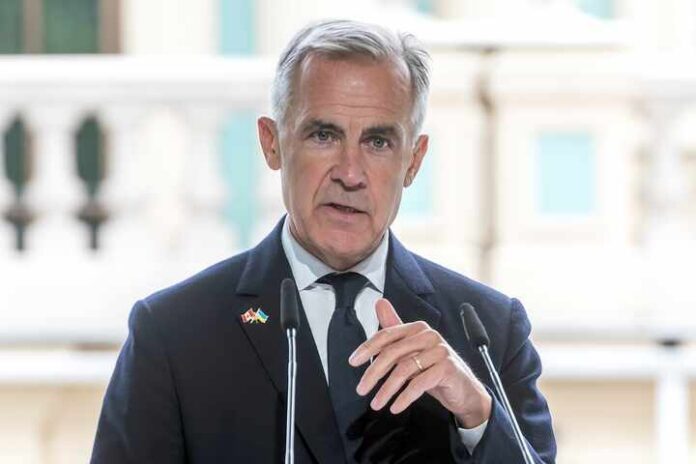
Canadian Prime Minister Mark Carney is going out of his way to praise the new United States–Iran memorandum that aims to end the current war and reset the region.[1][3] Speaking at the G7 meeting in France, he said there is “a likelihood that this memorandum of understanding agreement could be a game changer,” and claimed it could reshape the Middle East and beyond. He told CNN that Canada is “very pleased” with the deal and “absolutely” supports it, saying all G7 leaders share that view.[3][7]
Carney argues the agreement lays the groundwork to keep Iran from ever getting a nuclear weapon and to slowly reconnect shattered regional economies.[1][3] He also says it could open the door to progress on Lebanon, where Iran’s proxies have fueled conflict for years.[1][3] For Canadian and European leaders, this is being sold as a diplomatic “breakthrough” that lowers war risks, eases pressure on oil prices, and shows Western unity after months of fighting in the Gulf.
What the Memorandum Really Does — And What It Does Not
The memorandum is not a final peace treaty; it is a 14‑point framework that launches 60 days of talks.[1][9] Reports say it extends a ceasefire, reopens the vital Strait of Hormuz without tolls, and starts clearing Iranian sea mines so shipping can return to pre‑war levels.[11] In return, Washington would ease some sanctions and allow limited oil sales, but only if Iran meets each step it promised, with further relief tied to future “good faith” behavior.[3]
On paper, Iran again states it will “neither produce nor acquire nuclear weapons,” repeating a promise it has made many times.[5] The draft says Iran reiterates its pledge never to develop nuclear weapons, while the final agreement will decide how to handle enriched uranium and other nuclear details.[9] Until that final deal is reached, Iran keeps its current nuclear program in place, and the United States agrees not to add new sanctions or send more forces into the region.[9] That combination of ongoing nuclear activity and early Western concessions is exactly what worries many security hawks.
Big Money, Sanctions Relief, and Old Patterns
The financial side of the memorandum is huge and controversial. Versions of the draft point to at least $24–25 billion in frozen Iranian assets being opened up during the talks, with even larger sums if a final deal is reached.[1][3][10] Bloomberg reporting and broadcast analysis describe a fund of up to $300 billion for Iran’s reconstruction and economic development tied to a later agreement.[3][4] Iran would also gain new oil export waivers, plus broad banking, insurance, and shipping permissions as sanctions are loosened.[3][9]
Carney calls this a “big financial incentive” that will supposedly keep Iran honest, because it will only see the money if it follows the rules and reopens the Strait of Hormuz.[1] United States officials also say they want sanctions relief linked to actual Iranian compliance in a permanent agreement, not front‑loaded gifts.[10] But critics point out that past Iran deals, including the 2015 nuclear accord, front‑loaded cash and trade while Tehran kept enriching, testing missiles, and funding terror proxies. They fear this memorandum repeats that pattern by easing pressure before Iran makes hard, verified changes on the ground.
Why Conservatives Are Skeptical of “Game Changer” Talk
Conservative readers will recognize a familiar script: Western leaders rush to praise a temporary framework before a single centrifuge is dismantled or a single terror network is cut off. Even outlets that support diplomacy admit this memorandum is a “major geopolitical ceasefire and a preliminary non‑proliferation agreement,” not a lasting peace.[15] Analysts on foreign networks have called it a “time‑buying ceasefire” that stretches talks on sanctions, oil sales, nuclear issues, and control of the Strait, rather than a true final deal.[16]
That gap between soaring political language and modest legal reality is what should keep American conservatives alert. Iran keeps its nuclear program running while the final agreement is drafted.[9] The memorandum is not yet legally binding under international law.[16] Key questions remain open on verification, enforcement, and what happens if Tehran cheats again. Yet Canada’s leader and many in the G7 are already celebrating, while past experience shows that early celebration often ends with Iran richer, the West weaker, and the threat still there.
Sources:
[1] Web – US-Iran deal can be ‘game changer’, says Canadian PM
[3] Web – What’s in the Iran deal Trump says he’s ready to sign – Axios
[4] Web – Iran pushes differing versions of deal as U.S. sticks to timeline
[5] YouTube – US-Iran Deal Details Emerge in 14-Point Memorandum
[7] Web – Iran media publish purported details of Iran-US draft agreement
[9] Web – Iran Update Special Report, June 13, 2026: Iranian statements …
[10] Web – Read the 14-Point Draft Memorandum Between the US and Iran
[11] Web – U.S.-Iran Distrust Holds Up an Agreement – The Soufan Center
[15] Web – STATEMENT: Iran MOU Confirms Iran War Was Failure of Historic …
[16] Web – Iran-US MoU draws praise and backlash across Tehran’s political …