

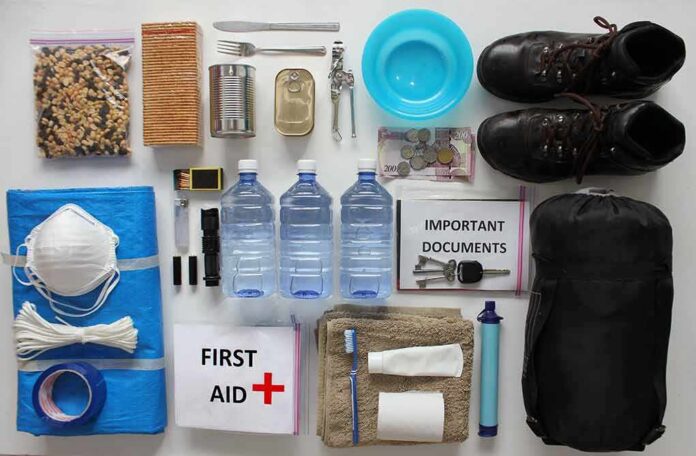
Britain’s official advice now tells families to keep cash, water, and canned food at home, underscoring how basic preparedness is no longer optional but expected.
Story Highlights
- UK guidance urges households to store water, tinned food, and essentials for short-term disruptions.
- Officials frame modest stockpiles as common sense, not panic buying.
- NATO and United States guidance treat resilient food and water as national-security priorities.
- Ready.gov details simple kits so families can ride out outages and evacuations.
UK Advises Households To Keep Basic Supplies Ready For Disruptions
United Kingdom emergency-preparedness guidance encourages people to keep bottled water, canned food, medicine, batteries, and cash at home for short-term incidents. Officials describe brief power failures, water service issues, and supply hiccups as realistic risks that can hit with little warning. The published advice says families should build a kit over time and keep items together for quick access. A member of Parliament backed the idea, saying that a small food store leaves you better off in a pinch.
United Kingdom news coverage lists nine common items to stock, echoing the government message to plan for days, not months. Reporters point to water, nonperishable food, first aid, and light sources as the core. The framing is clear and calm: think ahead, avoid last-minute runs, and protect the vulnerable in your home. The guidance draws a bright line between steady planning and panic buying. That matters when shelves get tight and tempers run hot.
Security Institutions Now Tie Resilience To National Defense
North Atlantic Treaty Organization materials set baseline resilience goals for member states and stress the protection of food, water, and critical infrastructure. The bloc’s public texts describe the need for supplies that can withstand disruption or sabotage and keep society functioning during shocks. This is not fringe talk. It is doctrine that treats civil readiness as part of defense. When the lights go out or networks fail, those first few days are the real test.
United States agencies align with that view. The Federal Emergency Management Agency’s National Resilience Guidance defines preparedness as planning, resources, training, and exercises that reduce harm and speed recovery. The United States Army Corps of Engineers promotes resilience practices that help communities absorb hits and bounce back. The theme is steady: plan ahead, shield the basics, and cut the time it takes to restore normal life after a storm, cyber issue, or grid failure.
Household Kits: Simple Steps That Pay Off When Services Stall
Ready.gov, the federal citizen-preparedness guide, spells out a home kit that covers water, food, light, radios, batteries, first aid, and needed medicines. The guide suggests at least one gallon of drinking water per person per day and enough shelf-stable food to get through a major event. It also reminds families to plan for pets, chargers, and backup power if possible. These basics help you shelter in place, evacuate fast, or support neighbors until help arrives.
Officials in the United Kingdom and United States treat this as normal life, not alarm. They want fewer frantic trips when storms roll in or when a water main breaks. That approach respects families, cuts waste, and avoids the ugly rush that hurts seniors and parents with small kids. Calm preparation also lines up with conservative values: self-reliance, local responsibility, and less strain on government when every minute counts. It is common sense backed by practice and policy.
What This Means For American Families Under President Trump
President Trump’s administration puts national resilience and secure supply chains high on the list. Federal guidance already supports home readiness and strong infrastructure. Families who keep a modest store of food, water, and basics give first responders time to reach the truly at risk. That reduces pressure on budgets and cuts chaos. It also helps blunt the effects of cyber threats, aging grids, and extreme weather that can spike energy prices and disrupt deliveries.
Conservative readers know the drill: trust yourself, not luck. A clear plan beats a crowded store when the power fails. A labeled bin by the door speeds an evacuation. Extra water and a first-aid kit turn a crisis into an inconvenience, not a disaster. United Kingdom guidance, North Atlantic Treaty Organization doctrine, and United States readiness materials all land in the same place. Prepare now, at a sensible scale, and protect your home front when systems wobble.
Limits Of The Current Guidance
The official materials focus on short-term events measured in days, not long collapse scenarios. They do not claim that hidden stockpiles guarantee better outcomes in all cases. They do, however, agree on one point that is hard to argue: a basic kit on hand improves your odds when services fail. That is the low-cost, high-return step every household can take without panic, politics, or waste, starting today.
Sources:
gao.gov, fema.gov, preparedbritain.co.uk, independent.co.uk, download.militaryonesource.mil, publications.usace.army.mil, england.nhs.uk