
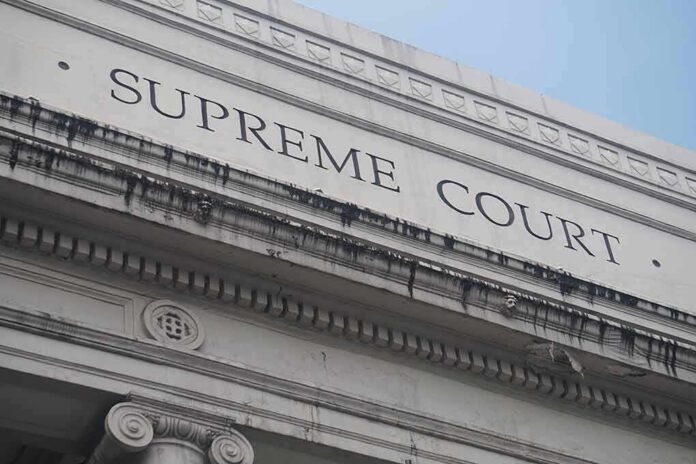
The Supreme Court will decide whether local climate lawsuits can override national energy policy and hit Americans with courtroom-made rules.
Story Snapshot
- The Justices will hear Suncor v. Boulder, a case over using state law to punish energy firms.
- Colorado’s high court let Boulder’s state-law claims proceed; companies appealed to the U.S. Supreme Court.
- Energy companies argue federal law and the Constitution block state courts from policing global emissions.
- The ruling could shape dozens of similar suits and future energy costs nationwide.
What The Case Is About: State Lawsuits Versus National Rules
On October 5, 2026, the Supreme Court will hear Suncor Energy and Exxon Mobil’s appeal in the Boulder climate case. The companies ask whether federal law preempts state-law claims that try to hold them liable for global emissions impacts. Boulder filed the suit in 2018, seeking money for wildfire, flood, and other climate-related costs. The legal fight centers on who sets the rules for nationwide energy and environmental policy: state courts or federal law.
Energy companies say Boulder’s lawsuit is a backdoor attempt to regulate greenhouse gases through state tort law. Their petition argues that the Clean Air Act and the Constitution’s structure reserve that job to federal institutions, not local juries. They warn one state’s rules could spill over and control the rest of the country. That would raise costs, confuse compliance, and undermine a stable national energy market.
How We Got Here: Colorado Court Ruling Opened The Door
In May 2025, the Colorado Supreme Court allowed Boulder’s consumer-protection and tort claims to move forward under state law. The court concluded federal law did not automatically block all such claims at the pleading stage. That ruling kept the suit alive, and the companies then sought review by the U.S. Supreme Court. The nation’s high court agreed to hear the case and asked for briefing on preemption and threshold jurisdiction questions.
Reporting and dockets show this case has bounced between courts for years. The dispute returned to the Supreme Court after the Colorado ruling, joining a wider wave of similar suits nationwide. The Justices now face a narrow but pivotal question: whether federal preemption and constitutional limits bar states from using local law to police global emissions conduct. The answer will either greenlight or restrain a growing litigation strategy.
What Boulder Claims And Why It Matters To Your Wallet
Boulder argues Suncor and Exxon Mobil should pay for local costs tied to climate change, including floods and wildfires. The county says the companies contributed to the harms and misled the public, so state law should allow recovery. But the record to date shows allegations, not final findings of deception or causation. No trial court has yet linked specific company emissions to specific Boulder losses with a final judgment.
🔴 Supreme Court to hear Boulder's climate suit against Exxon, Suncor
The Supreme Court will hear arguments Monday on whether Boulder, Colorado can pursue state-law claims against Exxon Mobil and Suncor Energy for damages allegedly caused by greenhouse-gas emissions. The 2018… pic.twitter.com/asUTzjAaAc
— NewsTongue (@NewsTongueX) October 4, 2026
For families, the stakes are simple. If courts let counties turn global climate policy into local lawsuits, the costs land on energy producers and then on you. Higher legal risk means higher prices for gas, diesel, home heating, and goods moved by truck. A national energy system cannot function if fifty states create fifty climate liability codes by verdict. The Supreme Court’s ruling could either restore one set of rules or invite a patchwork that fuels inflation.
What To Watch At The Supreme Court
Watch for questions about the Clean Air Act’s role and the Constitution’s limits on states setting rules for interstate commerce. The companies argue that only Congress and federal agencies can set national emissions policy, and that state-law claims here are preempted. Court watchers also expect focus on whether federal courts even have jurisdiction over some issues raised. A ruling for the companies could end or narrow many state climate tort suits.
Bottom Line For Conservatives
This case tests whether unelected local actors can use lawsuits to force national climate policy. President Trump’s administration has pressed for clear, lawful limits that protect energy security and the economy. A firm Supreme Court ruling against using state tort law as climate regulation would defend constitutional order, keep energy affordable, and stop forum shopping that sidelines voters and Congress. The decision will signal if policy is made at the ballot box—or in courtrooms.
Sources:
cbsnews.com, supremecourt.gov, abcnews.com, bouldercounty.gov, washingtonexaminer.com, scotusblog.com, earthrights.org, climatecasechart.com, houstonchronicle.com, vox.com