
Six major outages in six days hit flights, banks, and cloud tools, exposing fragile systems America relies on every day.
Story Snapshot
- Outages struck Microsoft, the Federal Aviation Administration, JPMorgan Chase, United Airlines, and a classified National Security Agency network within days.
- Officials denied a coordinated cyberattack, but several causes remain under review, including the Federal Aviation Administration router failure.
- Flight operations, banking access, and business communications saw real disruption, affecting millions.
- Microsoft has not released a full post-incident report, limiting outside review of its root cause.
Rapid-Fire Disruptions Across Critical Sectors
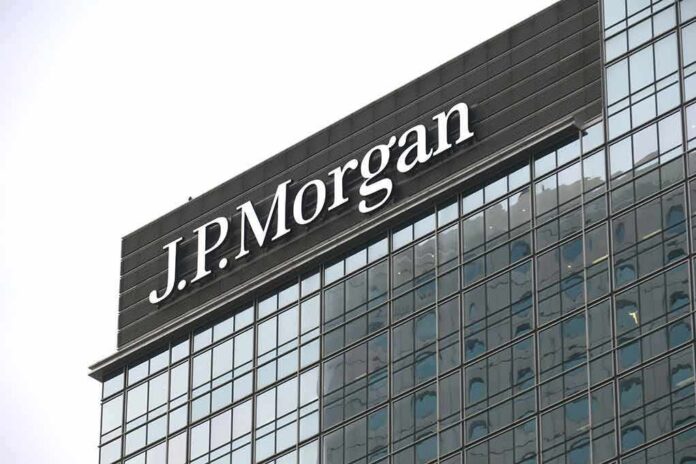
NBC News and Politico counted at least five to six major outages in roughly a week, spanning Microsoft, the Federal Aviation Administration, JPMorgan Chase, United Airlines, and the National Security Agency. These were not small hiccups. A nationwide Federal Aviation Administration ground stop delayed travel. Microsoft cloud tools, including Outlook and Teams, stalled work for many. Chase customers struggled with services. A classified National Security Agency system went dark, then returned. The timing fueled public concern about a possible coordinated hit.
These systems sit at the heart of daily life. Flights move troops, families, and freight. Banks run paychecks and small-business cash flow. Email and chat apps connect teams that keep cities running. When they fail in a cluster, people look for a common cause. That is normal. The week’s pattern did not prove a plot. But it did reveal how thin the margin is when a few core hubs slip, and the knock-on effects pile up fast.
What Officials Say vs. What We Still Do Not Know
Senior officials said there was no evidence these outages were linked or driven by hostile actors. Secretary of State Marco Rubio said there was “zero evidence” tying the events to criminals or foreign states, and that the incidents were unrelated. The Director of National Intelligence said the indicators point to separate, non-malign causes. Transportation Secretary Sean Duffy said intelligence agencies told him the Federal Aviation Administration ground stop was not a hack, while the Federal Bureau of Investigation reviewed a key router.
These statements matter, and they lower the temperature. Still, parts of the record remain incomplete. The Federal Aviation Administration is probing whether a contractor’s router install or a faulty device spiked connections and overloaded switches. Fortune reported a new router firing about 1,000 connection attempts every four to five seconds, which is a pattern worth scrutiny. Microsoft has not yet published a full post-incident report, limiting independent review of its failure chain and safeguards.
Technical Explanations So Far, And Their Limits
Microsoft described load shifting from servers that went unavailable and a secure-connection process that became overwhelmed. That reads like a cascading internal failure, not an external flood. JPMorgan Chase called its disruption a technical issue, not a cyber event. The National Security Agency said its outage was tied to maintenance. Each item on its own sounds routine. Lined up in the same week, it still looks alarming to the public that depends on them.
Uptime Institute research shows most large outages stem from configuration errors, change-management mistakes, and third-party failures, while a smaller share involve cyberattacks. In short, complex and aging systems break in messy ways. But Americans deserve more than “trust us.” Full, timely post-incident reports, redacted as needed, help outside experts confirm facts, test lessons, and harden shared infrastructure. Sunshine is not a threat to security; it strengthens it.
Why This Matters To Families, Flyers, And Small Businesses
Every hour of downtime costs real money. A grounded flight can erase a family trip or a business deal. A frozen bank app delays rent and payroll. A stalled email system puts a factory line on hold. These are not abstract tech problems. They touch lives and livelihoods. When multiple failures stack up, confidence drops. Restoring trust means faster answers, clear timelines, and visible fixes that reduce the chance of repeat failures across the same chokepoints.
2 PM Top-of-the-Hour News
BREAKING THIS HOUR- LARGE BANKS ARE THE LATEST TO REPORT TECH TROUBLE.
CUSTOMERS WITH CHASE, BANK OF AMERICA WELLS FARGO AND OTHERS ARE REPORTING DIFFICULTIES ACCESSING ACCOUNTS ONLINE.
THIS FOLLOWS LAST WEEK'S MICROSOFT OUTAGES AND PROBLEMS WITH… pic.twitter.com/RbPhKtSYCc— Worldwide News Network (@WorldwideNNX) November 16, 2026
Americans want resilience, not excuses. That means critical agencies must test gear before it goes live, enforce strict change controls, and keep backup paths truly independent. It means cloud giants must publish plain-language postmortems with concrete steps and dates. It means banks must drill for failover like they drill for fraud. President Trump’s team has started pushing for accountability. Now the follow-through must lock in: transparent reports, tougher standards, and audits that check the work, not the press release.
What To Watch Next
Watch for the Federal Aviation Administration’s root-cause report, including router logs and change records. Look for Microsoft’s full post-incident report that explains why servers became unavailable and how secure connections overwhelmed capacity. Track whether agencies share cross-sector indicators to confirm there was no shared trigger. If officials want the country calm, they should show their math. Americans will back fixes that are tested, verified, and explained in plain English.
Sources:
cnbc.com, cio.com, nbcnews.com, implicator.ai, learn.microsoft.com, apnews.com