

Twelve Democratic senators just moved to strip U.S.-Israel defense and intelligence upgrades from must-pass bills, risking America’s edge against Iran and terrorists.
Story Highlights
- Senators led by Chris Van Hollen urged leaders to delete three U.S.-Israel cooperation measures.
- The push targets intelligence sharing and a new defense technology initiative in the defense bills.
- Backers of the measures say deeper ties help deter Iran and protect U.S. forces and allies.
- U.S. law already supports close security and intelligence cooperation with Israel.
Democratic Letter Seeks to Kill Key U.S.-Israel Provisions
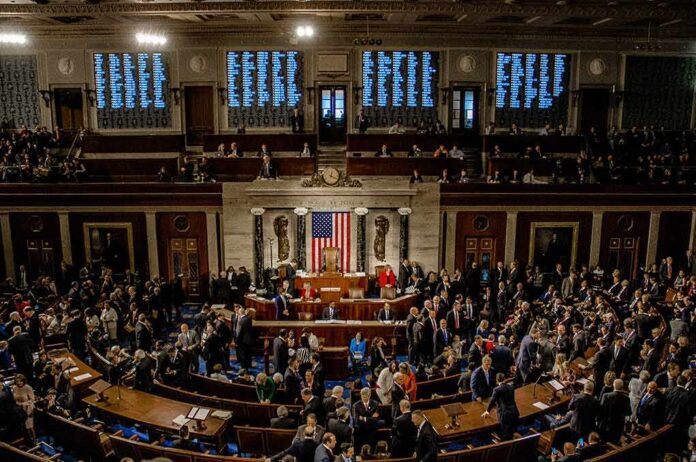
Senator Chris Van Hollen and eleven colleagues sent a November 10 letter asking congressional leaders to strip specific U.S.-Israel provisions from the final defense and intelligence bills. The senators want negotiators to remove Section 1217 of the Senate National Defense Authorization Act, Section 219 of the House version, and Section 618 of the Intelligence Authorization Act, which expand joint technology work and formalize intelligence sharing with Israel. The request aims directly at must-pass legislation that funds America’s military.
The letter says Section 618 would expand and enhance intelligence sharing with the Government of Israel and then limit the executive branch’s ability to reduce it later. The senators argue Congress should not force permanent cooperation that could constrain a future president’s discretion if conditions change. They frame this as a separation-of-powers concern and a national-security risk tied to lost flexibility, not as a break with Israel itself.
What The Targeted Measures Would Do
The technology provisions, identified as Sections 1217 and 219, would create a United States-Israel Defense Technology Cooperation Initiative. That initiative would speed joint research, development, testing, evaluation, coordination, and industrial cooperation to meet fast-changing threats. The intelligence provision, Section 618, would strengthen information exchanges and discourage sudden cutbacks, making day-to-day coordination more predictable and useful against shared enemies.
Supporters say these steps help Israel maintain a clear edge and deter Iran and its proxies that target Israel, U.S. forces, and regional partners. Reporting on the bills ties the intelligence measure to the long-standing U.S. goal of preserving Israel’s qualitative military edge through better data, faster warning, and improved targeting. Those backers argue that better technology and sharper intelligence save American and Israeli lives.
U.S. Law And Policy Already Back Close Cooperation
Current U.S. law directs the executive branch to address emerging shared threats with Israel, expand joint military exercises, and broaden intelligence cooperation, including satellite intelligence. That statute reflects decades of bipartisan policy viewing Israel as a critical ally in a dangerous region. It also leaves room for the president to adjust cooperation to advance U.S. national-security interests, balancing partnership with prudence.
Recent congressional actions point the same way. A House resolution urges deeper joint research, technology sharing, missile defense, cybersecurity, emerging technologies, and intelligence cooperation to strengthen both countries. Supporters describe Israel as a key ally that helps deter adversaries and promote peace through strength, underscoring why Congress often embeds these measures in defense bills to keep the alliance strong and ready.
Claims Of “Lost Flexibility” Versus Real-World Threats
The senators warn the intelligence section could tie a future president’s hands if conditions demand change. Their letter does not cite a specific intelligence failure or breach caused by Israel, and it does not show why existing safeguards and oversight would not work. The case rests on preserving maximum executive flexibility rather than proving direct harm from the provisions as written.
Backers counter that clear rules for deeper sharing are exactly what helps in a crisis, when time and clarity matter. They argue that Iran and Iran-backed groups move fast, use drones, missiles, and cyber tools, and test U.S. will every week. For them, tighter tech and intelligence ties with Israel improve warning, defense, and deterrence for U.S. troops and partners across the region, while staying consistent with U.S. law and long-standing policy.
Why This Fight Matters Now
The dispute lands inside must-pass defense and intelligence bills, where decisions set real priorities. President Trump’s team is focused on deterrence and on cutting red tape that slows security action. Weakening U.S.-Israel integration in the name of theoretical future flexibility could hand Iran breathing room today. If Congress wants strong oversight, it can set reporting and review rules without undercutting live cooperation that keeps Americans and allies safer.
Bottom Line For Conservatives
This is a clear test: stand with an ally that shares our fight against terror and Tehran, or inject uncertainty into the partnership that helps shield U.S. troops and families. The Democratic letter seeks to slow or stop practical steps that speed joint tech and intelligence work with Israel. The record shows Congress and law already back this cooperation. Keeping these provisions protects our edge, our values, and our people in a hard world.
Sources:
lifesitenews.com, vanhollen.senate.gov, aa.com.tr, asiatimes.com, uscode.house.gov, congress.gov