

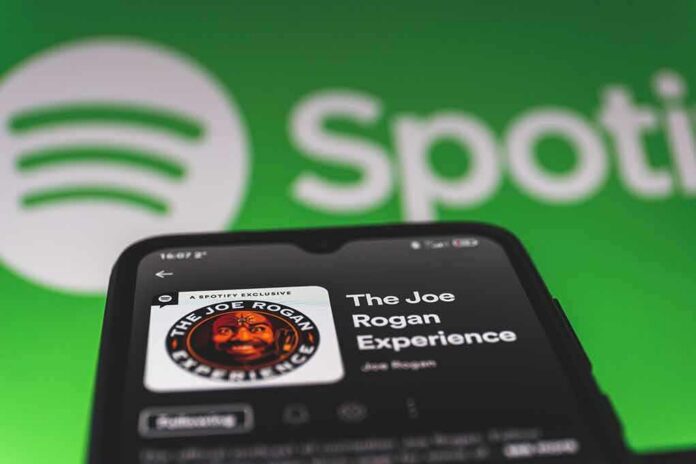
Joe Rogan told millions that podcasters are “not press people” and should not sit front row at President Trump’s press conferences, reigniting a fight over who gets a voice in the briefing room.
Story Highlights
- Joe Rogan said podcasters should not get front-row seats or be treated like reporters.
- Rogan framed podcasts as opinion shows, not professional news gathering.
- David Sacks argued the White House should seat major podcasters up front to reach voters.
- The Trump White House opened a “new media” seat and welcomed independent creators who produce news.
Rogan Rejects Front-Row Access For Podcasters
Joe Rogan stated on his show that podcasters should not be in the front row at White House press events. Rogan said he and other hosts are not “press people” and that their shows are opinion and conversation, not straight reporting. He added that people put too much weight on podcaster views. His remarks came while discussing a push to include podcast hosts in briefings with Press Secretary Karoline Leavitt.
Rogan underscored the split between influence and responsibility. He said podcasts can draw huge audiences but often do not follow newsroom practices like formal sourcing or editing. He stressed that the public should not see podcaster commentary as the same thing as field reporting. His blunt language drew headlines, but the core argument was clear: the front row should go to those doing the daily grind of reporting, not long-form conversationalists.
Sacks And Allies Push For New Media Seats
Entrepreneur David Sacks argued that the White House should seat prominent podcasters and alternative media voices in the front row. He named Joe Rogan, Tucker Carlson, Theo Von, and Megyn Kelly as figures Republicans should keep close through access. Sacks said these outlets are a big part of the base and that the administration should have stayed connected by giving them top placement in the room to reach their large audiences.
Sacks repeated that view in another forum, saying the party lost support among “alternative media” and should have ensured front-row access for those hosts. His case centers on audience reach and relevance to voters who do not trust legacy outlets. Supporters see this as breaking the monopoly of old media. Critics reply that seating should reflect reporting work, not follower counts or viral clips.
Trump White House Opens Door To Independent Outlets
Press Secretary Karoline Leavitt said the Trump administration will speak to all media, not only legacy outlets. Reporting on credentials noted that Leavitt encouraged podcasters and influencers who produce real news to apply for access. This message aimed to expand who can ask questions while keeping standards tied to news content and security needs, not just celebrity status or entertainment branding.
Coverage documented a front-row “new media” seat and a broader application process for digital reporters, podcasters, and creators. Reports said the rotating seat has included digital newsrooms and personality-driven shows. Outlets such as Breaking Points and the Ruthless Podcast were cited among participants. The framework signals an opening for serious nontraditional voices while keeping a focus on legitimate news production rather than pure opinion or spectacle.
What This Means For Transparency And Accountability
The clash reveals two tests for access. One favors journalistic function: gather facts, verify, and face questions if you get it wrong. The other favors public reach: meet citizens where they actually get news today. Rogan’s view presses for standards first. Sacks’s view presses for audience connection. The White House stance, as reported, tries to blend both by inviting new media that produce real news, then seating them alongside legacy outlets.
Conservatives should care because access rules shape which questions get asked on spending, the border, energy policy, and threats to constitutional rights. When gatekeepers box out independent voices, hard questions die. When access becomes a popularity contest, standards suffer and noise wins. The aim should be open doors with clear rules: show reporting, source your claims, correct errors, and then take a seat, whether you print, stream, or podcast.
Bottom Line For Readers
Rogan drew a bright line between commentary and news and said podcasters should not claim the mantle of the press. Sacks countered that new voices with big audiences deserve front-row access. The Trump White House moved to widen the room to serious independent outlets, including podcasters who do real reporting. That balance serves the public best: more voices asking sharper questions, fewer gatekeepers, and standards that protect truth over trend.
Sources:
foxnews.com, mediaite.com, medialist.com, local3news.com, netinfluencer.com, tradingview.com