
The Supreme Court refused to reinstate parts of President Trump’s mail-ballot order for now, keeping a lower-court block in place and setting up a bigger fight over who runs election mail.
Story Snapshot
- The Supreme Court left a district-court injunction in place against parts of Trump’s mail-ballot order.
- Justices said the dispute is not fully ripe on the merits, so the big legal questions remain open.
- The Postal Service finalized an election-mail rule with barcode, envelope, and reporting standards.
- States and activists claim the plan could confuse voters; the administration says it guards ballot integrity.
What The Supreme Court Did And Did Not Decide
The Supreme Court declined to lift a lower-court order that blocks parts of President Trump’s mail-ballot executive order ahead of the elections. Reports describe the ruling as procedural and not a decision on legality. Justices signaled the case was premature and that the challengers’ standing and timing questions were central. The bottom line is the fight continues in the lower courts, and the core constitutional issues are still undecided on the merits.
Coverage also notes at least one district court, in Massachusetts, issued an injunction against implementation earlier this year. That ruling showed a federal judge saw enough risk to pause parts of the order while lawsuits proceed. The Supreme Court’s refusal to undo that pause means current election mail practices remain more or less steady for now, while lawyers on both sides prepare fuller arguments and records for review in the coming weeks.
What Trump’s Order And The USPS Rule Would Change
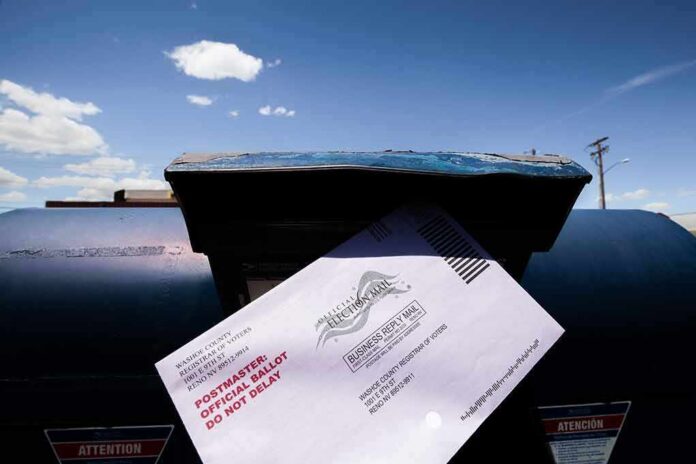
President Trump’s March 31 order directed the Postmaster General to start a rulemaking to set uniform standards for mail-in or absentee ballot services. The administration framed the plan as a way to ensure only verified voters receive ballots by mail. The United States Postal Service has since issued a final rule titled “Ballot Mail for Federal Elections,” which sets operational requirements like standardized envelopes, automation-friendly design, and unique identifiers to track election mail.
The Postal Service’s materials describe new steps for states and local offices that use the mail. The rule addresses use of official Election Mail logos, barcode and envelope specifications, and data exchanges to improve handling and tracking. Supporters say these steps add clarity and cut errors. Critics say they add red tape close to an election and could slow or block delivery if states cannot meet new technical steps in time. These details sit at the heart of the court challenges.
Why The Lower Courts Stepped In
Plaintiffs argued the order and rule would shift gatekeeping power over ballots away from states and toward a federal agency. They said sudden changes could cause confusion and risk some ballots not getting through. Media summaries quoted postal and state officials who warned the plan could be unworkable if forced in a tight window before voting. Judges often consider timing, practical impact, and who has legal authority when they weigh injunctions like this one.
Legal analysts explained that emergency rulings often turn on standing and ripeness, not final answers. The Supreme Court has stressed that agencies must complete rulemaking and show concrete effects before the Court weighs in broadly. Here, the Court’s move leaves the door open for a full merits decision later, once records are complete. For now, the district-court block stands, and the parties will argue over statutory power and the proper role of the Postal Service in election mail.
What This Means For Election Integrity And Next Steps
Conservatives want secure elections and clear rules that treat every lawful voter fairly. The administration argues the Postal Service standards would track ballots better and prevent errors or abuse. Opponents warn that new federal mail rules could override state systems and sow confusion for seniors, military voters, and rural communities who rely on mail. Because the Supreme Court did not settle the merits, these competing claims will get fuller testing soon in the lower courts.
🤔TIMELINES, PATTERNS, POST MARKS & ONE MORE RUN
Here's what everybody thinks happened on September 14th. The Supreme Court blocked Trump's Post Office ballot rule. Mail voting is safe. Story over.
That's not what I think happened.
Picture a bridge
An old bridge has a crack… https://t.co/DGZJrPBYWk
— TheDebriefing17 (@TheDebriefing17) September 15, 2026
Expect fresh filings now that the Postal Service’s final rule is public, including challenges that target specific provisions and timelines. Reports indicate the rule was available for inspection on August 21 and published on August 26, which sets the stage for more precise lawsuits that focus on concrete agency action. That posture is often what the Supreme Court wants to see before it weighs in again, especially on election cases close to voting.
Sources:
cnbc.com, hodgsonruss.com, govinfo.gov, supremecourt.gov, theguardian.com