
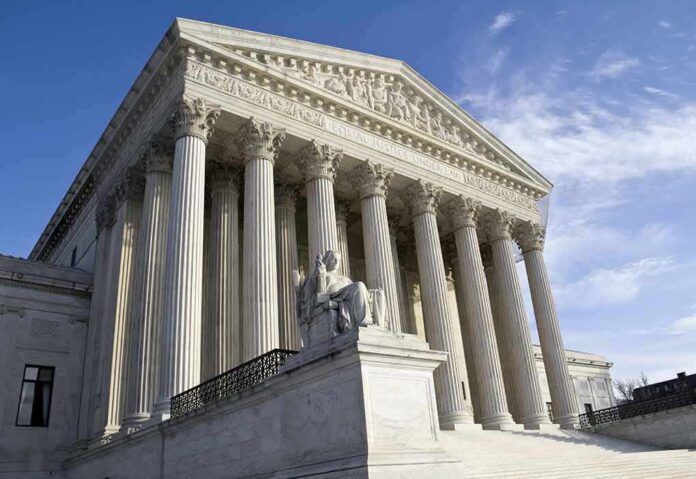
Two Supreme Court rulings since 2024 have shifted power toward the presidency by shielding official acts and narrowing nationwide court blocks on federal policy.
Story Highlights
- The Supreme Court recognized criminal immunity for presidential official acts, with absolute protection for core powers.
- The Court said there is no immunity for unofficial or private acts, drawing a bright line.
- A 2025 ruling cut back nationwide injunctions, limiting one tool to freeze federal policies everywhere at once.
- Congressional researchers describe a three-tier immunity framework now guiding courts.
What The Supreme Court Actually Decided On Presidential Immunity
On July 1, 2024, the Supreme Court held that a former president has absolute criminal immunity for exercises of core constitutional powers and at least presumptive immunity for other official acts while in office. Chief Justice John Roberts wrote that there is no immunity for unofficial acts, creating a firm split between official and private conduct as courts review cases. Congressional analysts later summarized the doctrine as a three-part structure that now anchors immunity disputes nationwide.
The ruling means prosecutors must first show that a charged act was unofficial before moving forward. If the act was official but outside core constitutional powers, courts must start from a presumption of immunity and decide if it can be overcome. If the act was within core constitutional powers, prosecution is barred. These standards do not end accountability for private wrongdoing, but they raise the bar for criminal cases tied to governing duties as president.
How Courts Curbed Nationwide Injunctions Against Federal Policies
On June 27, 2025, the Supreme Court limited the ability of lower federal courts to issue nationwide injunctions that halt federal policies for everyone, including people not part of a lawsuit. The decision scaled back a remedy that had become common in recent years, when single district judges could freeze rules across all states. Public reporting at the time described the ruling as a major cut to universal relief that had often stopped executive actions in their tracks.
Congressional Research Service materials explain that the new limits push courts to tailor injunctions to the parties before them, rather than the entire country. That approach keeps cases moving through normal appeals without instantly blocking federal action nationwide. For presidents of either party, the change reduces the odds that one courtroom can pause a national program overnight. For citizens and states, it means policy fights may take longer to resolve while cases climb the judicial ladder.
What These Two Rulings Mean For Checks And Balances Now
Taken together, the 2024 immunity decision and the 2025 injunction decision strengthen the president’s hand in two ways: they narrow criminal exposure for official acts and make it harder for single judges to halt federal policies for everyone. News coverage after the immunity ruling captured the bright line: broad protection for official actions, none for private conduct. Legislative analysts say courts now apply the three-tier framework when sorting presidential exposure, which supplies clearer guidance but also raises the threshold for charges tied to governing.
For readers who value limited government, the stakes are plain. Strong presidents can move faster on border enforcement, energy permits, and spending controls when fewer nationwide injunctions block them. Clear immunity for official acts also prevents local prosecutors from criminalizing policy calls after the fact. At the same time, the Court kept safeguards: private acts remain fully exposed to the law, and policies can still be challenged case by case as appeals proceed and the Supreme Court exercises its review authority.
Sources:
zerohedge.com, aclu.org, reuters.com, scotusblog.com, everycrsreport.com, aljazeera.com