
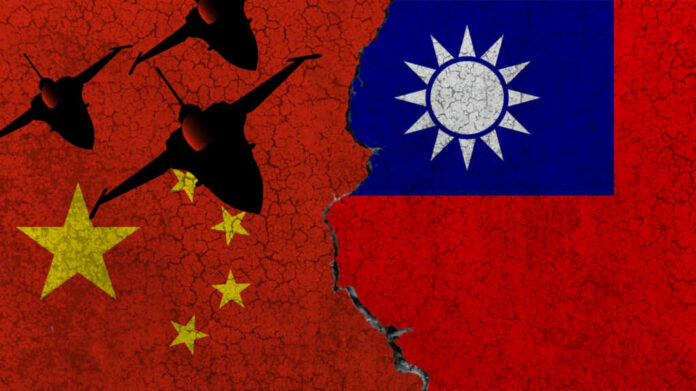
Trump’s refusal to spell out whether America would fight for Taiwan is not surrender to China—it is a high‑stakes bet on deterrence that breaks with the left’s habit of giving away our playbook.
Story Snapshot
- Trump declined to say if the United States would defend Taiwan after his summit with China’s Xi Jinping, keeping America’s response deliberately unclear.
- His answer fits a long tradition of “strategic ambiguity” on Taiwan, but his version is more transactional and harder-edged than past presidents.
- At the same time, Trump is pushing record arms sales and tougher self-defense requirements on Taiwan, along with high tariffs and economic pressure.
- Conservatives must weigh the benefits of ambiguity for deterrence against the risk that mixed signals could invite miscalculation by Beijing.
Trump’s Non-Answer: Ambiguity or Weakness?
When a reporter recently pressed President Donald Trump on whether the United States would defend Taiwan against a Chinese attack, he refused to give a straight yes-or-no answer, saying that he does not talk openly about that kind of decision and pivoting back to the idea that he does not expect a conflict with China over the island.[1] That public evasion mirrored earlier moments where he declined to commit explicitly, even as media outlets framed the summit around growing Taiwan tensions.[1]
Trump’s language in the clip is halting and partially garbled in available transcripts, which makes it difficult to quote word-for-word, but the core point is clear: he deliberately maintained uncertainty rather than promise to send American troops if China invades.[1] That choice angered many commentators who wanted an ironclad pledge, especially given Chinese leader Xi Jinping’s warnings about Taiwan during the summit. However, the administration has not issued any new formal doctrine that abandons existing Taiwan policy.[1]
Strategic Ambiguity: A Long-Standing but Sharpened Approach
Since 1979, Washington has followed a “strategic ambiguity” approach, refusing to say clearly whether it would fight for Taiwan while providing weapons, intelligence, and training to bolster the island’s defense.[4] Analysts note that this posture aims to deter both Beijing from attacking and Taipei from declaring formal independence. Trump’s Taiwan policy in his second term still fits within that tradition, but experts describe his version as “compounding” the ambiguity through contradictory signals and stretched-out silences.[1]
On the one hand, Trump has pressed Taiwan to dramatically increase its own defense spending, reportedly demanding levels as high as ten percent of its economic output while urging a shift toward asymmetric capabilities like drones, missiles, and mobile systems.[1] His administration approved an approximately eleven billion dollar arms package featuring rocket systems, artillery, and anti-tank weapons designed to make any Chinese invasion costly and uncertain.[1] Those moves show material support for Taiwan’s self-defense, even as his public comments avoid a clear commitment to direct American intervention.
Economic Leverage, Tariffs, and Alliance Burden-Sharing
Trump’s China and Taiwan policy also leans heavily on economic pressure and burden-sharing language. In 2025 he slapped a broad thirty-two percent “reciprocal” tariff on most imports from Taiwan, higher than some rates imposed on other partners, as part of his America First trade agenda.[1] That tariff stung an economy that many conservatives see as a friend, but the White House framed it as part of a larger effort to stop foreign powers from gaming American markets while still deepening security ties where U.S. interests require it.[1]
At the same time, Trump signed the Taiwan Assurance Implementation Act in December 2025, requiring regular reviews of United States–Taiwan relations and exploring ways to remove self-imposed limits on official contact.[1] That law, the first Taiwan-focused legislation of his second term, opens the door to more visible diplomatic engagement even as the president himself stays cagey about military commitments. Together, tough tariffs, demands for higher Taiwanese defense spending, and stepped-up arms sales reflect a transactional approach: allies that want American backing must shoulder more of the load and prove they are serious.
What Conservatives Should Watch in Trump’s Taiwan Gamble
For constitutional conservatives, the core question is whether Trump’s deliberate vagueness strengthens deterrence or risks sending mixed signals that invite miscalculation. Supporters argue that refusing to answer keeps Beijing guessing, avoids pre-authorizing another foreign war, and preserves Congress’s role in any decision to use force, rather than letting media questions box a president into automatic commitments.[1][4] That restraint stands in contrast to past leaders who casually promised to defend distant territories without securing public debate or adequate military preparation.[4]
Trump and Xi just reminded markets that Taiwan remains the biggest geopolitical risk.
Xi reportedly warned that mishandling Taiwan could lead to “conflict,” while Trump discussed Taiwan arms sales but avoided committing publicly to military defense. 🧵
— Sahil Kalra (@kalra___sahil) May 15, 2026
Critics counter that Trump’s sometimes disjointed wording and lack of clear follow-up can muddy the message for both China and partners in the region, especially when combined with tariffs that strain Taiwan’s economy.[1] They worry an authoritarian regime may interpret ambiguity as weakness, particularly if American politics appear divided or distracted. With record arms deals on the table and legislation nudging closer ties, conservatives should continue demanding that any move toward conflict follow the Constitution, keep American interests first, and avoid the nation-building quagmires that burned us in Iraq and Afghanistan.[1]
Sources:
[1] YouTube – WATCH: Trump says he doesn’t think there’s a U.S.-China conflict over …
[4] Web – Trump declines to say whether US would defend Taiwan in attack by …