
President Trump is warning that the pay-for-play chaos in college sports could wipe out the very programs that built America’s Olympic pipeline—and he’s now using federal leverage to force a reset.
Quick Take
- Trump signed an executive order on April 3, 2026 aimed at stabilizing college athletics and preventing what he described as a potential collapse.
- The order pressures the NCAA to implement reforms by August 1, 2026 and ties compliance to eligibility for certain federal funding.
- The White House argues today’s NIL and transfer “arms race” threatens non-revenue sports, including women’s and Olympic programs.
- The administration is urging Congress to pass a national framework—often discussed around proposals like the SCORE Act—to reduce legal and state-by-state conflicts.
Trump’s Executive Order Raises the Stakes for NCAA and Universities
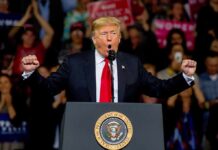
President Donald J. Trump signed the executive order titled “Urgent National Action to Save College Sports” on April 3, 2026, setting up a fast timetable for major governance changes in college athletics. The order warns that unchecked spending and loose rules around name, image, and likeness (NIL) deals—along with aggressive transfer activity—could destabilize athletic departments. The White House position is that reforms must come quickly to avoid irreversible damage.
The enforcement mechanism is the part that immediately caught administrators’ attention: the order ties compliance to federal funding eligibility, a powerful lever in a system where universities depend heavily on federal dollars across research, grants, and student aid. That approach reflects a broader trend in federal policymaking—using funding conditions to steer institutional behavior—while also raising predictable questions about how far executive authority can go before courts or Congress intervene.
How NIL and Transfers Turned Into a Financial Arms Race
College sports shifted rapidly after the NIL era took off, with booster-backed “collectives” helping drive what many schools describe as a bidding environment for top football and basketball talent. At the same time, transfer rules have contributed to roster churn and year-to-year instability. The research points to a landscape shaped not only by market demand, but also by fragmented state laws and continuing litigation that leaves universities guessing what rules will survive.
Legal analysis referenced in the research describes the executive order as an attempt to “impose order on chaos,” but also cautions that the outcome is far from certain because lawsuits and challenges are likely. That uncertainty matters because schools are already bracing for large costs connected to settlements and revenue-sharing frameworks, and they are trying to plan budgets without knowing what guardrails will exist. The practical effect is that universities face major financial decisions under moving legal targets.
Women’s and Olympic Sports Become the Center of the Political Argument
The White House frames its intervention around preserving broad-based participation rather than just the revenue engines. The administration’s fact sheet highlights “500,000 opportunities” and estimates roughly $4 billion in scholarship value tied to college athletics. Trump’s argument is that when football and basketball spending escalates without limits, the programs most likely to get squeezed are the ones that don’t generate television revenue—often the same teams that feed U.S. Olympic success.
This framing is politically potent because it touches a shared concern across ideological lines: everyday students and non-star athletes can lose out when institutions chase prestige and short-term wins. Conservatives who distrust bloated systems hear a warning about a cartel-like marketplace with weak rules and constant litigation. Many liberals hear an alarm about women’s sports and access. Both sides, however, are staring at the same dysfunction—an industry too big to govern itself and too legally exposed to remain stable.
Congress Is Being Pushed to Set a Single National Standard
The executive order also functions as a pressure campaign on lawmakers. The administration is urging Congress to pass a national framework that would reduce conflicts between NCAA rules, state NIL laws, and antitrust lawsuits. NCAA President Charlie Baker, according to the research summary, welcomed the order as a step forward while emphasizing that durable stability likely requires legislation. That is a key point: executive action can force urgency, but Congress controls the long-term architecture.
Trump warns college sports could be ‘lost forever’ as committee pushes changes, Congress urged to act 🗣️ Trump's committee eyes college sports overhaul before costs bury the golden goose, but will Congress swing the… #CollegeSportsReform #Trump 🔽 https://t.co/GbT25MHTGE
— Andrea Box (@andreabox0) May 10, 2026
What comes next is likely a race between implementation and litigation. The order sets August 1, 2026 as a deadline for NCAA reforms, but lawsuits from athletes or organized interests could slow enforcement or reshape key provisions. For voters frustrated with a federal government that often looks more performative than functional, this fight is a real-time test: can Washington deliver clear rules that protect opportunity and rein in chaos, or will the system drift back into courtroom government and state-by-state fragmentation?
Sources:
Urgent National Action to Save College Sports
FACT SHEET: President Donald J. Trump Takes Urgent National Action to Save College Sports