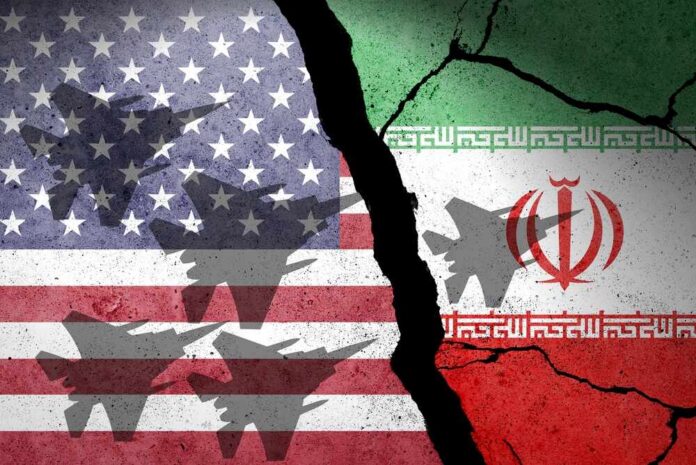
A former CIA director warns that America’s war with Iran could drag on for months, threatening U.S. casualties, regional instability, and global oil supplies—raising urgent questions about whether policymakers fully grasp the conflict’s true costs.
At a Glance
- Former CIA National Intelligence Manager Norman T. Roule assesses the ongoing U.S.-Israel-Iran war as “at a critical point,” with potential for months-long duration rather than swift resolution.
- The February 2026 “Epic Fury” operation killed Supreme Leader Ali Khamenei, but Iran’s retaliatory strikes on U.S. allies and continued resistance suggest stalemate conditions ahead.
- Oil disruptions via Iran’s control of the Strait of Hormuz pose immediate economic threats, with 20% of global oil supplies at risk from ongoing conflict.
- President Trump acknowledged potential American casualties in the conflict, signaling realistic war costs that contrast with optimistic regime-change narratives.
Intelligence Community Warns of Prolonged Conflict
Norman T. Roule, a 34-year CIA veteran and former National Intelligence Manager for Iran, delivered a sobering assessment in May 2026: the U.S.-Israel war against Iran remains unresolved and could persist for months. His expertise, grounded in decades of Middle East intelligence work, stands in sharp contrast to administration narratives suggesting quick victory through regime change. Roule’s warnings align with statements from former CIA Director William J. Burns, who emphasized the war’s prolonged consequences and course. These insider perspectives suggest policymakers may underestimate the conflict’s duration and complexity.
The “Epic Fury” Operation and Its Aftermath
On February 28, 2026, the U.S. and Israel launched “Epic Fury,” a massive military operation targeting Iranian sites and killing Supreme Leader Ali Khamenei. The strike represented an unprecedented direct action against Iran’s leadership. However, months later, Iran’s new leadership has responded with retaliatory strikes across the Gulf region, hitting U.S. allies including Bahrain, Qatar, Kuwait, and the UAE. The absence of regime collapse despite Khamenei’s death indicates that decapitation strategies alone have failed to break Iranian resistance, suggesting a protracted conflict ahead rather than swift political transformation.
Economic Threats and Oil Market Vulnerability
Iran’s strategic control of the Strait of Hormuz—through which 20% of global oil passes—creates an immediate economic vulnerability. Ongoing military operations and Iranian retaliatory capabilities threaten oil deliveries, potentially spiking energy prices worldwide. This economic dimension adds pressure on American households already dealing with inflation concerns, making the war’s indirect costs felt far beyond military expenditures. Global markets remain sensitive to any further disruptions in the region, and prolonged conflict increases the likelihood of sustained energy price volatility affecting working families and businesses.
Former CIA boss fears Iran war will ‘continue for a number of months’ https://t.co/QmogcDhBGX pic.twitter.com/OTf8ct8ZT9
— bulletinindy (@bulletinindy) May 14, 2026
American Casualties and the War’s Real Human Cost
President Trump acknowledged the possibility of American military casualties in the conflict, stating that “lives of American heroes may be lost… that often happens in war.” This candid admission underscores the human dimension often absent from policy discussions. While regime change advocates emphasize strategic benefits, the reality of American soldiers facing months of combat operations raises fundamental questions about whether the conflict’s objectives justify its costs. Families across the country face uncertainty about loved ones deployed in an expanding theater, a concern that transcends partisan politics and touches shared American values around protecting our service members.
Historical Echoes and Long-Term Consequences
The current conflict echoes America’s 1953 CIA-orchestrated coup against Iran’s Prime Minister Mohammad Mosaddegh, an operation that installed Shah Mohammad Reza Pahlavi and bred decades of resentment culminating in the 1979 Islamic Revolution. Contemporary regime-change rhetoric carries similar assumptions about reshaping Iranian governance through military force, yet history suggests such interventions often produce unintended blowback. A prolonged conflict risks creating new grievances, strengthening anti-American factions, and destabilizing the region further—outcomes that may undermine stated objectives of securing American interests and promoting stability.
Sources:
National Security Archive: CIA 1953 Coup History
CIA Reading Room: Central Intelligence Documents