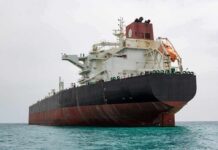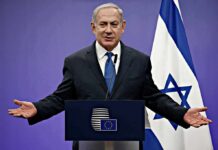

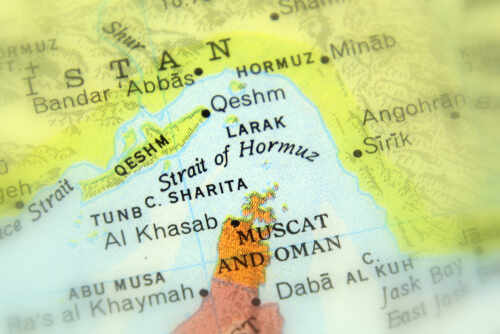
Iran’s de facto shutdown of the Strait of Hormuz has turned a global trade lifeline into a bargaining chip—and Washington is now answering with a blockade of its own.
Quick Take
- U.S.–Iran talks in Islamabad reportedly collapsed after marathon negotiations, with Hormuz control and uranium stockpiles among the key sticking points.
- President Trump ordered a U.S. naval blockade of the Strait of Hormuz after talks ended without agreement, escalating the pressure campaign to reopen shipping lanes.
- Iran has claimed “complete control” of the strait through drones and mines, while the U.S. has conducted warship transits to challenge that control and prepare mine-clearing.
- Roughly 20–25% of global seaborne oil moves through Hormuz, meaning a prolonged disruption risks price spikes and renewed inflation pressure.
Peace Talks Break Down as Hormuz and Nuclear Terms Collide
U.S. and Iranian negotiators met in Islamabad, Pakistan, for more than 21 hours seeking a deal to end a six-week war, but the talks ended without an agreement. Reports pointed to two especially hard problems: who effectively controls the Strait of Hormuz, and what happens to Iran’s uranium stockpiles tied to nuclear-program demands. Vice President J.D. Vance said Iran refused U.S. terms, and he departed after the talks failed.
U.S. officials framed the negotiation as an effort to restore freedom of navigation and reduce nuclear risk, while Iran pressed for recognition of its leverage and relief from sanctions pressure. The available reporting is clearer on the shipping choke point than on the specifics of uranium stockpile proposals, which appear less detailed in public accounts. That asymmetry matters: ambiguity on nuclear terms can leave room for miscalculation, even as ships and oil prices respond immediately.
Trump Orders a Counter-Blockade as the Navy Challenges Iran’s Claims
President Trump ordered a U.S. naval blockade of the Strait of Hormuz after the ceasefire talks ended without a deal, signaling that the administration intends to control ship movements and contest Iran’s ability to dictate commerce through the waterway. Around the same period, U.S. warships transited the strait with AIS switched on, an unusually overt way to broadcast presence and challenge Iran’s posture. U.S. commanders also described steps toward establishing safer commercial passage.
Iran, for its part, issued threats and public messaging meant to underscore that it is watching movements and can impose costs. Iranian communications highlighted surveillance and operational control, while U.S. actions emphasized the principle that international shipping cannot be held hostage. From a conservative standpoint, the immediate policy tension is straightforward: Americans pay the price at the pump when hostile actors can squeeze a strategic chokepoint, and deterrence fails when threats go unanswered.
The Strait’s Legal Reality vs. the War’s De Facto Reality
The Strait of Hormuz sits between Iran and Oman and narrows to roughly 29 nautical miles, yet it carries an outsized share of world energy flows. Legal analyses rooted in the U.N. Convention on the Law of the Sea describe a transit-passage regime that is not supposed to be suspended, limiting coastal states to certain safety and security regulations rather than denying navigation. In theory, that framework protects commerce; in practice, mines and drones can change outcomes faster than lawyers can.
That gap between law and capability is the story’s core warning. If Iran can impose a real-world blockade, it can try to convert battlefield leverage into political leverage—such as seeking toll-like arrangements or recognition of authority—regardless of what international norms say. The U.S. response, including overt transits and mine-clearing preparation, reflects a belief that the rules-based order only works when it is enforced. The longer the standoff lasts, the more global actors learn that chokepoints can be weaponized.
Oil, Inflation, and a Familiar Lesson About Government Competence
Energy markets treat Hormuz like a single point of failure because there is no comparable bypass for the volume involved; estimates commonly put about 20–25% of global seaborne oil moving through the strait. Reports also described hundreds of vessels waiting as disruptions mounted. Any extended interruption can ripple into higher fuel prices, higher shipping costs, and renewed inflation pressure that hits working families first—especially retirees and middle-income households already skeptical of elite promises.
https://twitter.com/
Politically, the breakdown reinforces why many voters across the spectrum say the federal government reacts late, spends heavily, and then asks the public to absorb the consequences. Conservatives tend to see this as the cost of weak deterrence and overreliance on international institutions that cannot enforce their own rules. Liberals often focus on humanitarian fallout and escalation risks. Both sides, however, recognize the same basic reality: when Washington cannot keep trade lanes open or clearly lock down nuclear terms, everyday Americans inherit the instability.
Sources:
https://time.com/article/2026/04/11/strait-of-hormuz-iran-peace-talks/
https://fortune.com/2026/04/11/iran-war-us-warships-strait-of-hormuz-transit-irgc-ceasefir-talks/
https://www.geopoliticalmonitor.com/who-controls-the-strait-the-question-mahan-never-asked/