

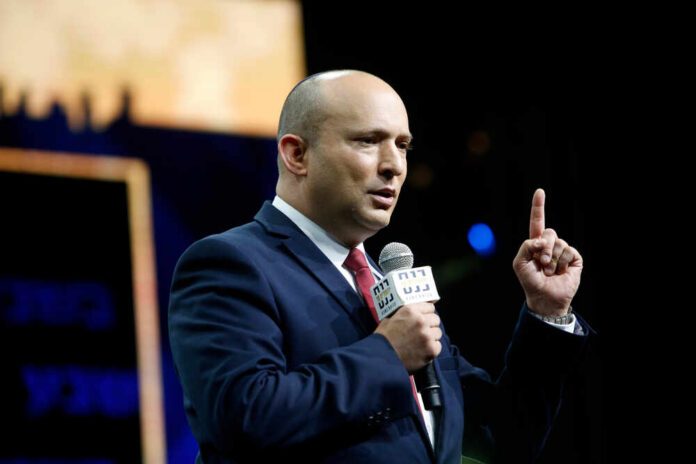
Former Israeli Prime Minister Naftali Bennett has declared Turkey “the new Iran,” marking a dramatic shift in Middle Eastern alliances that threatens to open yet another front in an already volatile region.
Story Snapshot
- Bennett labels Turkey an existential threat comparable to Iran, citing Erdoğan’s efforts to “encircle” Israel through proxies
- Israeli diplomat Ofir Akunis officially designates Turkey as Israel’s “enemy” over Gaza and Syria policies
- Turkey transformed from Israel’s closest Muslim ally to hostile adversary under Erdoğan’s 23-year leadership
- Ankara coordinates with Qatar, Muslim Brotherhood, and nuclear-armed Pakistan to build anti-Israel “Sunni axis”
- Relations collapsed after Turkey imposed trade embargo, hosted Hamas leaders, and backed Syrian regime change
From Ally to Adversary: Bennett Sounds Alarm
Naftali Bennett addressed the Conference of Presidents of Major American Jewish Organizations in Jerusalem this week with an urgent warning: Turkey under President Recep Tayyip Erdoğan has become a “sophisticated and dangerous adversary” pursuing Israel’s encirclement. The former prime minister urged Israel to “act simultaneously against Tehran and Ankara,” framing Turkey as a threat requiring the same strategic attention previously reserved for Iran. Bennett’s characterization represents the sharpest rhetorical escalation yet from a senior Israeli official, moving beyond diplomatic criticism to positioning Turkey as an active enemy state plotting Israel’s destruction through regional proxy networks.
The Architecture of a Hostile Sunni Coalition
Bennett detailed Turkey’s construction of what he termed a “hostile Sunni axis” designed to isolate Israel diplomatically and militarily. This network connects Ankara with Qatar’s financial resources, the Muslim Brotherhood’s ideological apparatus, and Pakistan’s nuclear capabilities. Turkish Foreign Minister Hakan Fidan has labeled Israel a “rogue actor” and the region’s primary threat, while Erdoğan compares Israeli Prime Minister Netanyahu to Hitler and accuses the Jewish state of genocide. Israel’s Consul General in New York, Ofir Akunis, echoed Bennett’s assessment by formally declaring Turkey an enemy, specifically opposing any Turkish military role in Gaza peacekeeping. These coordinated statements suggest growing consensus within Israeli security circles that Turkey poses systemic dangers beyond routine diplomatic friction.
Historical Rupture: How 23 Years Changed Everything
Turkey served as Israel’s closest Muslim ally until approximately 2003, maintaining robust military and intelligence cooperation that anchored Israel’s regional security strategy. Erdoğan’s rise to power initiated a gradual but relentless deterioration driven by his religious nationalist ideology and domestic political calculations. The rupture accelerated dramatically after October 7, 2023, when Hamas attacked Israel. Turkey responded by imposing a trade embargo, providing safe haven to Hamas leadership, and amplifying anti-Israel rhetoric to unprecedented levels. IDF strategic planners now categorize Turkey alongside Iran as a primary source of proxy warfare, noting Turkish support for actors in Syria and Gaza mirrors Tehran’s destabilization playbook. This transformation eliminates what was once a critical buffer between Israel and the broader Muslim world.
Syria and Gaza: Flashpoints for Direct Confrontation
Turkish involvement in Syria’s recent regime change particularly alarms Israeli security officials. Ankara installed Ahmad al-Sharaa through Turkish-backed forces, creating a client state on Israel’s northern border that potentially serves as another platform for anti-Israel operations. Combined with Turkey’s vocal demands for a role in Gaza governance and its hosting of Hamas officials, these moves constitute what Bennett describes as deliberate encirclement. The economic dimension compounds security concerns—Turkey’s embargo strains Israeli supply chains while Erdoğan leverages his relationship with President Trump and Turkey’s NATO membership to complicate American mediation efforts. Israeli analysts warn Turkey could become an “eighth front” requiring resource diversion from existing conflicts across seven theaters.
Strategic Implications: A New Regional Calculus
The absence of formal cabinet declarations distinguishing Bennett and Akunis’s statements from official policy presents a nuanced picture, yet their rhetoric signals a substantive shift in Israeli strategic thinking. Some observers note the timing may serve domestic political purposes or reflect post-Iran vacuum positioning. However, the consistency across military planners, diplomatic officials, and political leaders suggests genuine reassessment of Turkey as Israel’s “largest strategic threat.” This framing carries profound implications for regional alliances, potentially driving Israel closer to Greece and Cyprus while straining already fragile Arab-Israeli normalization efforts that Erdoğan actively opposes. For Americans watching their government navigate these treacherous waters, the question becomes whether Washington’s NATO commitments and Middle Eastern partnerships can coexist when a NATO member openly works to undermine a key U.S. ally.
Israel seeks to declare Turkey 'new enemy' after Iran: Turkish FM Fidan https://t.co/K2DB4WLZZl
— Ahram Online (@ahramonline) April 13, 2026
The deterioration of Israeli-Turkish relations from partnership to enmity illustrates how quickly regional alignments can shift under ideologically driven leadership. Whether Bennett’s warning represents the beginning of sustained confrontation or rhetorical posturing ahead of potential diplomatic engagement remains unclear. What is certain: the Middle East’s already complex security environment has grown measurably more volatile with Turkey positioned as Israel’s emerging adversary rather than its Muslim bridge to broader acceptance. Both Israelis concerned about encirclement and Americans frustrated by endless entanglements in regional conflicts face an unsettling reality—stable partnerships built over decades can unravel in years, leaving behind dangerous vacuums filled by hostile actors.
Sources:
Bennett warns of ‘new Turkish threat,’ calls for Zionist unity – Israel National News
Israeli diplomat labels Türkiye an enemy over Gaza and Syria stances – Yeni Şafak
Former Israeli PM Bennett warns Turkey poses a new threat – i24NEWS
Israel sizes up its next enemy: Will Turkey become the new Iran? – Brussels Signal
Turkey: Israel’s largest strategic threat – The Jerusalem Post
Former Israeli PM Naftali Bennett says Turkey is ‘the new Iran’ – AllSides