

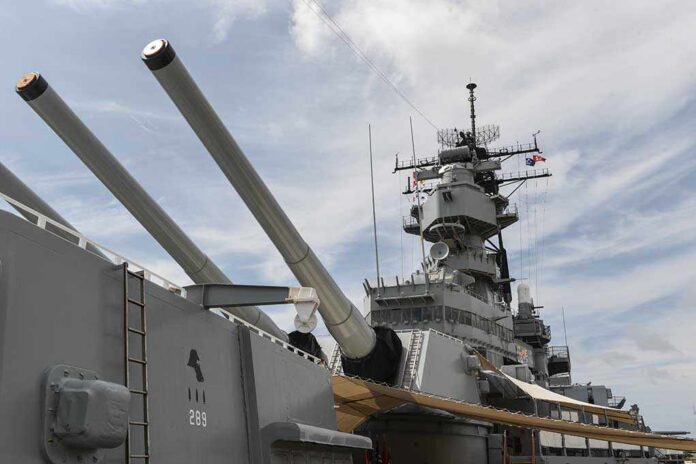
A new government watchdog report says the Navy’s plan to build 15 nuclear-powered “Trump-class” battleships will cost taxpayers far more than the Pentagon has admitted.
Quick Take
- The Congressional Budget Office says the Navy’s 2027 shipbuilding plan would cost $54 billion a year on average, 18% more than the Navy’s own estimate.
- Much of that extra cost comes from 15 planned Trump-class battleships, also called the “Golden Fleet.”
- Budget analysts peg the full battleship program at $275 billion, well above the Navy’s $157 billion estimate.
- A government auditor warns this fits a long pattern of Navy shipbuilding running over budget and behind schedule.
- Some defense experts say packing so much firepower into a few huge ships breaks the Navy’s own battle strategy.
Budget Office Flags a Costly Shipbuilding Plan
The Congressional Budget Office released its review of the Navy’s fiscal year 2027 shipbuilding plan on November 19. The report found the plan would cost an average of $54 billion a year over the next 30 years. That number is 18% higher than what the Navy itself projected. The gap matters because it means Congress may be approving a plan built on numbers that do not add up.
The budget office also compared the new plan to recent spending history. It found the Navy’s 2027 plan would cost 41% more per year, in real terms, than what Congress actually appropriated over the past five years. That is a steep jump for taxpayers already weary of government programs that blow past their original price tags.
Battleships Drive Most of the Cost Growth
Analysts point to one main culprit: the Navy’s plan to build 15 large, heavily armed battleships, officially designated BBG(X) and nicknamed the Trump class. The budget office says these ships account for much of the difference between the Navy’s estimate and its own. The first ship, named Defiant, is expected to cost about $23 billion, with later ships running around $18 billion each.
Add it all up, and the full 15-ship program could cost roughly $275 billion, according to the budget office. The Navy itself had projected the program at closer to $157 billion. That gap, nearly $120 billion, shows how far apart the Pentagon’s planners and independent budget scorers can be on a single weapons program.
Navy Says the Battleship Fills a Real Gap
The Navy defends the battleship as more than a vanity project. Public descriptions say each ship would carry 128 vertical-launch missile cells plus 12 dedicated launchers for hypersonic weapons, built to serve as a survivable command ship linking manned and unmanned forces in combat. Supporters argue a rebuilt, heavily armed surface fleet sends a clear deterrent message to adversaries like China.
Not everyone in the defense world is convinced the concept fits the Navy’s own strategy. Mark Cancian of the Center for Strategic and International Studies argues the ships would take years to design, cost roughly $9 billion each by his estimate, and run against the Navy’s stated plan to spread firepower across many smaller ships instead of a few giant ones.
A separate Singapore-based defense analysis makes a similar point, arguing that existing destroyers of similar size could carry more missile cells than the proposed battleship, and that spreading firepower across more ships, rather than concentrating it, better protects the fleet from a single catastrophic loss.
The Senate's proposed reduction in funding for the Trump class battleship is a significant development, but it is not yet a final congressional cancellation.
The Navy requested approximately $1.84 billion for FY2027, including $1 billion in advance procurement, and nearly $837…
— USAI Media (@USAI_Media) November 21, 2026
A Familiar Pattern of Pentagon Overruns
This would not be the first time a Navy shipbuilding program ran over budget. The Government Accountability Office has repeatedly found that Navy shipbuilding practices lead to cost growth, delivery delays, and ships that fall short of promised performance, citing the Columbia submarine, Littoral Combat Ship, and Zumwalt destroyer programs as recent examples. For a conservative base focused on cutting waste and demanding accountability, that track record is exactly why independent cost checks matter before Congress signs off on another multibillion-dollar bet.
A strong Navy capable of deterring China and defending American interests abroad is not in dispute. But handing the Pentagon a blank check without honest cost estimates is the kind of fiscal mismanagement conservatives have spent years fighting against. Lawmakers now face a choice: demand the Navy sharpen its numbers before more steel gets cut, or let another defense program drift toward the same overruns that have plagued shipbuilding for decades.
Sources:
mediaite.com, cbo.gov, piqmarkets.com, newsdive.net, theamericanwatchdog.com, navytimes.com