
Washington just closed a major loophole in Iran’s oil trade, putting ships that take mid-sea transfers on notice that they can be boarded, diverted, or captured.
Story Snapshot
- U.S. Central Command now treats ship-to-ship transfers of Iranian-loaded cargo as blockade evasion.
- New enforcement targets a proven tactic used to dodge port-based checks, tightening the net at sea.
- Task Force Iron Gate expands pressure to Iran’s land borders and the Caspian Sea routes.
- CENTCOM reports redirection or disablement of ships and a sharp revenue hit to Iran’s oil trade.
What CENTCOM Changed And Why It Matters
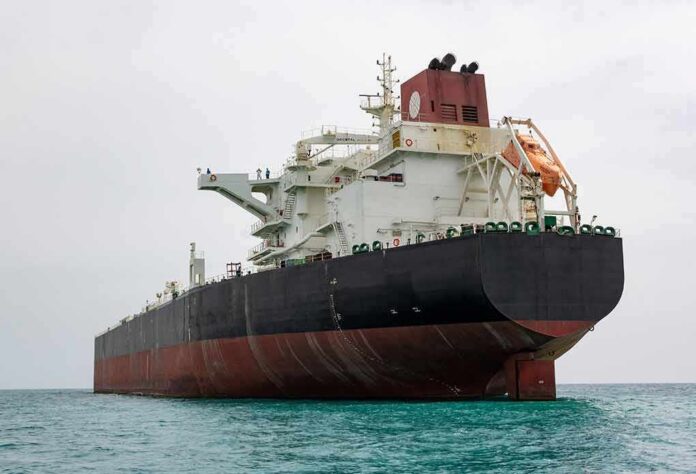
United States Central Command issued an enforcement advisory on November 18. The rule says any ship that receives cargo at sea from a vessel loaded in Iran can be treated as a blockade evader. The advisory authorizes stopping, boarding, diversion, capture, or ordering a return to the Iranian origin, consistent with law. The change closes a gap. Smugglers had avoided Iranian ports and swapped oil mid-ocean to hide origin. The policy brings those swaps under the blockade’s reach.
Reuters reported the directive was designed around a known evasion tactic. Operators used ship-to-ship transfers to mask Iranian origin without docking in Iran. Industry analysis also shows sanctioned fleets adapted by adding more relay transfers after designations. That pattern fits a broader shift to opaque moves at sea that frustrate tracing. The new rule aims at the handoff point where cover stories form, not just at the point of loading in port.
From The Gulf To The Caspian: Iron Gate Extends The Campaign
United States Central Command also stood up Task Force Iron Gate on November 7. The unit’s mission is to disrupt movement of advanced weapons, dual-use items, sanctioned goods, and illicit revenue across Iran’s land borders and the Caspian Sea. The approach links naval pressure with land-route disruption. Reporting describes a shift from a purely maritime effort toward blocking alternate corridors that keep cash and gear flowing to Tehran’s networks.
The New York Times described the task force as small and unusual in scope, with questions about practical reach. The structure puts a military command in the lead for a campaign that spans economics, security, and inland routes. That design shows intent to squeeze every pathway, not just tankers in the Gulf. It also signals that the White House expects partners to help shut down cross-border moves and Caspian ferries that have fed Iran’s procurement.
Early Results And The Ongoing Test At Sea
United States Naval Institute News reported that United States Central Command said warships had redirected about 150 vessels and disabled five since the blockade’s July return. OilPrice reported a Central Command estimate that over $25 billion in crude exports were blocked. Those figures show scale and ambition, but they are agency claims. Public vessel-by-vessel files were not shown in the reports. Independent audits could firm up the totals and help measure real revenue loss.
Shipping watchers still see Iranian adaptation. Breakwave Advisors said exports have held up through extra ship-to-ship transfers. A separate report said Iranian crude moved from a sanctioned Suezmax to an unsanctioned medium-range tanker. These facts do not erase the pressure, but they prove the cat-and-mouse continues. The new enforcement rule directly targets this weak link. The next weeks will show if more boardings and diversions cut down those relays at scale.
Security Stakes For Americans And Allies
United States Naval Institute News counted at least 16 maritime attacks in November, with threats in key chokepoints. Those attacks raise insurance costs, strain supply chains, and risk American and allied ships. A tougher net on oil revenue aims to shrink the cash that fuels those proxy groups. The measure also warns third-country operators: help Iran hide cargo, and your ship may face a stop, a tow, or a seizure under the blockade order.
3 AM Top-of-the-Hour News
The U-S has reportedly sent a third aircraft carrier to the Middle East. Axios is reporting that the U-S-S Theodore Roosevelt arrived a short time ago ahead of what it called a major escalation with Iran. Retired Army Major Mike Lyons says while the… pic.twitter.com/nj9HO4ytsu
— Worldwide News Network (@WorldwideNNX) November 16, 2026
For readers tired of weak enforcement and global double standards, this step means fewer excuses. The rule goes after the gray-market tricks, not just flag colors and port calls. It backs up sanctions with action at sea and along land routes. Legal details on each case will matter. So will partner help around the Caspian and border crossings. But the message is simple: no more free pass for mid-sea swaps that bankroll regimes that target Americans and our allies.
What To Watch Next
Watch for public case files on boarded or diverted ships. Names, cargo, dates, and legal hooks will build trust at home and abroad. Look for time-series data on ship-to-ship transfers before and after the November 18 advisory. If the numbers fall, the rule is biting. Track whether Task Force Iron Gate reports seizures on land routes or the Caspian. Concrete wins there would close more doors that smugglers use when the Navy shuts lanes at sea.
Sources:
aljazeera.com, nytimes.com, oilprice.com, fakti.bg, breakwaveadvisors.com, news.usni.org