
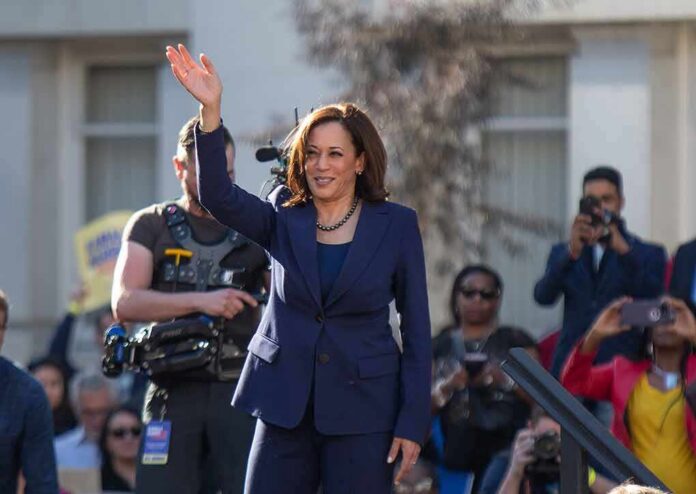
A top Democratic mega-donor is publicly refusing to back Kamala Harris for 2028, saying flatly that “the money would not come to her and the votes wouldn’t come.”
Story Snapshot
- Democratic donor John Morgan says he does not want Harris to run again and doubts she can raise money or win votes.
- Early polls still show Harris leading the crowded 2028 Democratic field, with some surveys putting her as high as 50 percent.
- Party insiders reportedly fear repeating a losing formula after Harris’s 2024 defeat to President Trump.
- No single alternative, including Gavin Newsom, Pete Buttigieg, or Alexandria Ocasio-Cortez, has consolidated support.
Donor Doubts Threaten Harris’s Path
Democratic mega-donor John Morgan put his skepticism about Kamala Harris on the record, saying he does not want her to run for president again. He argued her campaign coffers and voter turnout would fall short a second time, a blunt warning from inside the party’s own money machine. That kind of public doubt from a major funder rarely happens without deeper grumbling behind closed doors.
Morgan’s comments tie Harris directly to the unpopular record of the Biden years, an era many Democrats now treat as politically toxic. Voters already rejected that ticket once in 2024. Democratic strategists worry that nominating Harris again would hand President Trump and Republicans an easy target: four more years tied to policies voters already fired.
Polls Still Show Harris on Top
Despite the donor pushback, Harris keeps showing up as the front-runner in early polling. A Rasmussen Reports survey found 34 percent of likely Democratic primary voters back her, well ahead of the rest of the field. A separate Harvard/Harris poll put her support even higher, at 50 percent among Democrats surveyed. Name recognition, not enthusiasm, may explain much of that lead.
The numbers create a strange split. Rank-and-file Democrats keep telling pollsters Harris is their top pick, even as the people who actually cut checks and run campaigns say she cannot win. That gap between grassroots polling and elite confidence is exactly the kind of dysfunction conservatives have watched plague the Democratic Party since President Trump’s 2024 win.
Party Insiders Fear a Repeat Loss
Democratic strategists quoted in party circles say Harris’s 2024 loss still haunts internal conversations about 2028. Some argue her campaign was too short to prove anything about her real appeal. Others say the loss reflects a bigger problem: a candidate too closely tied to an administration voters already rejected over inflation, open borders, and soft-on-crime policies.
A USA Today opinion piece pointed to Democratic governors like Josh Shapiro and Andy Beshear as stronger general-election prospects than either Harris or Newsom, arguing the party keeps overlooking candidates with actual swing-state wins. That kind of second-guessing from within Democratic media itself shows how unsettled the party remains about its own bench heading into the next race.
A Fractured Field With No Consensus
Research from the center-left group Third Way found Democratic voters want a nominee who fights for working people, works across the aisle, and comes across as authentic. Harris struggled with that “authentic fighter” image in 2024, and donors like Morgan clearly doubt she has fixed that problem. Newsom, Buttigieg, and Ocasio-Cortez all poll competitively enough to keep the race wide open.
None of the alternatives have consolidated Democratic support either, leaving a party that beat itself in 2024 still searching for direction two years later. For conservatives watching from the outside, the spectacle of Democratic donors trashing their own front-runner while primary voters shrug and keep polling her at the top is a clear sign the party has not learned its lesson from the last election.
2028 Democratic Primary Crosstabs — Black Democrats only (6 recent polls)
J.L. Partners
🔵 Harris: 53% (+45)
🔵 Newsom: 8%
🔵 AOC: 4%
🔵 Buttigieg: 0%
——
Harvard/Harris
🔵 Harris: 55% (+38)
🔵 Newsom: 17%
🔵 Buttigieg: 7%
🔵 AOC: 4%
——
Manhattan Institute
🔵 Harris: 45%… pic.twitter.com/DVFUoeHxUq— InteractivePolls (@IAPolls2022) July 27, 2026
Whether Harris even runs remains unconfirmed. Multiple outlets note she has not declared a 2028 campaign, which means every poll, every donor complaint, and every strategist’s worry is built on a hypothetical candidacy that may never officially launch.
Sources:
townhall.com, facebook.com, usatoday.com