
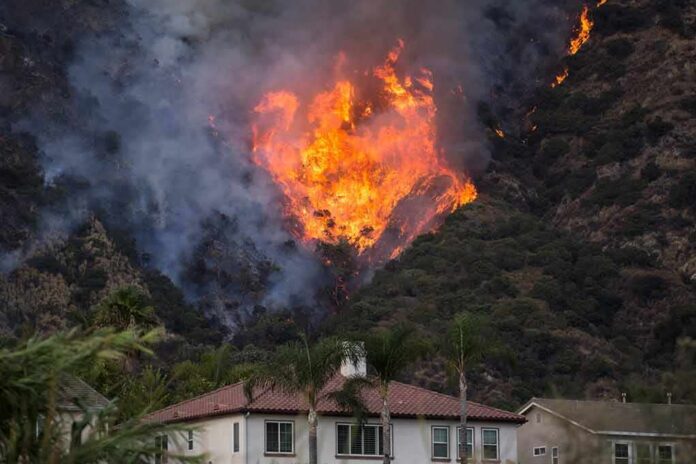
Spain has declared its first-ever national emergency for wildfires, as merged blazes near Madrid overwhelm local forces and trigger mass evacuations.
Story Snapshot
- Spain’s central government has taken direct command of firefighting after fires near Madrid and Ávila grew “beyond capacity” and forced tens of thousands to flee.
- Military units and European partners are now leading major parts of the response, raising real questions about centralization and dependence on outside help.
- Heatwaves, wind, and suspected human causes turned multiple smaller fires into one massive front, echoing broader worries about aging grids and weak land management.
- For American conservatives, Spain’s crisis is another warning about what happens when government ignores hard infrastructure, energy realism, and basic preparedness.
Spain’s Wildfire Emergency Shows What Happens When Crisis Outruns Local Control
Spanish officials say several fires west of Madrid merged into a single blaze that they now describe as “beyond the capacity” of firefighters to manage. This front, pushed by extreme heat and strong winds, has forced evacuations and lockdowns affecting around 60,000 people in the Madrid and Ávila areas. For the first time, Spain’s government responded by declaring a national emergency for wildfires, shifting control from regional leaders to the interior minister in Madrid. That move mirrors the same instinct we see in Europe and in Washington: when local systems struggle, central authorities step in fast, often with sweeping powers.
The declaration means Spain’s Interior Ministry now coordinates all firefighting resources, including regional brigades, national police, and the country’s Military Emergency Unit. Reports say military units are leading efforts on the ground near Madrid and Ávila as part of this single command structure. On paper, that helps cut red tape when lives are at stake. But it also concentrates power in one political office and sets a precedent: in the next “emergency,” central authorities can more easily bypass local judgment. American readers have seen versions of this during pandemic orders, energy rules, and border crises, where “coordination” can shade into control.
Mass Evacuations, Military Deployment, and European Reinforcements
Media coverage from Europe describes a fast-moving disaster, with more than 250,000 people evacuated across Spain and France as multiple fires raged near Madrid and Bordeaux. In Spain alone, Interior Ministry figures say nearly 60,000 people in the Madrid and Ávila regions have either left their homes or been ordered to stay inside because of smoke and flame risk. To support overwhelmed local crews, Spain’s military has deployed thousands of personnel and dozens of aircraft to fire lines in recent seasons, and foreign partners have sent firefighters, vehicles, and planes as well. That level of mobilization underscores just how thin regular emergency capacity can be when state planners focus more on climate slogans than concrete readiness.
European Union mechanisms have also been activated to send firefighting aircraft and teams into Spain. Spanish and European leaders openly frame the crisis as a lesson about climate change, promising new “permanent state policies” around climate emergencies. That framing shifts debate away from hard questions about forest management, grid reliability, and enforcement against arsonists. Spain’s own long-term data show that most fires over the past decades were started by people, and more than half were set on purpose. When leaders talk only about climate, they risk ignoring the criminal and policy failures that conservatives would call out as common sense: secure the land, police the bad actors, and keep energy and infrastructure strong.
Weather, Human Causes, and the Push for More Central Emergency Powers
Officials and reporters describe this year’s fires as driven by a “perfect storm” of extreme heat, high winds, and merging fire fronts. A deadly blaze in southern Spain’s Almería region, which killed at least 12 people and left many missing, may have started with a fallen power line, according to early reports. That possibility will sound familiar to Americans who watched California’s fires traced back to aging grid hardware and delayed maintenance. When governments chase green targets and cut reliable energy investment, basic safety work on lines, rights-of-way, and access roads often slips.
**G-1. Macron calls crisis cabinet as France-Spain wildfires threaten Bordeaux on day six**
**Frame — what people think:** A sudden climate emergency with out-of-control wildfires forcing mass evacuations across France and Spain; Macron stepping up with a crisis cabinet as… https://t.co/1r4fzwI3QR
— GrumpyNews, emotionally clean news. (@GrumpyNews_) July 27, 2026
Spain’s prime minister has already signaled plans to make climate emergency measures permanent national policy, building on this wildfire season as justification. Under that approach, temporary crisis powers can turn into standing authority for central ministries, far beyond firefighting. For conservatives, this is the real warning in Spain’s story. Emergencies are real, and well-coordinated response saves lives, but vague “climate” mandates and permanent emergency law invite mission creep. The more power a distant capital accumulates during each disaster, the easier it becomes to regulate property, guns, farming, and energy choices under the same banner.
Why Spain’s Fires Matter to American Conservatives Watching Washington
Spain’s struggle with wildfires is not just a foreign headline; it is a live case study in how modern governments handle crisis. First, they expand central control. Second, they lean on military and cross-border assets when regular systems prove inadequate. Third, they frame the story mainly around climate, even when human behavior and weak infrastructure play major roles. American conservatives have seen all three patterns at home, from federal pressure on states to energy policies that raise costs while grids age, to agencies using “emergency” language to justify new rules.
Watching Spain, readers can draw some clear lessons. Strong local capacity, serious forest and land management, and honest accounting of human causes matter more than slogans. Emergency powers should stay narrow, clearly time-limited, and focused on real threats, not used later to push unrelated agendas. And when foreign partners or supranational bodies step in, countries must guard accountability, so voters know who made which decisions and why. Spain’s fires are a human tragedy. They are also another signal that free nations must balance urgent action with firm limits, or risk seeing every crisis turned into a gateway for bigger government and weaker local control.
Sources:
youtube.com, usnews.com, euronews.com, bbc.com, reuters.com, apnews.com, surinenglish.com