President Trump’s across-the-board tariff push is shifting trade power back toward American workers and away from countries that have gamed our markets for decades.
Story Highlights
- President Trump ordered a baseline 10 percent duty on most imports to rebalance trade and reduce chronic deficits.
- Congressional research tracks expanded tariff use in Trump’s second term and the legal tools that enable it.
- Some lawmakers seek to reclaim tariff authority from the White House, citing Article I powers.
- Courts narrowed one emergency tool, but other trade statutes remain available for targeted actions.
What Trump Ordered And Why It Matters
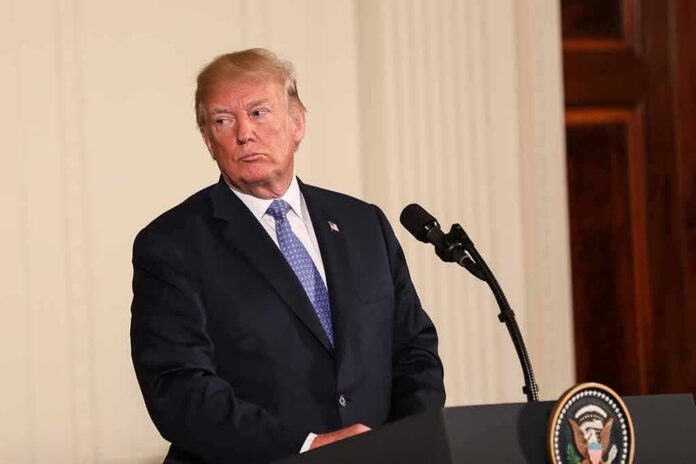
President Trump signed a directive in April 2025 setting an added 10 percent duty on nearly all imports, with the goal of rebalancing trade flows and cutting large goods trade gaps. The order framed the duty as a simple, across-the-board rule to counter years of one-sided deals and foreign industrial policy that undercut American shops and mills. The policy message was plain: the United States will no longer accept persistent deficits while rivals protect home industries and flood our market.
Congressional researchers confirm that since January 2025, tariffs have increased across many product lines and partners. They detail how presidents can act under existing trade laws, and where Congress can step back in. Their work maps the current landscape so businesses, workers, and lawmakers can see which legal paths are open and which are limited. The report also tracks implementation steps and timelines that shape supply-chain choices and price pressures in the near term.
The Law: Where Executive Power Starts And Stops
Congress holds the tariff power under the Constitution, but it has delegated parts of that power for decades. Statutes allow presidents to adjust duties in set cases, like addressing unfair trade or threats tied to national security. Analysts outline how these delegations work and how Congress can review or reverse some actions by votes and time limits. This shared structure lets a president act fast, while keeping Congress as the final backstop on long-running measures.
Courts have recently narrowed one path that used emergency powers to place import taxes. After the ruling, legal analysts note that targeted trade tools, such as actions tied to security or unfair practices, remain active. Another statute that allows temporary tariffs has hard caps and requires congressional approval for longer use. That mix means the White House still has tools, but must fit actions to the right law and timelines.
Pushback In Congress And Why The Debate Helps Voters
Some members of Congress argue the White House has too much room to set tariffs today. They cite Article I and want new guardrails, like strict time limits or votes to extend major duties. A taxpayer group echoes that concern and urges senators to resist bills that hand the executive even more tariff power. Their view is that new import taxes are taxes in substance and should return to the legislative branch for control.
Other voices in policy circles explain why Congress delegated in the first place. They note lawmakers feared pressure from narrow interests and wanted the executive to negotiate and act with speed. That history created today’s structure: more discretion at the White House, with Congress able to claw back authority when it chooses. A well-run system needs both parts working, and voters should expect clear goals, tight legal footing, and regular review.
How The Policy Aims To Protect American Families
The tariff baseline seeks to change behavior abroad and rebuild capacity at home. The White House argues that persistent deficits reflect tilted rules and state subsidies overseas, not free trade. A simple duty sets a floor that encourages sourcing shifts, new domestic investment, and fairer terms in talks. It also gives the United States leverage to win targeted exemptions when partners drop barriers and respect our workers and farmers.
Critics warn that import taxes can raise prices. That risk is real in the short run. But families know what long-run damage looks like when factories close and wages stall. The administration’s bet is that a stable, transparent baseline supports planning, moves production back, and reduces reliance on hostile regimes. Congress still has tools to refine or time-box measures. That balance can keep pressure on foreign cheaters while guarding American wallets.
What To Watch Next
Lawmakers are weighing new rules that either expand targeted tariff power for strategic foes or tighten oversight to reassert Article I control. Business leaders want clarity so they can invest in plants, ports, and people. The administration says the baseline duty is leverage for better deals, not an end state. Watch for exemptions tied to verified reforms, and for Congress to set clean review windows so families and small firms get predictability with strong borders and strong industry.
Sources:
youtube.com, congress.gov, whitehouse.gov, ntu.org, brookings.edu, cbc.ca, constitutioncenter.org, ilj.law.indiana.edu