

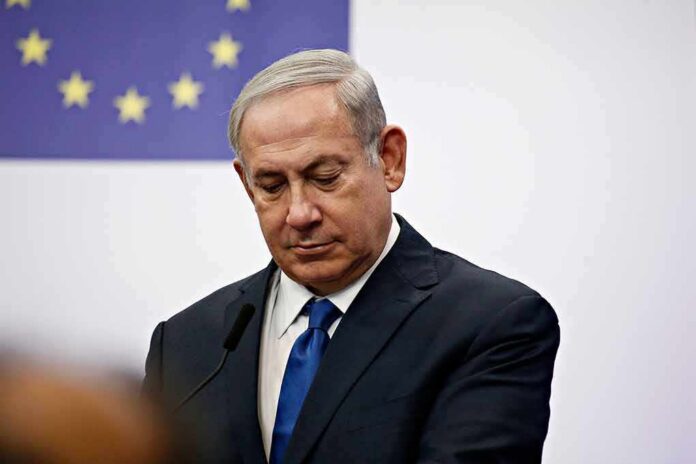
Israel’s prime minister has flatly rejected a key part of President Trump’s Gaza peace plan, exposing deep fault lines between Washington’s push for a quick deal and Israel’s demand for full Hamas disarmament first.
Story Snapshot
- Netanyahu says the US-backed Gaza draft is “not our draft” and that Israel never agreed to it.
- Israel insists there will be no lasting ceasefire or troop withdrawal until Hamas is fully disarmed and stripped of power.
- Hamas and some foreign leaders welcome Trump’s framework, but Israel says it does not meet core security needs.
- The clash highlights the risk when peace plans move faster than real security guarantees, something Americans know too well.
Netanyahu Publicly Breaks With The US-Backed Gaza Draft
Prime Minister Benjamin Netanyahu used a video message on his social media to make Israel’s position clear: the Gaza proposal pushed by President Trump’s team is a draft from Washington, not from Jerusalem, and Israel did not agree to it. Netanyahu said, “They sent us a draft – we did not agree to it, it is not our draft. We sent our comments,” drawing a bright line between American expectations and Israeli consent. That public break leaves the plan in doubt.
Netanyahu’s office followed up by stressing that the version of the framework now being discussed in public does not reflect Israel’s actual positions. A spokesman said Israel had shared “comments and concerns” with American officials and warned that the public text misrepresents their stance. This signals that Israel sees the draft as a work in progress, not a binding deal. For readers at home, it is a reminder that foreign policy headlines often hide unfinished bargaining underneath.
Israel’s Red Line: No Withdrawal Before Hamas Is Disarmed
Israeli leaders have tied any lasting ceasefire or troop pullback in Gaza to one core demand: Hamas must be fully disarmed and lose its power to rule before Israel stands down. Reports on Israel’s response say there will be no withdrawal from current lines inside Gaza until Hamas is disarmed and the strip is demilitarized. Netanyahu’s office has also said any deal must let Israel keep fighting until its aims are met, including destroying Hamas’s military and governing tools. That reflects a hard security-first doctrine.
Several outlets describe this same pattern: Trump’s plan offers a path to ceasefire and withdrawal, but Israel rejects it because it does not lock in full Hamas disarmament before Israeli troops move back. One summary of Israel’s reply said the plan did not “adequately address” demands that Hamas be stripped of weapons and power. For many conservative Americans, that stance feels familiar. It mirrors our own call for victory over terror groups instead of half measures that leave enemies armed and waiting for the next attack.
Pattern Of Resisting Outside Pressure On Gaza And Statehood
Netanyahu’s rejection of the Trump-backed draft fits a longer record. He has resisted pressure from foreign governments to accept plans that hint at a future Palestinian state or limit Israel’s freedom to act against terror threats. Earlier statements from Netanyahu said Israel must keep security control over all land west of the River Jordan, a view that clashes with ideas of full Palestinian sovereignty. His postwar Gaza plan also centers on complete demilitarization and the end of Hamas rule. These goals drive his response to any outside proposal.
🚨 **#BREAKING: NETANYAHU REJECTS US GAZA PLAN + IRAN DENIES TALKS WITH US + MASSIVE PROTESTS IN JAPAN OVER MOSQUE!** 🚨
🇮🇱🇺🇸 **NETANYAHU: ISRAEL DID NOT AGREE TO US-BACKED GAZA PLAN**
Israeli PM Benjamin Netanyahu says Israel rejected the draft proposed by President… pic.twitter.com/4DTQkK3CLG
— don stefan (@DonStefan____) August 5, 2026
Inside Israel, this hard line is shaped by coalition politics as well as security concerns. Some right-leaning ministers attack any framework that appears to open the door to Palestinian statehood or weakens Israel’s leverage, making it costly for Netanyahu to seem soft on withdrawal terms. On the American side, this should sound like a warning about how fast globalist diplomats try to lock in “solutions” that do not fix the root problem. When plans move ahead of disarmament and real control on the ground, they invite more war, not peace.
What This Standoff Means For Americans Watching The Gaza War
For American readers who back President Trump and value clear strength against terror, this clash is important. The Trump administration is trying to end a brutal war and free hostages, but it must work with partners who live under constant rocket fire and trust their own red lines. Netanyahu is saying no to a plan he believes could leave Hamas armed and in place, even if it wins praise abroad. That kind of pushback, even toward a friendly White House, shows how serious the security stakes are for Israel’s leaders.
The dispute also exposes how modern peace plans can drift away from basic common sense. Mediators and global institutions often push quick ceasefires, reconstruction schemes, and political roadmaps while terrorists remain capable of fresh attacks. Netanyahu’s team is pressing the opposite order: disarm the killers first, then talk about rebuilding. For conservatives in America, this echoes our broader concerns about dealing with crime, border chaos, and foreign threats. Real peace comes when the bad actors lose their guns, rockets, and tunnels—not when politicians sign another feel-good document.
Sources:
insiderpaper.com, wsj.com, firstpost.com, bbc.com, cnn.com, newarab.com, rte.ie, yahoo.com, timesofisrael.com, economictimes.indiatimes.com, aa.com.tr, english.news.cn, npr.org, nbcnews.com