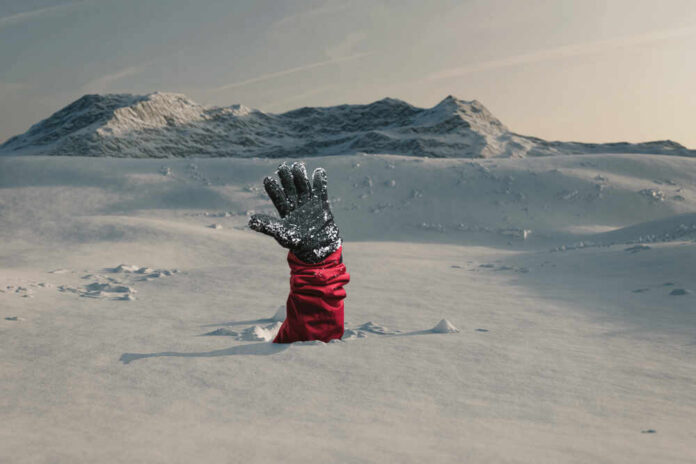
Grossglockner TRAGEDY: Court Turns Survival Into Crime
An Austrian court conviction is sending a chilling message to anyone who believes personal risk in the mountains excuses abandoning a partner when things go wrong.
Quick Take
- Austrian climber Thomas Plamberger was found guilty after prosecutors argued he left his girlfriend, Kerstin Gurtner, to die during a winter climb.
- The fatal incident happened January 18, 2025, during an overnight attempt on Grossglockner, Austria’s highest peak at 3,798 meters.
- The case spotlights how European “duty of care” expectations can cross from moral pressure into criminal liability.
- Investigators and mountain rescue authorities were drawn into a high-profile debate over what “reasonable rescue” means in extreme terrain.
What Happened on Grossglockner—and Why It Became a Criminal Case
Thomas Plamberger and his 33-year-old girlfriend, Kerstin Gurtner, started an overnight winter ascent of Grossglockner on January 18, 2025, in Hohe Tauern National Park. Grossglockner’s routes are known for exposure, icefalls, and sudden weather shifts, conditions that become unforgiving when temperatures drop and help is far away. After Gurtner suffered a fatal accident during the climb, Austrian authorities investigated not only the incident itself but also Plamberger’s actions afterward.
Prosecutors argued that Plamberger’s post-incident decisions amounted to “gross negligence,” framing the case as more than a tragic mountaineering mishap. Plamberger, according to court-related reporting, maintained that rescue was impossible under the conditions he faced. The end result was a guilty verdict for leaving her to die—an outcome that stands out because it treats a partner’s alleged abandonment in a high-alpine emergency as criminal conduct rather than merely unethical behavior.
An Austrian court has convicted a man of manslaughter caused by gross negligence after his girlfriend froze to death as the couple attempted to climb the country’s highest peak last year.#austria #mountaineering #crime #courthttps://t.co/u27Y24mtqA
— 650 CKOM (@CKOMNews) February 20, 2026
Austria’s “Duty of Care” Meets the Reality of Winter Alpine Risk
The case landed in a legal environment where partner responsibility in the mountains is taken seriously, and where authorities may view a shared expedition as creating enforceable obligations. Reporting notes that Austria’s alpine rescue framework can hold climbers accountable for partners during joint undertakings, especially when decisions made by the stronger or leading climber shape the other person’s odds of survival. That legal posture can collide with the harsh truth that winter conditions sometimes turn rescue attempts into life-or-death gambles.
Legal scholars cited in the reporting describe an evolution in mountaineering law: what used to be handled as civil liability or community condemnation is increasingly evaluated through a criminal lens when a death occurs. That trend is familiar across parts of Europe, where the state often claims a stronger role in regulating risky behavior in the name of safety. For Americans who instinctively distrust government second-guessing in emergencies, the case raises a hard question: when does “duty” become a tool for prosecutors to re-litigate split-second survival decisions?
Why the Court Focused on Leadership, Decision-Making, and Abandonment
According to the research, Plamberger was the lead climber during the ascent, giving him outsized influence over pace, route decisions, and whether to continue, descend, or attempt assistance. That power dynamic matters because prosecutors and judges tend to examine what the more capable partner knew, what options existed, and whether any attempt at aid was reasonable. The conviction signals that the court believed the threshold for abandoning a partner had been crossed, even in a setting where mistakes can be fatal fast.
Climbing community reactions described in the reporting split along a predictable line. Some climbers defend Plamberger by emphasizing survival instincts and the brutal constraints of high-alpine weather, darkness, and exhaustion. Others argue that roped partners in winter terrain accept a mutual rescue obligation that doesn’t vanish when the situation turns ugly. That debate is not just philosophical; it affects how climbers plan, what training clubs emphasize, and whether climbers increasingly feel pressured to attempt rescues that could create two fatalities instead of one.
What Comes Next: Scrutiny, Regulation, and the Risk of Government Overreach
As of early 2026, the guilty verdict reportedly stands, with sentencing finalized in late 2025 and no further successful legal motions publicly reported. Even with limited public detail on the precise sentence length, the broader impact is already visible in the discussion around winter ascents and accountability. The research notes possible downstream effects including heightened scrutiny of winter climbs, increased rescue callouts, higher insurance costs, and even proposals such as mandatory tracking devices.
Conservatives don’t need to romanticize reckless risk to see the concern here: once the state decides it can criminally referee judgment calls made in extreme, time-compressed emergencies, the incentive structure changes. People may take bigger risks to avoid legal consequences, or avoid helping altogether out of fear that imperfect aid will be prosecuted as negligence. The available reporting is based heavily on one specialized source, so some specifics remain limited, but the core takeaway is clear: Europe’s expanding criminalization of “failure to rescue” is reshaping what partnership means on the mountain.
Sources:
Austria Climber Found Guilty for Leaving Girlfriend to Die