
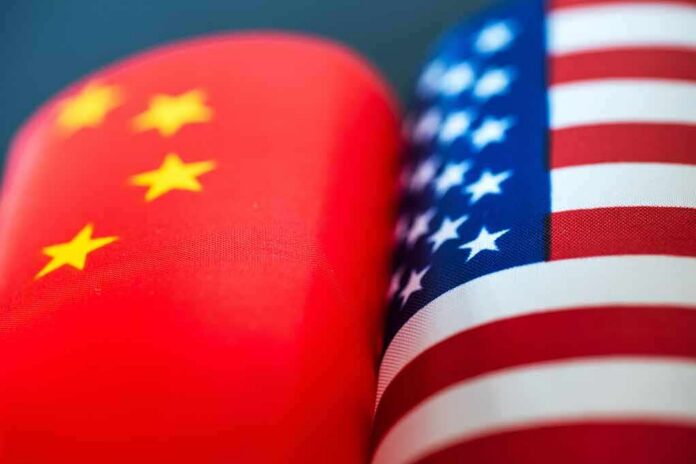
Tariff relief on only “non-sensitive” goods shows Trump’s U.S.–China Board of Trade is a cautious tool, not a blank check.
Story Highlights
- Tariffs trimmed on about $30 billion each way, focused on low-risk, consumer and farm goods.
- White House framed relief as limited to goods with no national-security risk.
- Broader trade truce extended two months to January 10, preserving leverage while talks continue.
- Key disputes over tech, rare earths, and export controls remain unresolved.
What the tariff step actually does
White House lists show both countries trimmed tariffs on about $30 billion in goods. The United States targeted “non-sensitive” items like agricultural products, seafood, logs and wood, cosmetics, and medical devices. China’s list covered small appliances, toys, holiday decorations, and children’s car seats. These are everyday goods, not core technologies. The move gives some cost relief to families and producers without touching strategic sectors that matter for security.
United States Trade Representative Jamieson Greer said the point was to keep national-security risk off the table. He pointed to consumer goods, low-tech items, medical devices, energy, and farm products as eligible. That framing matches the product lists and keeps pressure on areas where Beijing’s behavior remains a problem. The plan avoids any handout on semiconductors, advanced batteries, or critical supply chains that China tries to dominate.
The truce extension and what it buys
Treasury Secretary Scott Bessent confirmed the broader trade truce was extended two months, from November 10 to January 10. That window gives negotiators a little time to push follow-on talks. Reports tied the tariff trims to a larger package that includes an artificial intelligence dialogue and an eight-point agenda from Xi’s visit. The narrow scope protects leverage while keeping markets calm and reducing holiday-season price pressure.
Coverage described this step as building on the earlier Busan truce. That truce sought stability while linking progress to actions from Beijing on fentanyl, soybean purchases, and steady rare earth exports. The new moves keep that steady tone in place, but they stop well short of a reset. The structured give-and-take shows reciprocity, not a one-sided gift, which matters for American strength and credibility.
Limits, open questions, and why hopes stay modest
Reports did not include detailed tariff rates, enforcement rules, or exact timing. That leaves the real economic punch unclear. The Board of Trade label also lacks firm details on who runs it and how it decides cases. Those gaps help explain why analysts call the step modest. It is real and targeted, but it does not settle the fight over tech controls, rare earth leverage, or industrial overcapacity that harms U.S. workers.
Independent reporting says China continues to use economic tools to gain advantage, even during truces. Major sticking points remain: high tariffs, export controls on sensitive technology, and rare earth supply risks. That is why many experts caution that this de-escalation does not equal normalization. For conservatives, that means staying vigilant. Keep tariffs where needed, force transparency, and tie any further relief to measurable results that help American families and factories first.
What this means for conservative readers
This deal delivers narrow relief without surrender. Families may see lower prices on toys, small appliances, and holiday goods. Farmers and medical suppliers may move products faster. But Beijing did not get a pass on strategic tech or defense-linked items. The Trump team kept the pressure tools in place while preventing price spikes. That approach supports secure borders, strong industry, and lower costs, and it avoids the old globalist habit of trading away leverage for empty promises.
How to judge next steps
Watch for formal notices that spell out rates and dates. Look for clear customs guidance that shows this is more than talk. Track whether Beijing follows through on fentanyl crackdowns and stable rare earth flows. Expect more targeted talks on artificial intelligence safety and export controls. If results are real and verified, more relief on truly low-risk items may follow. If not, the United States still holds the tools to raise pressure fast and protect American jobs.
Sources:
washingtonexaminer.com, english.aawsat.com, nypost.com, washingtonpost.com, thehindu.com, reuters.com, foxnews.com, axios.com, politico.com