

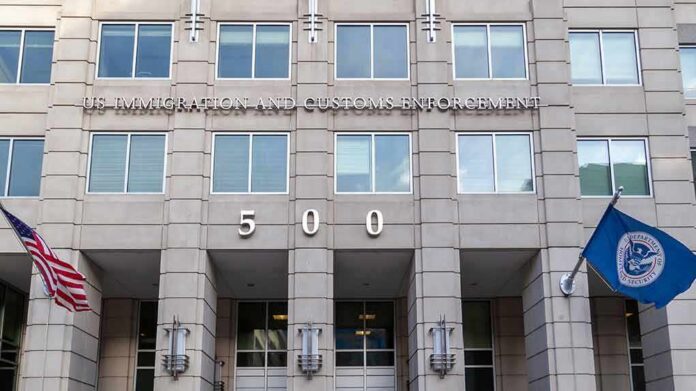
A viral claim said immigration officers stopped deporting anyone but “criminal aliens,” but official records show enforcement still applies to many removable noncitizens beyond convicted criminals.
Story Snapshot
- DHS policy has long allowed action against a wide range of removable noncitizens, not just convicted criminals.
- Trump-era guidance rejected blanket exemptions and set multiple priority buckets, including fraud, benefits abuse, and final orders.
- Historic ICE reports and testimony show recent border entrants and repeat violators were also enforcement targets.
- A 2026 DHS update highlighted ongoing removals of serious offenders, reinforcing a public-safety focus.
What the Viral Claim Gets Wrong
Social media posts claimed Immigration and Customs Enforcement now only deports “criminal aliens.” Government records do not match that claim. A Congressional Research Service summary of Department of Homeland Security guidance describes broad enforcement categories, including border violators, fraud, public-benefit abuse, final removal orders, and public-safety or national-security risks, not only convicted criminals. That means officers can act against many types of removable noncitizens when the facts and the law support it.
The American Immigration Council’s own summary of Trump-era enforcement states that priorities included people charged with crimes, those who committed chargeable offenses, those who engaged in fraud, those who abused public benefits, and those with final orders who refused to depart, along with people who pose safety or security risks. While that group often criticizes strict enforcement, its recap underscores that eligible targets included far more than one narrow criminal category.
What The Record Shows Under Longstanding Policy
Federal records long before the current debate show this broader approach. The Immigration and Customs Enforcement Enforcement and Removal Operations report for fiscal year 2015, published under prior leadership, listed priorities that reached beyond criminal convictions. Those included recent border entrants and certain interior unlawful entrants, along with national-security and public-safety threats. This history shows the system has not been a simple “criminals only” switch, despite how pundits often frame it.
Department of Homeland Security testimony to Congress in 2011 described enforcement targets that included national-security threats, recent illegal entrants, repeat violators, and fugitives or those obstructing immigration controls. That testimony counters the claim that broad action against noncriminal categories is new or improper. Rather, it reflects a long-running structure in immigration law and operations: protect the public, enforce final orders, and address illegal entry and fraud as part of a complete strategy.
Trump-Era Guidance and Today’s Focus
Trump-era policy emphasized that the Department of Homeland Security would not carve out classes of removable people and give blanket passes. The framework set multiple priority buckets and directed officers to enforce the law against all removable individuals while focusing resources on serious public-safety and security risks, recent unlawful entrants, fraud, public-benefit abuse, and final-order cases. That balanced approach rejects “open borders” confusion and the false claim that only convicted criminals can face removal.
Recent public updates reinforce that focus on safety. In August 2026, the Department of Homeland Security announced removals of killers, drunk drivers, sexual assailants, and weapons traffickers, signaling continued pressure on dangerous offenders. That message aligns with President Trump’s pledge to protect communities, while the policy record shows officers retain authority to act against other removable noncitizens when warranted by law and evidence.
Why The Narrative Keeps Getting Skewed
Media and activist feeds often compress complex policy into a blunt “criminals only” versus “everyone” story. The actual record supports a broader, law-driven set of targets that include criminals, yes, but also border violators, final-order fugitives, and those who commit fraud or abuse public benefits. That matters for public safety and the rule of law. Communities want fewer repeat crossers, less document fraud, and clear consequences for ignoring final court orders.
The data picture still has gaps. Public sources here lean on policy memos, reports, and statements rather than a fresh, full 2026 breakdown by criminal history and entry category. That limits how precisely we can measure day-to-day allocation across groups. But the available record is clear on the core point: federal policy does not set deportation only for convicted criminals. It authorizes broader, common-sense enforcement to secure the border, uphold court orders, and protect families.
Sources:
ice.gov, congress.gov, dhs.gov, americanimmigrationcouncil.org