
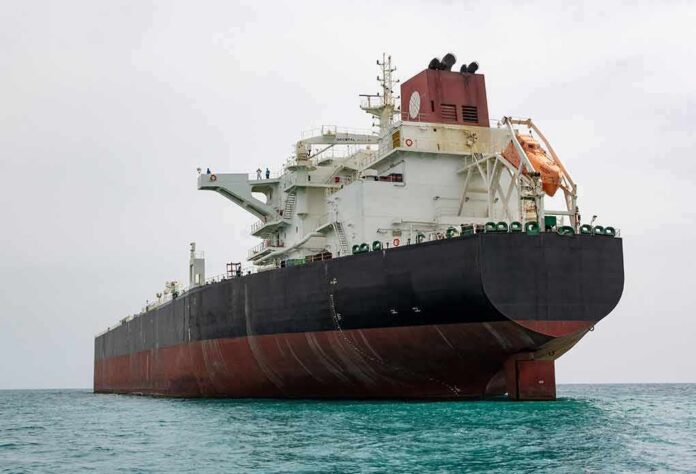
Iran says it will reopen the Strait of Hormuz in seven days—but only if America eases pressure and lifts the port blockade, raising fresh stakes for global energy and U.S. security.
Story Snapshot
- Iran offered to reopen Hormuz within seven days if the United States eases military pressure and lifts its blockade on Iranian ports.
- Talks occurred through mediators during the United Nations General Assembly; both sides remain far apart.
- The United States and partners demand free passage with no attacks or tolls before any deal moves forward.
- Dozens of countries urged an immediate reopening and condemned attacks that disrupted trade and energy flows.
What Tehran Proposed And Why It Matters
Reuters reported that a senior Iranian official said Tehran could reopen the Strait of Hormuz within seven days if the United States eases military pressure and lifts its blockade on Iranian ports. Sources also said U.S. and Iranian teams discussed a phased pathway that links shipping access to steps on sanctions and military activity. This offer targets the most critical oil chokepoint on earth. Any shift there can move prices, test alliances, and affect families at the pump.
United Nations shuttle diplomacy brought messages back and forth between the sides, but gaps stayed wide. Iran’s president used his speech to attack President Trump’s stance while saying he still wants talks, a sign Tehran is trying to keep leverage while seeking relief. During this same window, a coalition of nations urged reopening the strait and condemned attacks by Iran and its partners, raising global pressure on Tehran to stop threats to shipping.
U.S. Red Lines: Free Passage, No Tolls, No Attacks
Senior U.S. officials said Iran must publicly commit to stop attacks on ships, keep all lanes open, and impose no tolls before any deal advances. This standard backs a basic principle: freedom of navigation. It also rejects any plan that lets Tehran control who passes or charge transit fees, ideas U.S. officials have rebuffed before. The United States has not granted Iran control of Hormuz traffic and signaled it will not do so now, keeping pressure on Iran to change behavior.
President Trump has rejected past Iranian responses he viewed as weak or incomplete and has insisted that American interests and allies must be protected first. That approach matches the current stance: no rewards for aggression, and no concessions that weaken energy security. In practice, this means any path to reopening must prove ships can transit safely without paying Iran, and that attacks from Iran or its proxies will stop as a condition, not a promise later.
Energy Stakes For American Families And U.S. Allies
The Strait of Hormuz carries a huge share of the world’s traded oil. When traffic slows, prices can jump, which hits family budgets and small businesses. That is why more than 80 countries called for reopening and condemned attacks that shook global trade and energy supplies. A stable waterway helps keep fuel costs in check, supports U.S. manufacturing, and denies Iran a tool to squeeze free nations. The choice before Tehran is simple: stop coercion or face united pushback.
Iran has proposed reopening the Strait of Hormuz and restarting talks over its nuclear program within seven days if the United States agrees to several things.
READ MORE: https://t.co/DfpsgIGxgz pic.twitter.com/xIEbFZIuLK
— The National Desk (@TND) September 25, 2026
Analysts note the strait is often neither fully shut nor fully open, but stuck in a risky middle where threats, mines, and insurance spikes do the damage. That gray zone rewards bullies and punishes consumers. A real fix needs verifiable steps, not vague pledges. The United States is pressing for exactly that—clear commitments against attacks and tolls, monitored in plain view—before easing any pressure. That plan protects American wallets and upholds freedom of the seas.
What To Watch Next
Watch whether Iran issues a public, concrete pledge to end ship attacks and allow full, toll-free passage. Look for a timeline that starts with safety guarantees and monitoring, not sanctions relief first. Track whether more nations join the call to reopen and back it with patrols and penalties on violators. If Tehran wants relief, it must prove it can act like a responsible state, not a gatekeeper. Until then, the United States holds the line on security and free navigation.
Sources:
insiderpaper.com, reuters.com, cnbc.com, investing.com, tbsnews.net, foxnews.com