
Dozens of near-identical U.S. embassy alerts across the Middle East warned Americans to brace for sudden escalation, flight cancellations, and airspace closures.
Story Snapshot
- U.S. embassies across multiple Middle East capitals issued matching security alerts.
- Alerts warned of possible flight cancellations, airspace closures, and travel disruptions.
- Messages cited “tensions in the Middle East” and urged heightened vigilance.
- Posts appeared in Jordan and the United Arab Emirates, with parallel language in Qatar and Lebanon.
Embassies Warn Of Possible Escalation And Travel Disruptions
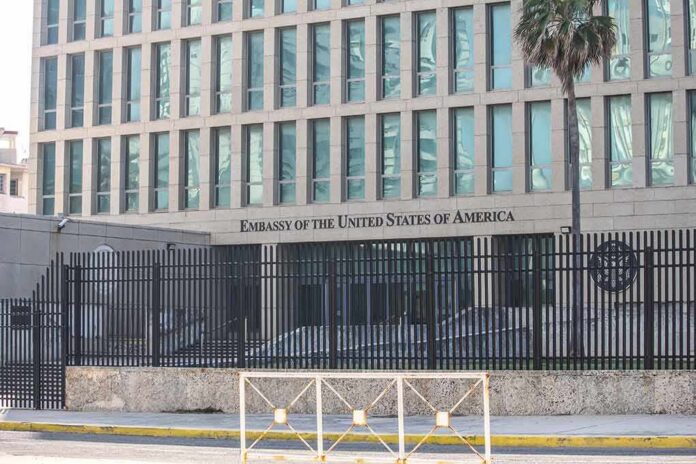
U.S. diplomatic missions across the Middle East posted security alerts telling Americans to stay vigilant and be ready for travel problems. The messages said tensions in the region made the situation complex and could escalate without warning. The alerts told travelers to plan for flight cancellations, airspace closures, and other disruptions. U.S. Embassies in Jordan and the United Arab Emirates published the language on official channels, confirming the core warning to citizens in those countries.
U.S. embassy social posts in Qatar and Lebanon carried the same phrasing that urged heightened vigilance and awareness of possible flight shutdowns. Those posts reinforced that the caution applied across borders, not just in one hotspot. The shared wording suggested a coordinated approach to risk communication across U.S. missions in the region, using standard language to move fast when the threat picture can shift in hours, not days.
Region-Wide Messaging Points To Coordinated Consular Action
Regional news summaries reported that many embassies issued the alert in near-unison, underscoring the wide scope of the warning. Coverage listed postings across Israel, Saudi Arabia, Iraq, Kuwait, Lebanon, Jordan, Bahrain, the United Arab Emirates, and Qatar. The intent was clear: inform Americans that the risk was regional and could affect air routes, commercial schedules, and border operations across several countries at once, even if no single, named plot was disclosed.
Standard practice inside the State Department is to mirror alert language across posts when the risk ties to fast-moving regional tensions. That practice limits confusion and speeds delivery to citizens who rely on embassy channels. While each country’s conditions can vary, the synchronized message helps Americans make quick choices about routes and timing. It also pushes travelers to plan for back-up options if flights delay, divert, or cancel with little notice.
What Travelers Should Do Right Now
Americans in the region should check airline notifications often, confirm itineraries before leaving for the airport, and keep extra time in plans. Travelers should identify alternate routes, know where their passports and medications are, and maintain charged phones and local transport options in case airspace closes. People should enroll in the State Department’s traveler program and follow their embassy’s alerts. These steps match the government’s plain guidance to expect sudden changes and to move early when needed.
The alerts did not accuse one actor or cite a specific attack plan. That is common for broad warnings tied to regional tension. The immediate point was safety, not intelligence detail. The government used clear language that aimed to reduce risk for Americans, especially those on tight schedules or with family in multiple countries. Readers should treat the alerts as time-sensitive and practical, since airspace and airports can change status with limited notice.
Sources:
njsr.com.ng, yahoo.com, avapress.com, ground.news, x.com