

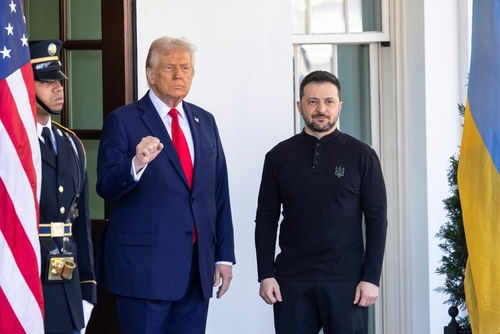
Ukraine’s battle-tested drone warfare expertise is now helping defend American interests in the Middle East after the Trump administration requested assistance against Iranian Shahed drone attacks—a remarkable role reversal that transforms Kyiv from aid recipient to strategic partner.
Story Snapshot
- President Zelenskyy confirmed the U.S. requested Ukrainian specialists and technology to counter Iranian Shahed drones penetrating Middle East defenses
- Ukraine developed cutting-edge interceptor systems after years defending against Russian-deployed Iranian drones, expertise now sought by Pentagon and Gulf states
- The cooperation marks a pragmatic shift in U.S.-Ukraine relations under Trump despite previous tensions over aid spending
- Ukrainian firms exposed media confusion after Fox News mislabeled Ukrainian intercept footage as American technology
Trump Administration Requests Ukraine’s Battle-Proven Expertise
President Volodymyr Zelenskyy announced March 5 that the United States requested specific support from Ukraine to combat Iranian Shahed drones threatening American interests across the Middle East. The Ukrainian leader instructed his defense ministry to provide necessary resources and specialists, stating Ukraine helps partners who ensure Ukrainian security. This request follows U.S. and Israeli strikes on Iranian targets that killed Supreme Leader Ayatollah Ali Khamenei, triggering massive Iranian retaliation using Shahed drones that penetrated some existing missile defense systems in Dubai, UAE, Qatar, and Saudi Arabia.
Ukraine’s Hard-Won Drone Defense Technology Fills Critical Gap
Since Russia’s 2022 invasion, Ukraine faced relentless Iranian Shahed drone attacks supplied by Tehran to Moscow, forcing Kyiv to develop innovative countermeasures that American defense planners now desperately need. Ukrainian firms like Wild Hornets created specialized interceptor drones including the STING system, designed specifically to neutralize cheap, mass-deployed loitering munitions that conventional air defenses struggle to stop cost-effectively. The Financial Times reported Pentagon officials and Gulf state representatives entered talks to purchase these Ukrainian interceptor systems. Zelenskyy noted more Patriot missiles were expended in three days of Middle East fighting than Ukraine received throughout two years of war—highlighting the urgent need for affordable alternatives.
Media Misattribution Reveals Technology Confusion
Fox News inadvertently exposed widespread confusion about drone warfare technology when it aired Ukrainian intercept footage on March 5, mislabeling it as American high-tech arsenal destroying Iranian drones. Wild Hornets, the Ukrainian defense firm that developed the actual intercept technology shown, publicly corrected the misattribution. This incident underscores how Ukraine’s battlefield innovations outpaced public awareness and reveals the extent to which Ukrainian engineering quietly advanced beyond traditional Western systems. The U.S. separately reverse-engineered captured Iranian drones for Middle East deployment, yet still required Ukraine’s operational expertise gained through real combat conditions that American forces lacked.
Strategic Leverage and Conditional Cooperation
Zelenskyy conditioned expanded Middle East support on Gulf states leveraging their Russian economic ties to pressure Putin toward a ceasefire within one to two months, according to Bloomberg interviews. This strategic approach transforms Ukraine from dependent aid recipient into valuable partner with leverage—something conservatives appreciate as more balanced than Biden-era blank checks. The Pentagon-Gulf procurement talks represent potential economic benefits for Ukrainian defense industries while addressing legitimate American security needs without wasteful spending. However, Russia maintains contact with both Iran and Gulf states, and Putin historically rejected ceasefire proposals, making Ukraine’s conditional offer a long-shot diplomatic play that nonetheless demonstrates Kyiv’s growing geopolitical sophistication under pressure.
Zelenskyy said the US asked Ukraine for support in fighting off Iran's Shahed drones, so he's sending experts their way https://t.co/UDGunaW4lA
— Automation Workz (@AutomationWorkz) March 6, 2026
Implications for American Defense Strategy
This development accelerates the global counter-drone technology race as allies recognize Ukrainian innovations forged in actual combat prove more effective than theoretical Western systems. Ukrainian expertise addresses the Shahed proliferation threat spreading beyond Ukraine and Iran to conflict zones worldwide, offering cost-effective solutions that protect American lives and interests without massive defense contractor spending. For conservatives frustrated by past foreign aid waste, this represents results-oriented cooperation—Ukraine earned credibility through battlefield success, not lobbying. The Trump administration’s pragmatic request, despite previous tensions including the contentious April 2025 White House meeting, shows willingness to leverage proven capabilities regardless of political friction, putting American security interests first while potentially stabilizing Ukraine without endless financial commitments.
Sources:
Zelenskyy says US requested assistance to combat Iranian drones – Scripps News
Ukraine Offers Help To Middle East To Stop Iran’s Shaheds Drones But For A Price – NDTV
Better Late Than Never: US and Allies Race Toward Ukrainian Counter-Shahed Tech – FPRI