

Alexander Butterfield, the Nixon aide whose truthful testimony under oath exposed a secret taping system and toppled a president, has died at 99—reminding us that one man’s integrity can enforce accountability even in the highest office.
Story Highlights
- Butterfield revealed Nixon’s secret Oval Office tapes on July 16, 1973, providing undeniable evidence of the Watergate cover-up that forced Nixon’s 1974 resignation.
- His death at age 99, confirmed by wife Kim and John Dean, closes a key chapter on the last major Watergate figure.
- Butterfield oversaw the 1971 voice-activated system installation, known only to a tiny circle including Nixon and H.R. Haldeman.
- John Dean praised Butterfield as a heroic truth-teller who bore the burden of secrecy but stood for justice.
- His testimony reinforced constitutional checks and balances, a lesson in limited government and accountability.
Butterfield’s Pivotal Testimony
Alexander Butterfield served as White House deputy assistant to President Richard Nixon from 1969 to 1973. On July 16, 1973, he testified before the Senate Select Committee on Presidential Campaign Activities. During routine questioning, Butterfield disclosed Nixon’s secret voice-activated taping system installed in 1971. Microphones captured all conversations in the Oval Office, Cabinet Room, Executive Office Building, and Camp David. This revelation stunned investigators and the public. Butterfield acted from duty under oath, despite knowing the information was highly classified within Nixon’s inner circle.
Watergate Origins and Cover-Up Exposed
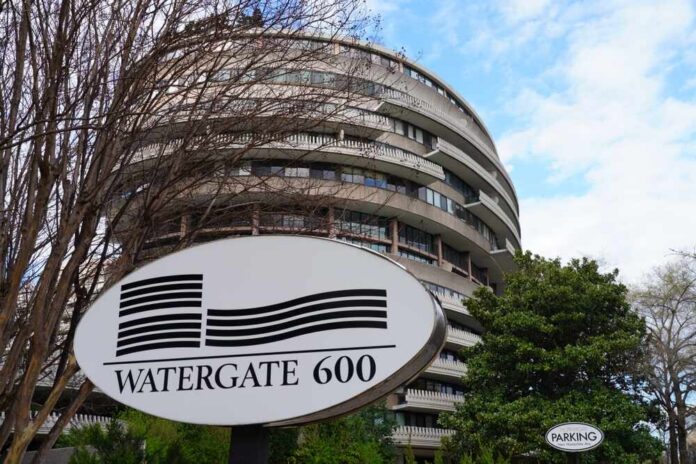
The Watergate scandal began with a June 17, 1972, break-in at Democratic National Committee headquarters by Nixon-linked operatives. Nixon ordered the taping system in April 1971 to document Oval Office discussions. John Dean’s June 1973 testimony speculated on recordings of his Nixon meetings. Senate staff questioned Butterfield privately on July 13, 1973. His public confirmation shifted the investigation dramatically. The tapes later revealed Nixon’s cover-up efforts, vulgar language, and biases. The Supreme Court ordered their release in 1974, leading to Nixon’s August 9 resignation.
Personal Cost and Lasting Legacy
Butterfield, a UCLA friend of Chief of Staff H.R. Haldeman and Air Force veteran, managed White House logistics. After leaving for FAA administrator in 1973, he faced fallout. He later believed President Ford fired him in retaliation. In a 2008 Nixon Library oral history, Butterfield expressed mixed feelings. He felt partially responsible for Nixon’s fall but celebrated the resignation as justice prevailing. Butterfield praised Nixon’s foreign policy achievements yet called him dishonest and the cover-up’s architect. His actions upheld truth amid power abuses.
Reactions and Historical Impact
John Dean confirmed Butterfield’s death around March 9-10, 2026, stating he bore heavy responsibility for revealing sworn secrets but told the truth. Butterfield’s mid-level role lent credibility to his testimony, breaking the tight secrecy of Nixon, Haldeman, and aides. The scandal eroded public trust, prompted reforms like the Presidential Records Act of 1978, and reinforced checks and balances. Today, under President Trump’s focus on accountability and limited government, Butterfield’s story resonates as a warning against executive overreach and a tribute to individual integrity protecting constitutional principles.
Alexander Butterfield, Nixon aide who disclosed Watergate tapes, dies at 99 #FAA #Veteranhttps://t.co/hUN9lhzGKj
— myah1951 (@myah1951) March 10, 2026
Sources:
Alexander Butterfield, the Nixon aide who disclosed Watergate tapes, dies at 99.
Alexander Butterfield, the Nixon aide who disclosed Watergate tapes, dies at 99.
Alexander Butterfield, Nixon aide who revealed Watergate tapes, dies at 99.