
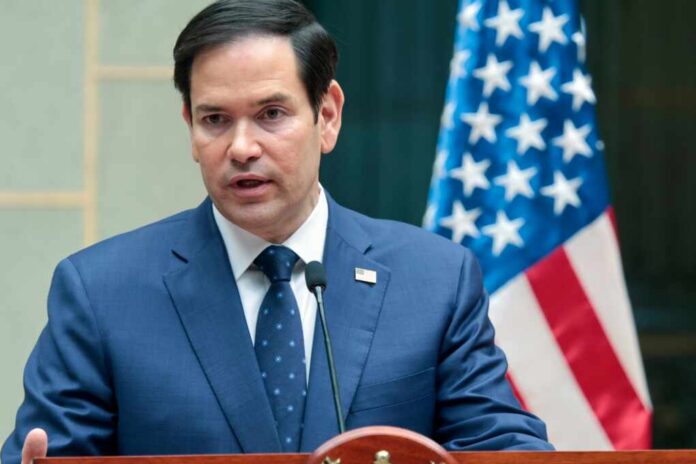
Secretary of State Marco Rubio has declared the U.S. will destroy Iran’s military capabilities to prevent a nuclear-armed regime from threatening American lives, vindicating warnings he made over a decade ago that critics dismissed.
Story Snapshot
- Rubio threatens to dismantle Iran’s navy, air force, and missile programs to prevent nuclear weaponization
- The Secretary of State’s 2015 predictions about Iran exploiting sanctions relief are now coming true amid escalating Middle East tensions
- Trump administration frames current military campaign as “last best chance” to stop Iran’s nuclear ambitions
- White House warns Iran against retaliating on U.S. interests following recent Israeli strikes
Rubio’s Decade-Old Warning Becomes Reality
Marco Rubio stood on the Senate floor in 2015 and predicted Iran would exploit sanctions relief from the Obama-era nuclear deal to build long-range missiles capable of striking American cities. Critics dismissed his warnings as fear-mongering. Now, as Secretary of State in 2026, Rubio is confronting precisely the scenario he forecast: an Iranian regime on the brink of nuclear capability, protected by an extensive shield of missiles and drones funded by that very sanctions relief. This vindication offers little comfort as the administration grapples with a crisis that many believe could have been prevented.
Explicit Threats to Iranian Military Infrastructure
Rubio has issued stark warnings that the United States will systematically destroy Iran’s navy, air force, missile production facilities, and drone capabilities to prevent the regime from acquiring nuclear weapons. The Secretary of State has declared that “under no circumstances” can Iran possess nuclear weapons, describing the current military campaign as America’s final opportunity to neutralize the threat before Iran completes what he calls an impenetrable “conventional shield.” President Trump has signaled expectations for a quick conclusion to the conflict while reserving the right to conduct targeted strikes if Iran retaliates.
The Failed Nuclear Deal’s Legacy
The 2015 Joint Comprehensive Plan of Action, championed by the Obama administration, lifted crippling sanctions in exchange for temporary restrictions on Iran’s nuclear program. Rubio argued at the time that the deal would fund Iran’s regional aggression and missile development rather than promote peace. The current crisis appears to validate those concerns, as Iran has used the intervening years to develop sophisticated missile and drone technology while advancing its nuclear program. The regime’s pursuit of hegemonic power through proxy forces and terrorist activities has created the exact scenario Rubio warned would lead to military confrontation.
Escalating Tensions and Regional Instability
Iranian proxies have been attacking U.S. forces throughout the region, prompting Rubio to declare that “Iranians are hitting us everywhere” during remarks in April 2026. Recent Israeli strikes on Iranian targets, conducted independently of U.S. involvement, have further escalated tensions. The White House has warned Iran against targeting American interests in response to these strikes while maintaining close coordination with Israel and regional partners. This delicate diplomatic dance reflects the administration’s attempt to degrade Iranian capabilities while avoiding a broader regional war that could destabilize global energy markets and draw in multiple nations.
The situation highlights a broader frustration shared across the political spectrum: for years, Americans have watched as foreign policy decisions made by Washington elites created problems that ordinary citizens now face. Whether one supported or opposed the Iran nuclear deal, the current crisis demonstrates how disconnected policymakers can be from the long-term consequences of their choices. Rubio’s warnings went unheeded by an establishment that prioritized diplomatic legacy over hard security realities. Now, with Iranian missiles potentially months away from nuclear warheads, the American people must trust the same government apparatus to fix a problem many believe it created through wishful thinking and willful blindness to an adversary’s stated intentions.
Sources:
White House Statement from Secretary of State Marco Rubio