
President Trump’s AI “Jesus” meme is colliding with a Vatican dispute in a way that risks turning faith into just another partisan weapon.
Story Snapshot
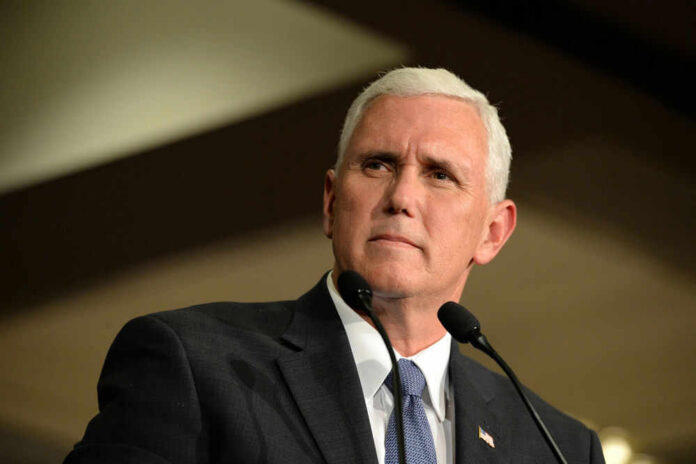
- Former Vice President Mike Pence publicly criticized an AI-generated image portraying Trump as Jesus Christ and urged the president to de-escalate.
- Trump deleted the post after backlash but defended himself in a CBS interview and continued criticizing Pope Leo XIV.
- Pope Leo XIV downplayed the political back-and-forth, saying he was focused on preaching peace while traveling in Africa.
- The episode highlights how AI-driven political messaging can inflame religious sensitivities and complicate U.S. diplomacy.
An AI meme ignites a real-world religious and political clash
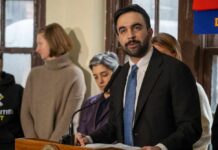
President Donald Trump briefly posted an AI-generated image depicting himself as Jesus Christ, then removed it after public backlash. The image landed at a sensitive moment because Trump has also been sparring with Pope Leo XIV over policy and public messaging. Former Vice President Mike Pence, a prominent voice among evangelicals, criticized the meme as offensive and advised Trump to back down rather than escalate a dispute that mixes religion with statecraft.
Trump’s deletion did not end the controversy. In a Monday night interview with CBS News anchor Norah O’Donnell, Trump defended the post and continued pressing his criticism of Pope Leo XIV. According to the CBS segment, Trump suggested the image made him look like a “doctor,” a defense that did little to settle concerns about reverence and boundaries. The immediate result is another high-profile fight where the original post disappears, but the political argument keeps expanding.
Pence’s critique signals a familiar tension inside the broader right
Pence’s intervention matters less as a personal rebuke and more as a signal flare about coalition management. Many conservatives prioritize religious liberty and respect for faith traditions, even while enjoying rough-and-tumble politics. When political leaders use sacred imagery for memes—especially AI-generated content that can feel deliberately provocative—some allies see it as unnecessary risk. Pence’s advice to de-escalate reflects a belief that culture-war battles should be chosen carefully, not triggered by internet bait.
The available reporting leaves gaps: the CBS material centers on Trump’s interview and the Pope’s comments, while Pence’s full remarks are not presented in the same detail. That limitation makes it hard to weigh tone and context, but the basic dynamic is clear. A former vice president tied to the evangelical wing publicly warned a sitting Republican president that the optics and substance could alienate people who otherwise agree with him on policy, including many churchgoing voters.
Pope Leo XIV’s response: avoid the brawl, project moral authority
Pope Leo XIV responded from Africa by rejecting the idea of a tit-for-tat political debate with a U.S. president. CBS reported the Pope said he was not trying to debate Trump and instead emphasized preaching peace. That posture is consistent with how Vatican leaders often preserve influence: speak in moral terms, avoid looking like a partisan actor, and let political storms burn out on their own. It also contrasts with Trump’s more confrontational public style.
What this episode says about government, media cycles, and credibility
This dispute also shows how quickly modern governance gets dragged into distraction cycles. Trump’s policies and the Pope’s priorities can overlap in real-world ways—especially on immigration, global humanitarian concerns, and international diplomacy—but those issues are harder to explain than a viral image. For voters already convinced the “system” serves elites and attention-seekers, the meme-to-feud pipeline reinforces cynicism: serious institutions become props, and accountability gets replaced by outrage management.
Mike Pence Advises Trump to Back Down in Pope Feud After Blasting 'Offensive' Jesus Meme https://t.co/KxZmpN0EtE
— Mediaite (@Mediaite) April 23, 2026
For conservatives, the practical takeaway is not that faith must be scrubbed from public life, but that using religious symbols as political content invites predictable backlash and hands opponents an easy narrative. For liberals, the episode confirms fears about politicizing religion and marginalizing dissenting communities. For everyone else, it highlights a shared frustration: leaders across the spectrum often choose what trends online over what improves daily life, leaving citizens feeling like spectators to a permanent campaign.
Sources:
Trump doubles down in feud with Pope Leo after backlash to deleted post depicting him as Jesus
Pope Leo says he’s not trying to debate Trump, but preach peace in Africa