President Trump’s new $100,000 fee on most new H-1B visa petitions forces employers to prove real national interest—or pay up.
Story Highlights
- Trump’s proclamation requires a $100,000 payment on new H-1B petitions, citing immigration law authority.
- United States Citizenship and Immigration Services issued guidance on timing and proof of payment for filings.
- A federal judge later ruled the original fee unlawful as an unauthorized tax, vacating it nationwide.
- The administration is pursuing a formal rule to set a new fee of about $103,000 going forward.
What Trump Ordered And Why It Matters For U.S. Workers
President Trump issued a proclamation restricting entry of H-1B specialty workers unless employers submit a $100,000 payment with new petitions. The order cites sections 212(f) and 215(a) of the Immigration and Nationality Act to justify limits on entry and to protect American workers’ wages and opportunities. The fee applies to new filings and was designed to curb program abuse and offshoring pressure that can undercut U.S. jobs. Supporters see it as a firm test: pay the premium or prove the hire serves America first.
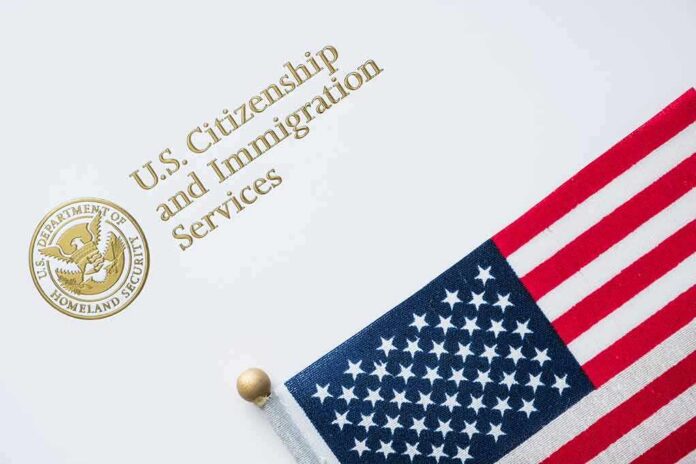
United States Citizenship and Immigration Services (USCIS) followed with step-by-step guidance. The agency said any new H-1B filing after 12:01 a.m. eastern daylight time on September 21, 2025, must include proof of the $100,000 payment or documentation of an approved exception. USCIS warned it would deny petitions that lacked proof. The instruction covered the 2026 lottery and other new cases and built a process for exceptions tied to clear national interest needs.
How The Policy Hit The Courts And Where It Stands Now
Litigation came fast. A federal district judge ruled the $100,000 payment requirement was an unlawful tax that Congress never authorized and vacated the fee nationwide. The ruling did not erase the worker-protection logic behind the proclamation, but it blocked the payment condition as written. In response, the administration opened a formal rulemaking path to codify a similar fee of about $103,000 for new H-1B petitions, seeking to anchor it in regulation rather than a proclamation alone.
This legal path reflects a bigger fight over who sets immigration costs and conditions. Congress has set many fees by law. Agencies set others by regulation. The court said the proclamation tool could not impose a payment like a tax. The administration’s new proposal aims to clear that hurdle by using notice-and-comment rulemaking. That move keeps the worker-first goal alive while addressing the judge’s concerns about legal authority and process.
What Employers, Communities, And Taxpayers Should Watch Next
Employers face a simple choice under the policy vision: show a real national interest case or plan for a steep program cost. Advocacy groups and some industries argue the fee harms hospitals, schools, churches, and other employers that lean on H-1B workers, especially in rural areas. They warn of hiring delays and service gaps if costs bite hard. Those concerns will likely surface again in comments on the proposed rule, alongside calls to close loopholes that have pushed jobs and training offshore.
🇺🇸 President Trump is doing something amazing by proposing a $103,000 fee for H-1B visas! 🙌🏻
DHS estimates would prevent 76% of small businesses from importing cheap foreign labor and would force them to hire young Americans.
We have the best and brightest right here in… pic.twitter.com/bmuksIIRuA
— Tiffany Marie Brannon (@TiffanyMBrannon) August 29, 2026
Taxpayers and American workers should track two outcomes. First, whether a high fee, paired with narrow exceptions, reduces outsourcing models that replace or depress U.S. jobs. Second, whether a tight exception path still lets in talent that clearly serves the national interest, such as critical health, defense, and research roles. The mixed research record on H-1B labor effects makes design matter. A strong filter and clear guardrails are key to protect wages without starving strategic industries.
Sources:
redstate.com, employmentlawworldview.com, natlawreview.com, pbs.org, reuters.com