

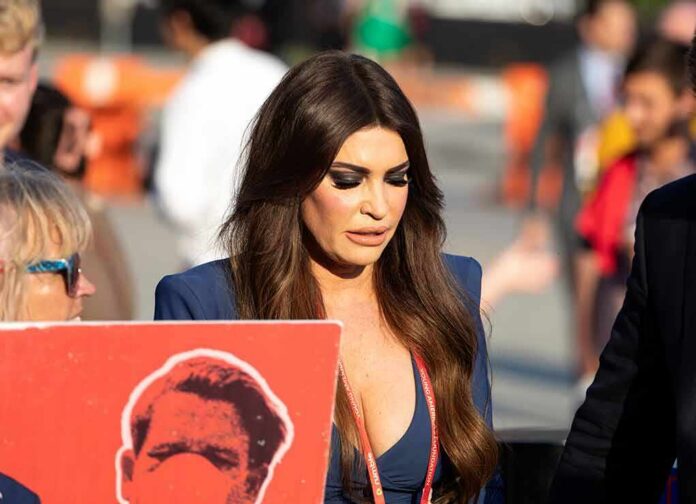
The White House asked Kimberly Guilfoyle to resign after reports of a $100,000 solicitation tied to her American Express bill and alleged promises of access.
Story Highlights
- White House requested Guilfoyle’s resignation following misconduct reports.
- Alleged texts showed a $100,000 wire to American Express and talk of broad access.
- President Trump said the team is “looking at it” and is “not happy”.
- Guilfoyle’s lawyer disputes message authenticity and says money was for unpaid fees.
What Triggered the Resignation Request
White House Press Office officials said the administration asked United States Ambassador to Greece Kimberly Guilfoyle to resign after reports that she asked a political associate for $100,000 to cover an American Express bill. Network reports said the alleged messages pointed to a wire transfer and suggested it would be less visible if routed to the card company. The reported exchange came just before her 2025 Senate confirmation process, raising concerns about access and timing.
President Trump told reporters the team is reviewing the matter and “we’re not happy.” That comment signaled a firm stance on ethics within his administration. Coverage also said the State Department’s internal watchdog is examining the situation, which often happens when questions arise about possible misuse of position or improper asks. The request to resign shows the administration’s priority: protect the office and stop even the appearance of pay-to-play.
What The Alleged Messages Said And Why It Matters
Reports said screenshots show Guilfoyle asking Eric Deters to wire $100,000 to American Express and telling him that a wire “won’t show up anywhere,” adding that he could expect wide access in return, according to his account. Deters called it a “quid pro quo.” He did not send the money, so there is no bank record of a completed transfer. Still, the language about avoiding a paper trail raises red flags that require a clear answer.
CBS and other outlets reported that White House officials were told the messages were authentic, though no public forensic report has been released. That kind of limited disclosure can shape public views fast. It puts pressure on the administration to act while facts are still being sorted. The administration’s step to seek a resignation avoids giving the impression that such requests, if true, are tolerated by those serving the American people.
The Pushback From Guilfoyle’s Legal Team
Guilfoyle’s lawyer says the messages are inauthentic in some way and denies any ask for money in exchange for government access. Her team says the dispute is about unpaid speaking, travel, and consulting fees from events before her nomination. That claim, if supported by contracts and invoices, would frame the $100,000 as private compensation rather than a public corruption scheme. Reporters have not published a full forensic record resolving that dispute.
🚨Just in: President Trump has demanded the resignation of Kimberly Guilfoyle as U.S. Ambassador to Greece, White House Press Secretary Katie Zacharia has confirmed pic.twitter.com/P6NCFEGbFo
— The Calvin Coolidge Project (@TheCalvinCooli1) October 13, 2026
This legal defense faces a core test: were the messages real, and what was the money for? If the records show a clean private debt with documentation, that backs her case. If the messages are genuine and include directions to hide a payment while offering access, that undercuts it. Because the money was never paid, investigators will likely look harder at phones, backups, and full message threads to nail down context and authenticity.
Why Conservatives Should Care About The Standard Set Here
Public service must be above reproach. The Trump administration’s move shows a clear line: no one should trade on public office or even create that impression. Conservatives want limited government that serves citizens, not insiders. That requires strong ethics and fast action when doubts arise. Requesting a resignation while facts are reviewed keeps faith with voters who expect clean conduct and accountability from anyone who represents the United States abroad.
Past Washington culture blurred lines between fundraising, influence, and access. Courts have said access alone is not an “official act,” but voters still expect integrity. The right answer is sunlight and records. Full-message forensics, travel logs, and contracts can resolve what happened. Until then, the administration’s duty is to protect the office and the mission. That is how you defend the Constitution’s promise of equal treatment, not special lanes for the well connected.
What Comes Next In The Review
Investigators can verify phones, cloud backups, and carrier logs to confirm or debunk the screenshots. They can also check whether any American Express payment was attempted, and whether invoices support claims of unpaid fees. If the record proves private debt, say so. If it shows pressure for money tied to access, take firm action. Either way, the public deserves a clear, documented answer grounded in evidence, not rumor or spin.
President Trump set the tone by saying the team is not happy and is looking at it. The White House request that Guilfoyle step aside shows the administration will move first to protect the public trust. That is the standard conservatives expect: facts first, zero tolerance for influence games, and strong defense of American values in every embassy and every office that carries our flag.
Sources:
cbsnews.com, politico.com, cnbc.com